Discover how to get vomit smell out of mattress: a quick guide
- Jan 19
- 13 min read
It happens. Whether it's the stomach flu making its rounds through your Des Moines home, a pet having an accident, or a little one getting sick in the middle of the night, dealing with vomit on a mattress is an unfortunate reality.
That unmistakable sour smell is your signal to act fast. The longer you wait, the deeper the acids and odor-causing bacteria sink into the mattress fibers, turning a simple cleanup into a major battle.
Your Immediate Action Plan for Mattress Odors
For any household, a quick response is your best defense against a lingering smell. The acids in vomit can permanently damage mattress materials, but it's the bacteria that create that stubborn, lasting odor.
This is especially true in homes with kids or pets, like in the busy family neighborhoods in West Des Moines. The initial cleanup isn't just about getting rid of the mess you can see; it's about damage control. You need to stop the problem at the surface before it has a chance to set in for good.
First Response Steps
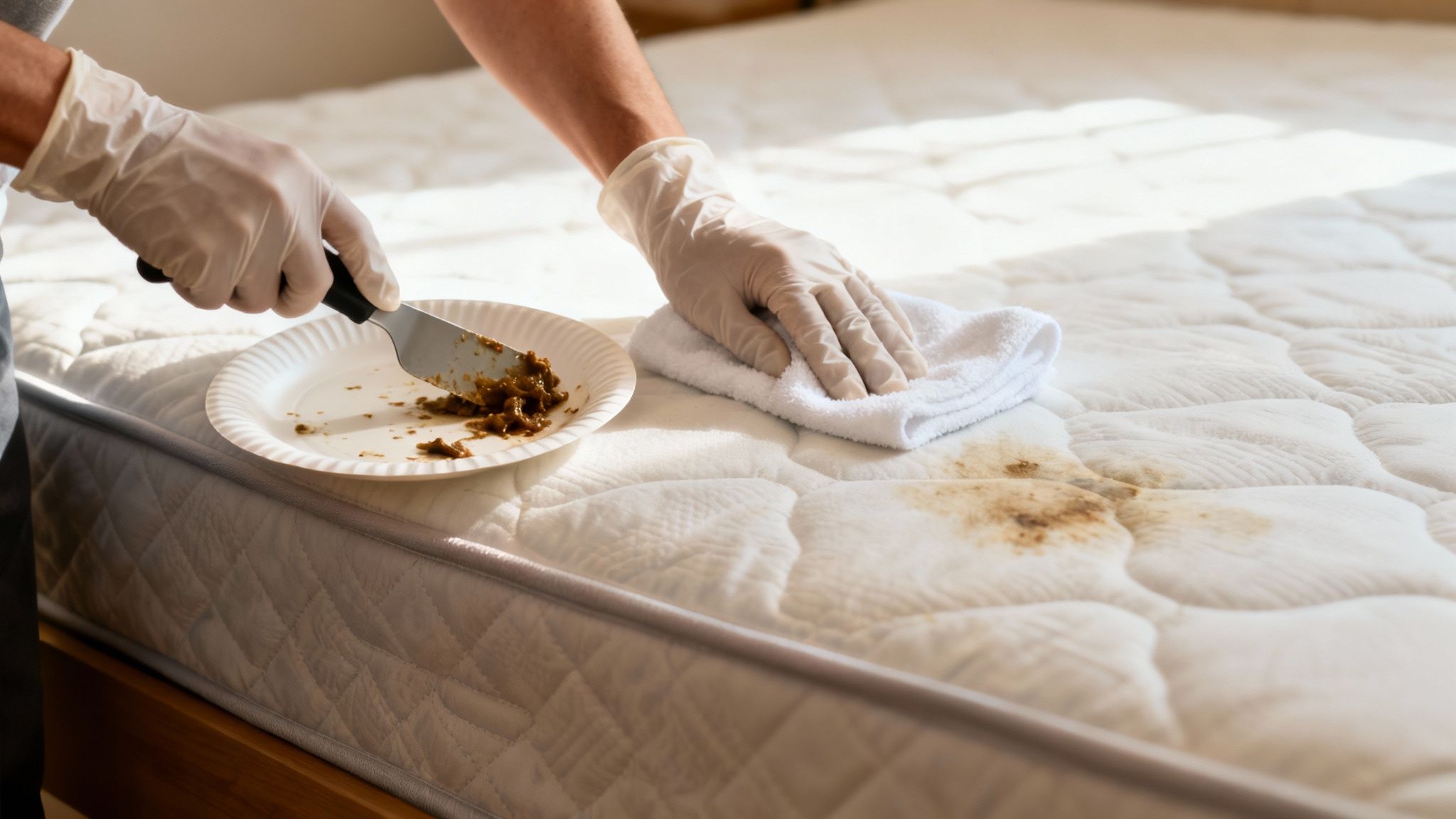
The first few moments are everything. Using the right technique will stop the stain from spreading and prevent odor-causing bacteria from embedding deep into the foam and fabric. Your only goals right now are to contain and lift-not to scrub or push the mess deeper.
Think of your mattress like a giant sponge. If you start scrubbing, you’re just forcing the liquid further down, making it almost impossible to remove completely.
This simple visual breaks down the three critical first actions.
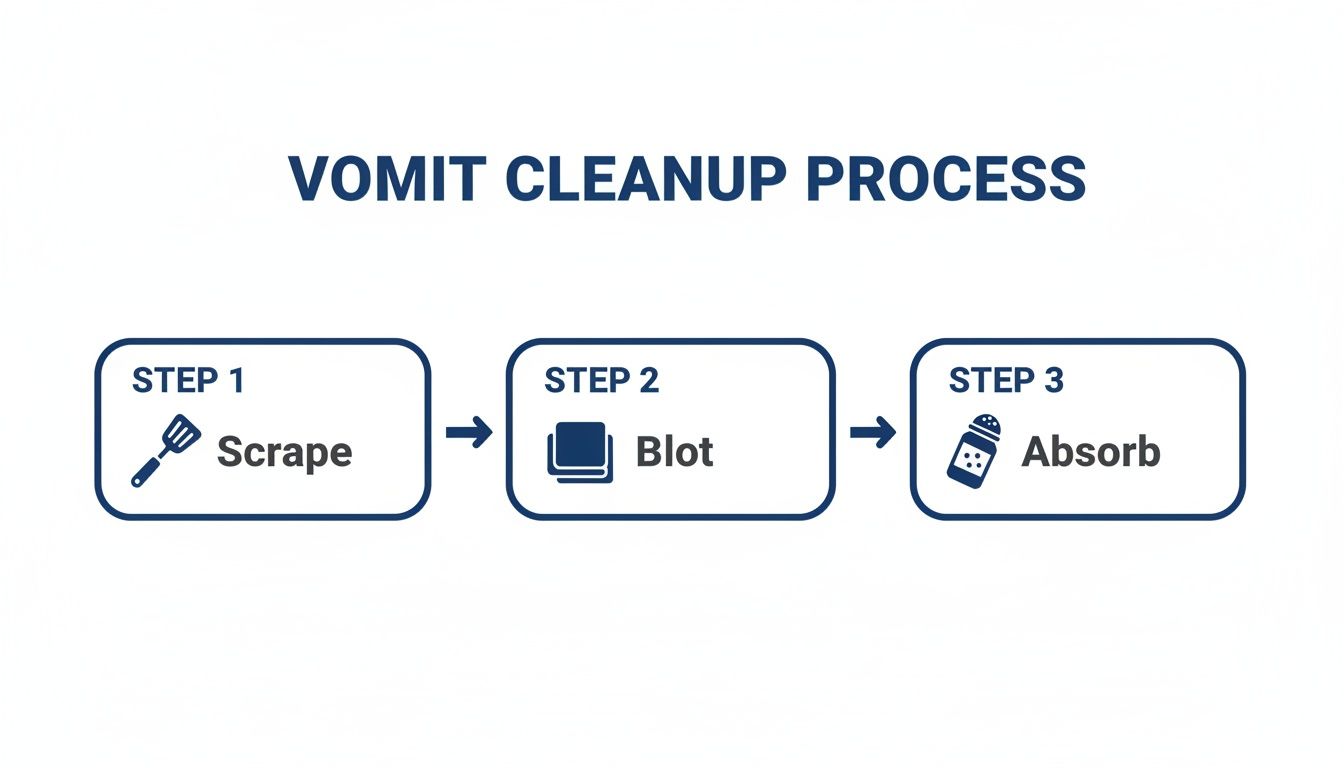
This three-part process-scrape, blot, absorb-is the foundation for any successful mattress cleanup. Get this right, and you've already won half the battle.
Why You Must Avoid Rubbing and Scrubbing
When you see a stain, the first instinct is to grab a cloth and scrub. On a porous surface like a mattress, that’s the worst thing you can do.
Rubbing grinds the acidic mess and bacteria into the mattress fibers. It makes the stain bigger and the smell nearly impossible to fully remove.
Instead, always be gentle. Blotting with a clean, dry towel pulls moisture up and out. Press down firmly with a dry cloth, lift it, and move to a clean section of the towel. Keep doing this until the area is as dry as you can possibly get it. This step is crucial because it makes any cleaning solution you use later much more effective.
Regular care helps, too. Simply knowing how often to clean your mattress can prevent small issues from turning into bigger ones down the road.
Emergency Cleanup Supply Checklist
When an accident happens, you don’t want to be scrambling to find supplies. Having a few key items on hand can make a huge difference. Here's a quick list of what to grab.
Item | Purpose | Pro Tip |
|---|---|---|
Rubber Gloves | Protect your hands from germs and mess. | Keep a box under the bathroom sink for easy access. |
Spatula or Dustpan | Scrape away solid material without pushing it in. | A plastic paint scraper or even a stiff piece of cardboard works in a pinch. |
Paper Towels or Old Rags | Blot and absorb as much liquid as possible. | Microfiber cloths are extra absorbent and great for this step. |
Plastic Bag | Dispose of soiled towels and waste immediately. | Double-bag it to contain odors before putting it in the trash. |
Having these items ready means you can start the cleanup process immediately, which is the best way to save your mattress from lasting damage.
Effective DIY Cleaning Solutions from Your Pantry
Once you've handled the immediate mess, you don't need to rush out for harsh chemicals. The next step in getting that vomit smell out of a mattress involves a quick trip to your own pantry. A couple of simple, budget-friendly ingredients can work wonders for any Des Moines family dealing with an unexpected accident. These methods are safe, accessible, and surprisingly powerful.
The two heroes of this story are baking soda and white vinegar. Both are brilliant at breaking down the acidic compounds in vomit that cause those awful, lingering smells. Let's walk through how to use them correctly to get your mattress fresh again without causing any damage.
The Baking Soda Paste Method
Baking soda is a natural absorbent and a fantastic deodorizer. Instead of just sprinkling it on dry, making a thick paste gives it more contact time with the stain. This allows it to draw moisture and odors from deep within the mattress fibers where they hide.
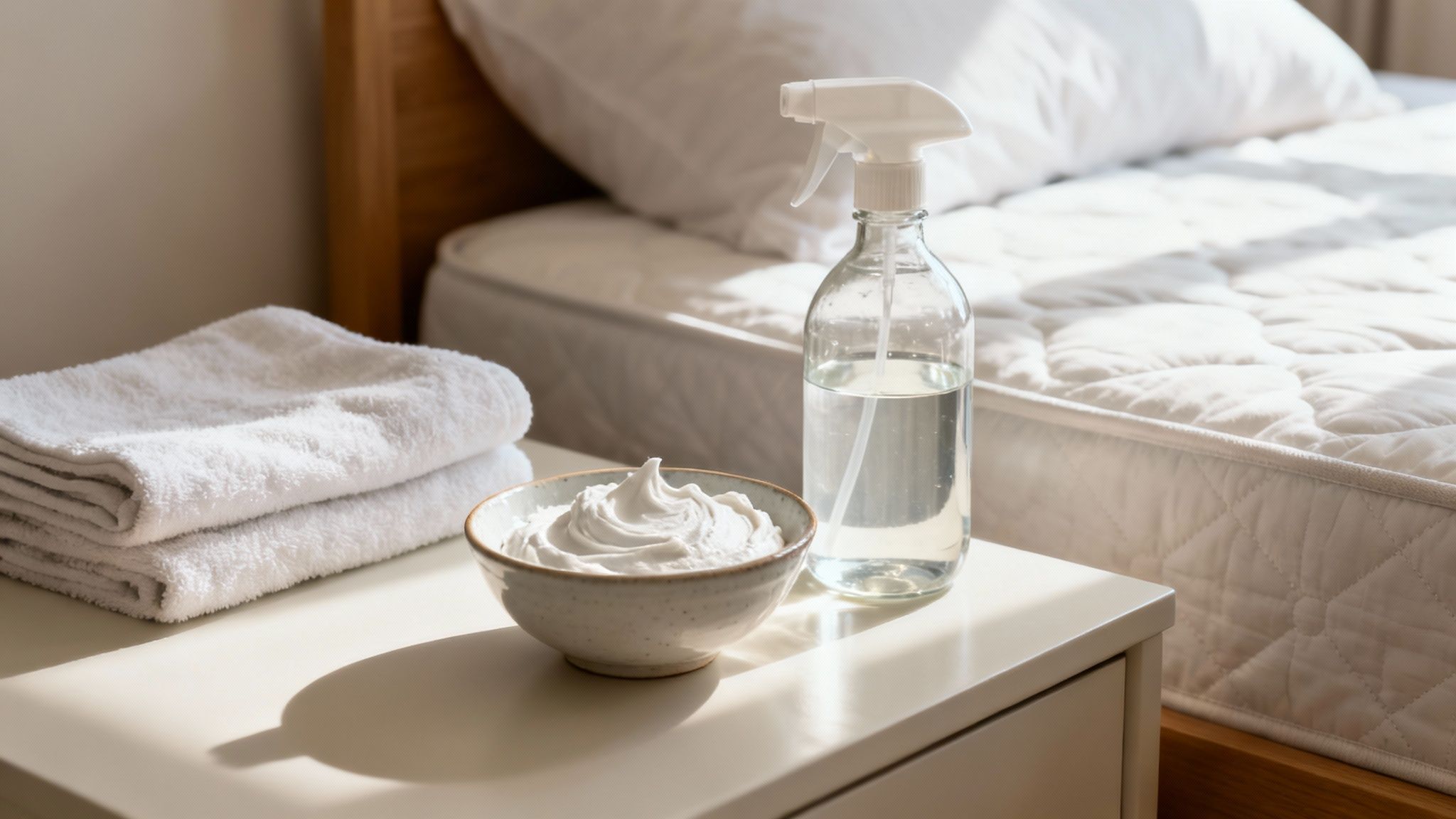
Create the Paste: In a small bowl, mix about a half-cup of baking soda with a few tablespoons of water. You're aiming for a thick, spreadable consistency-almost like cake frosting.
Apply and Wait: Using a spatula or the back of a spoon, spread a generous layer of the paste over the entire affected area. Make sure it completely covers the stain. Now, you just have to let it work its magic. Leave it completely undisturbed until it's dry and hard, which could take several hours or even overnight.
Vacuum Thoroughly: Once the paste is hard and crumbly, grab a vacuum with a hose attachment and suck up all the dried residue. Go over the spot a few times from different directions to make sure you get everything.
This simple process is remarkably effective. If you've used baking soda on other household messes, you already know how well it works.
The Vinegar and Water Spray Solution
While baking soda absorbs, vinegar disinfects and neutralizes. The acetic acid in white vinegar is fantastic for breaking down the smelly bacteria left behind by vomit. The key is using it correctly to avoid soaking your mattress.
Pro Tip: Never use apple cider vinegar or other colored vinegars on a mattress, as they can leave behind their own stains. Stick to plain, distilled white vinegar for cleaning.
To make this spray, just mix equal parts white vinegar and cool water in a clean spray bottle. Lightly mist the stained area-you want it damp, not soaked. Let the solution sit for about 15-20 minutes, then gently blot the area with a clean, dry towel to pull up any excess moisture. The vinegar smell will be strong at first, but it disappears as it dries, taking the unpleasant vomit odor with it.
It's amazing how a simple pantry item can tackle such a tough job. The science behind it is why the professional mattress cleaning industry is growing so fast. Vomit odors fuel an industry projected to surge with a 7% CAGR from 2025-2033. In the $2.5 billion North American market, incidents affecting 1 in 5 households every year drive that demand.
Vomit stains release compounds that can linger for up to 6 months in foam mattresses. While a vinegar solution can remove up to 70% of embedded odors, professional enzyme treatments boast a 99% efficacy rate.
When you're working with specialty materials, you have to be extra careful. For instance, there are specific techniques for cleaning memory foam mattresses safely to protect your investment. Proper technique is key, no matter what cleaning solution you choose.
Using Enzyme Cleaners for Tough Organic Stains
Sometimes, the DIY solutions from your pantry just aren't enough to break down the stubborn proteins in vomit. When that sour smell lingers despite your best efforts with baking soda and vinegar, it’s time to bring in the secret weapon for any parent or pet owner: an enzymatic cleaner.
These cleaners aren't just masking the odor; they're eliminating it at the source. They use natural, beneficial bacteria to produce enzymes that literally digest the organic matter causing the smell. Think of them as microscopic cleaning crews that break down the stain until there's nothing left to smell.
Choosing the Right Enzyme Product
Not all enzyme cleaners are created equal. When you're at the store, look for a product specifically formulated for organic stains from pets or humans. These are designed to target the exact proteins found in messes like vomit, urine, or blood.
Here are a few things to check on the label:
Safe for Upholstery: Make sure the product is cleared for use on fabrics and mattresses.
Multi-Protein Formula: Cleaners that tackle a variety of organic stains are often the most effective.
Odor Eliminating: The label should clearly state that it eliminates odors, not just cleans stains.
This is a crucial step for households in areas like Ankeny or Waukee, where kids and pets are part of daily life. The right product makes all the difference in truly solving the problem.
The Correct Application Method
Using an enzyme cleaner is simple, but the process matters. You can't just spray and wipe; the enzymes need time to work their magic.
Start with a patch test on a small, hidden area of your mattress, like the underside or a corner. This ensures the product won't cause any discoloration. Once you're confident it's safe, lightly spray the affected area. You want to dampen the fabric, not soak it through, since oversaturating the mattress can lead to mildew issues.
Let the cleaner "dwell" for at least 15-20 minutes, or whatever the product instructions recommend. This waiting period is when the enzymes are actively breaking down and consuming the odor-causing organic material.
After the dwelling time, gently blot the area with a clean, dry cloth to absorb any excess moisture. Don't scrub. Just press firmly to lift the liquid out.
This focus on proper mattress care is part of a larger trend. Historical trends show a 15% revenue jump in mattress care, fueled by a post-pandemic hygiene focus. Vomit incidents, which affect about 25% of parents with young children annually, embed odors that professionals neutralize with specialized treatments. For families in Johnston or Urbandale, this highlights the value of effective cleaning, as steam methods preferred by pros evaporate volatile compounds with 99% efficiency, far outpacing baking soda's 50% absorption rate. You can discover more about the growing mattress market on Technavio.com.
The principles behind using enzyme cleaners on mattresses are very similar to other tough household challenges. If you're also dealing with furry friends, our guide on removing pet stains from your carpet and furniture offers more great advice that applies here, too. The key is always to let the product do the heavy lifting for you.
Getting It Dry and Smelling Fresh
After all that cleaning, you're on the home stretch. But don't rush this final stage-a damp mattress is a welcome mat for mold, mildew, and a whole new set of musty smells. Getting your mattress completely dry is non-negotiable if you want a healthy, fresh-smelling bed.
Properly drying the mattress ensures you've truly solved the problem and aren't just trading one bad smell for another. It’s the step that locks in all your hard work.
Airflow Is Your Best Friend
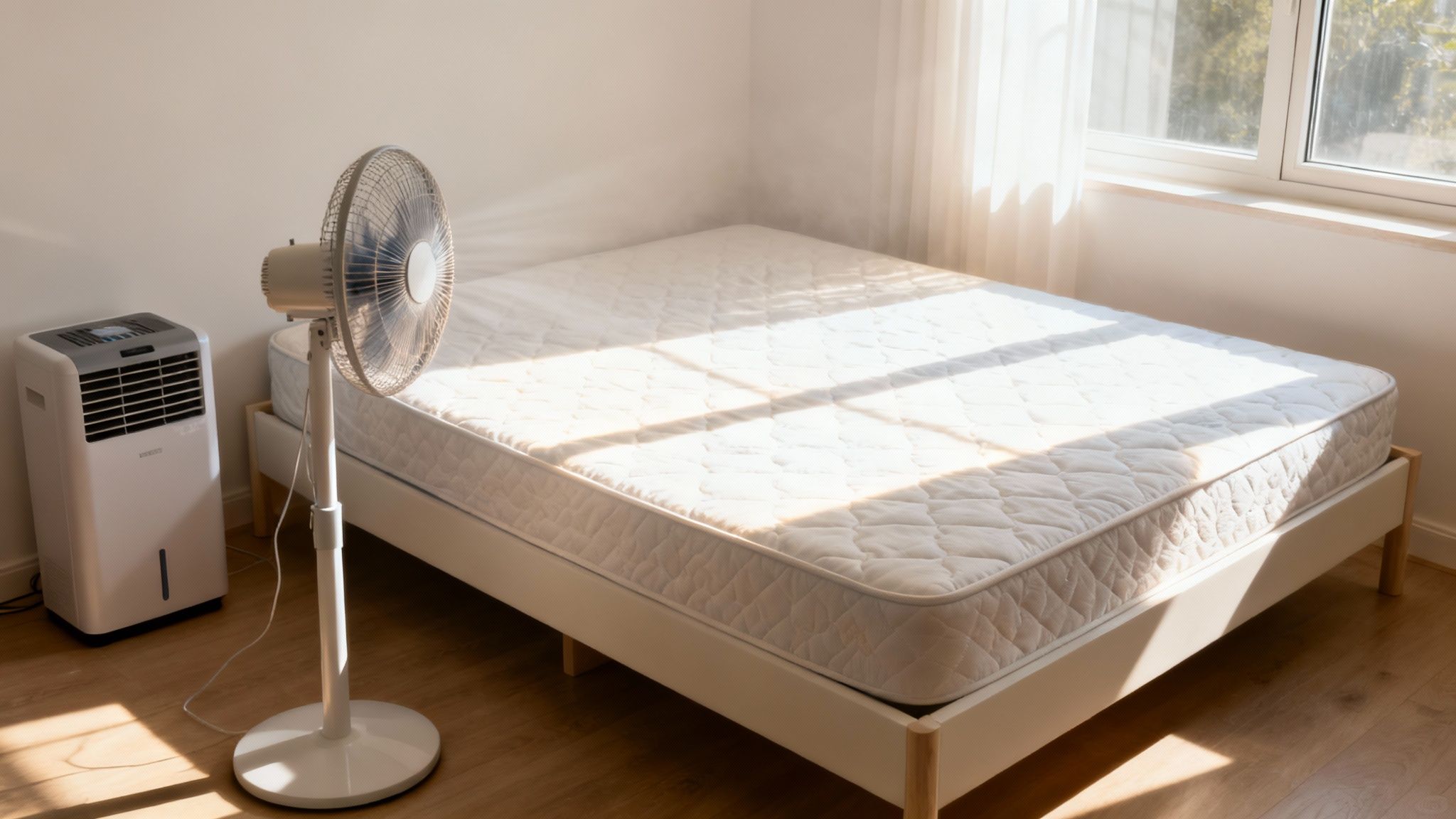
The best way to dry a mattress is with good, old-fashioned air circulation. Your goal is to keep air moving over and around the damp spot to wick moisture away. This is far safer and more effective than blasting it with heat.
Open the Windows: If it’s a nice day out in Des Moines, get a cross-breeze going through the bedroom. Fresh air works wonders.
Set Up Fans: Point one or two fans directly at the wet area. If you can manage it, prop the mattress up on its side so air can hit the front and back.
Use a Dehumidifier: For those humid Iowa days or a damp winter, a dehumidifier is a game-changer. It pulls moisture right out of the room's air, which makes the mattress itself dry out significantly faster.
Whatever you do, never use direct heat like a hairdryer or a space heater. The intense, concentrated heat can permanently damage the delicate foams and fibers inside your mattress, causing them to warp or even melt. Patience is key here.
Comparing Safe Mattress Drying Methods
Choosing the right drying method really comes down to your home's setup, the weather, and how much time you have. Here’s a quick look at your best options.
Method | Effectiveness | Estimated Time | Best For |
|---|---|---|---|
Fans & Open Windows | High | 6-12 hours | Any situation, especially on low-humidity days. |
Dehumidifier | Very High | 4-8 hours | Humid conditions or enclosed rooms with poor airflow. |
Sunlight (Indirect) | Moderate | 8-24 hours | Placing the mattress near a sunny window; the UV rays also help disinfect. |
Direct Heat (Avoid) | Dangerous | N/A | Never recommended due to risk of permanent mattress damage. |
At the end of the day, a combination of fans and open windows is usually the most practical approach, but a dehumidifier will always speed things up.
The Final Deodorizing Touch
Once the mattress is 100% bone-dry to the touch-and you’ve pressed down firmly to check for any deep-down dampness-you can tackle any faint, stubborn odors left behind. This is where baking soda comes in for one last round.
Sprinkle a fresh, thick layer of baking soda over the entire area you cleaned. Don't be shy with it; you want a good coating. Let it sit for at least a few hours, or even overnight if you can. The baking soda will absorb any final traces of acidic odor that might be lingering in the fibers.
To finish, grab your vacuum and use the upholstery attachment to thoroughly suck up all the baking soda. Go over the spot multiple times from different angles to make sure no powder is left behind. This final step leaves your mattress not just clean, but truly fresh and ready for a good night's sleep.
When to Call a Professional Mattress Cleaner in Des Moines
You’ve blotted, sprayed, and piled on a mountain of baking soda. But after all that work, a faint, foul odor still hits you when you walk into the bedroom. This is the moment so many of us face-the realization that the problem has soaked deeper than any surface treatment can reach.
Knowing when to throw in the towel on the DIY struggle and bring in a professional is the key to actually saving your mattress and getting your home feeling healthy again.
At-home methods are fantastic for that immediate, surface-level cleanup. They can stop a disaster from setting in right away. But once liquid has seeped into the deeper layers of foam and padding, household tools just can't pull it back out. That lingering smell is a dead giveaway that bacteria are still thriving deep inside the mattress core.
Signs It's Time for Professional Help
Sometimes, the smartest move is knowing when to call for backup. If you’re running into any of these issues, it’s probably time to let an expert take over.
The Odor Returns: You think you've finally beaten the smell, but it creeps back a day or two later, especially when it's humid. This is a sure sign moisture and organic material are still trapped deep down.
A Visible Stain Won't Budge: Despite your best efforts with vinegar or enzyme cleaners, a noticeable shadow or discoloration is sticking around. This means the stain has fully set into the fabric fibers.
Allergies or Sensitivities Are a Concern: If anyone in your home deals with allergies, asthma, or is sensitive to germs-especially kids or the elderly-a professional cleaning is the only way to be sure all bacteria and allergens are completely gone.
Think of it this way: DIY methods are like wiping up a spill on the kitchen floor. Professional cleaning is like having the entire floor deep-cleaned and sanitized. One handles the surface, while the other gets rid of contaminants from the very foundation.
The Professional Advantage
So why is professional mattress cleaning so much more effective? It really comes down to specialized equipment and experience. Our team at Shiny Go Clean uses powerful hot water extractors that do what sprays and towels simply can't.
This equipment injects hot water and a specialized cleaning solution deep into the mattress, then immediately vacuums out the dirty liquid-along with all the bacteria, grime, and allergens. It’s the only process that guarantees a true deep clean, removing the problem at its source instead of just masking the symptoms on the surface.
Waking up to that persistent vomit smell isn't just unpleasant; it's a health concern. Vomit is highly acidic, with a pH of around 2-3, which allows it to penetrate mattress fibers and release compounds that can linger for weeks if not neutralized. For the 50.1 million Americans with asthma, lingering allergens in a mattress can make symptoms worse. Professional steam cleaning at 212°F kills 99.9% of bacteria, effectively getting rid of those deep-set odors for good. You can learn more about the mattress cleaning market from industry data.
Your Des Moines Solution Is a Call Away
You’ve done your part, but some battles just aren't meant to be fought alone. When you need to be absolutely certain that your mattress is completely clean and sanitized, it's time to call in the experts. Don't let a stubborn odor disrupt your family's comfort and health any longer.
Shiny Go Clean offers a reliable, professional solution for homeowners across the Des Moines metro. We have the right tools and experience to permanently remove tough odors and stains, leaving your mattress truly clean from the inside out.
Ready to get your bedroom back to feeling fresh and clean? We make it easy. You can learn more about our house cleaning services in Des Moines IA or just give us a call. Let us handle the tough stuff so you can rest easy.
For guaranteed results, reach out to us at (515) 446-9726 or book your cleaning online today.
A Few Common Questions We Get About Mattress Odors
Even after a solid cleanup effort, it's normal to have a few questions. We get calls from Des Moines residents all the time asking about the final details, so we’ve put together answers to the most common ones. Hopefully, this clears things up and gets your bedroom feeling fresh again.
Can I Just Use Bleach to Clean the Mattress?
We strongly advise against it. Bleach is an incredibly harsh chemical that’s just too aggressive for mattress fabrics. You're almost guaranteed to end up with permanent yellowing or discoloration, and it can seriously damage the delicate fibers in memory foam or latex beds.
Worse yet, bleach can react with ammonia-a compound often found in bodily fluids-and create toxic chloramine gas. It's much safer to stick with simple solutions like white vinegar and baking soda or a proper enzyme cleaner. These are designed to break down the organic mess without destroying your mattress or putting your home's air quality at risk.
How Long Does a Mattress Take to Fully Dry?
Drying time really comes down to two things: how much liquid soaked in and the humidity inside your home. A lightly treated spot might be dry in 4 to 6 hours if you have good airflow from fans or open windows.
But for a more saturated area, you should expect it to take up to 24 hours to dry completely. The most important thing is to make sure it's 100% dry deep down before you even think about putting sheets back on. Trapping even a little bit of moisture can lead to mold and mildew, which is a much bigger problem than the one you started with.
Will a Mattress Protector Actually Stop Vomit Smells?
Absolutely. In fact, a quality waterproof mattress protector is the single best defense you have. Think of it as an insurance policy for your bed. It creates an impermeable barrier that stops any liquids-vomit, sweat, spills, you name it-from ever reaching the mattress itself.
After an accident, the cleanup is as simple as stripping off the protector and tossing it in the washing machine. It’s a small investment that prevents a huge cleaning headache and protects the lifespan and hygiene of your mattress for years to come.
After you've dealt with a mess, learning how to find a good mattress protector is the key to safeguarding your bed from future accidents. It's one of the easiest ways to keep your mattress fresh, no matter what life throws at you.
Is Professional Cleaning Worth It for Just a Faint Smell?
That faint, lingering odor is a clear sign that bacteria and organic material are still hiding deep within the mattress fibers. At-home methods are great for surface-level accidents, but they often can't reach the mattress core where the real problem is festering.
For anyone in Des Moines concerned about hygiene-especially in homes with kids, pets, or allergy sufferers-a professional cleaning is a smart investment in your health. Our team at Shiny Go Clean uses specialized hot water extraction equipment that flushes out contaminants from deep inside the mattress. We make sure it's truly sanitized, not just smelling better on the surface.
When DIY methods aren't enough to restore your peace of mind, Shiny Go Clean is here to help. For a truly deep clean that eliminates odors at the source, book our expert team online today.
Book your professional cleaning now at https://shinygoclean.com.
Comments