How to Get Your Security Deposit Back in Madison, WI
- Jan 11
- 17 min read
Getting your security deposit back in Madison comes down to being proactive and thorough. You need to start documenting everything weeks before you move out, clean like you mean it, and know your rights as a renter. This straightforward approach helps you sidestep last-minute surprises and makes sure your hard-earned money comes back to you.
Your Game Plan for Getting Every Dollar Back
Hey neighbor! Moving out can feel like a whirlwind of boxes and checklists, but getting your full security deposit back shouldn't be a roll of the dice. With a solid plan, you can confidently handle your move-out in Madison and see that money return to your pocket where it belongs. Think of this as some friendly advice to break down a stressful process into simple, manageable steps.
Your game plan should kick off weeks before you even think about packing. The first thing to do? Dig out that original lease agreement. It’s more than just a piece of paper-it’s your rulebook. Your lease spells out exactly what your landlord expects, from the required notice period to their specific standards for move-out cleaning.
Understanding Wear and Tear vs. Damage
One of the biggest gray areas for renters is the difference between "normal wear and tear" and actual "damage." Landlords can deduct for damage you caused, but not for the natural aging of the property. Knowing where that line is drawn is key to protecting your deposit.
Normal Wear and Tear: This is the small stuff that happens from just living in a space. Think minor scuffs on the wall where your couch sat, slightly faded paint from sunlight, or worn spots in the carpet in high-traffic areas.
Damage: This covers issues caused by negligence or abuse. We're talking about a big hole in the wall from a doorknob, a deep scratch across the hardwood floor, or a broken window. These are the things you're on the hook to fix.
Here’s a simple visual breakdown of the process to get your security deposit back, from reviewing your lease to documenting the final condition.
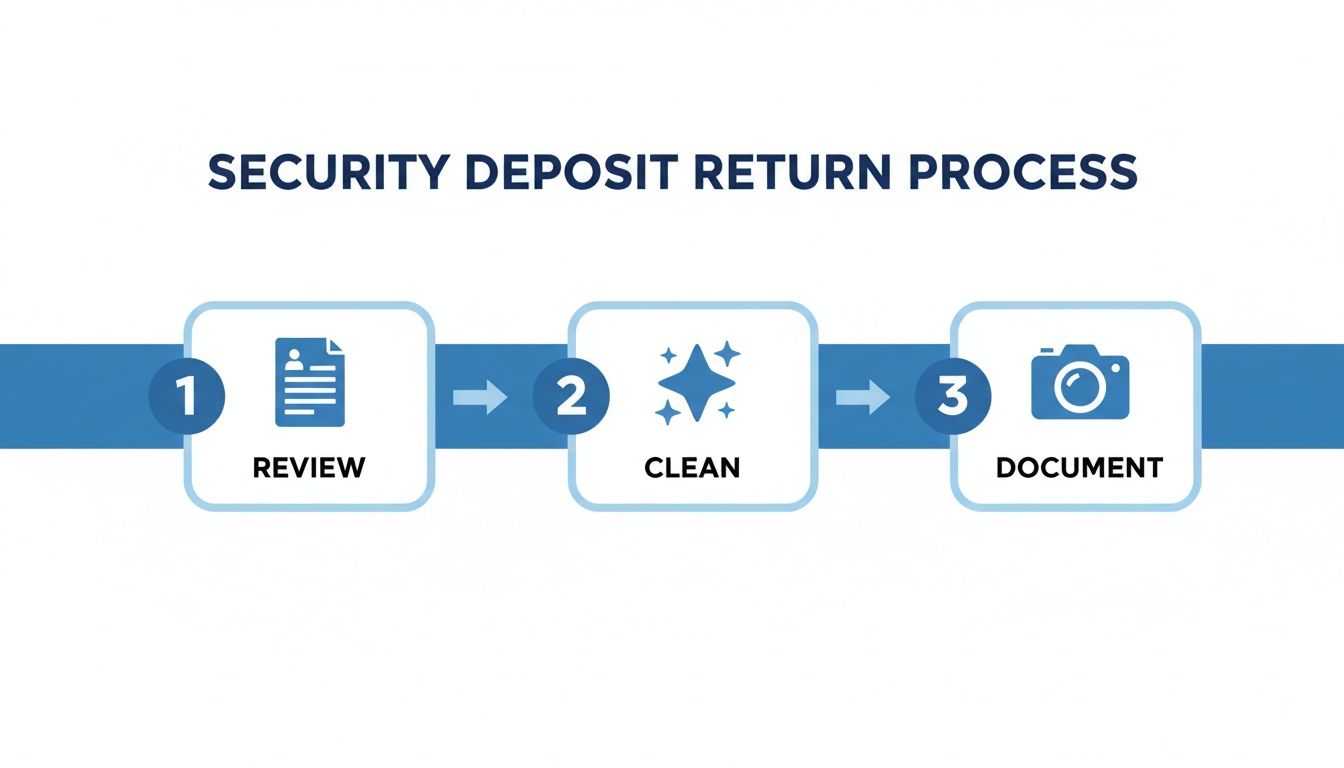
This visual really highlights the three pillars of a successful move-out: reviewing what you agreed to, doing a deep clean, and creating a photo record of your hard work.
Your Pre-Move Out Timeline
Starting early is the best way to avoid a last-minute scramble. Make sure to give your landlord proper written notice according to your lease-usually 30 or 60 days. This is also the perfect time to ask for a pre-move-out inspection. Some landlords offer this as a courtesy, which gives you a chance to fix any issues they spot before the final walkthrough.
Your goal is to leave no room for debate. When a landlord sees a meticulously cleaned and well-documented apartment, it makes it much harder for them to justify deductions. A professional, proactive approach shows respect for the property and protects your financial stake.
Clear communication and a paper trail are your best friends here. Send your move-out notice via email so you have a dated record. Once you have a solid grasp of your lease and a clear idea of what needs doing, you can create a personalized cleaning plan. You can learn more about how a move out cleaning service checklist can really get your full security deposit back in our detailed guide. This prep work is the foundation for a stress-free move and a full refund.
The Ultimate Move-Out Cleaning Checklist
Let's be honest, the number one reason landlords in Madison hold back deposit money is cleanliness. Getting your security deposit back isn’t just about tidying up; it's about leaving the place looking fantastic so there's no question you've met your end of the deal.
This isn't a simple wipe-down. It’s a deep clean that shows you cared for the property. We're talking about tackling the forgotten spots that inspectors love to check, like the inside of the oven, behind the fridge, and those dusty baseboards that have seen a few Madison winters.
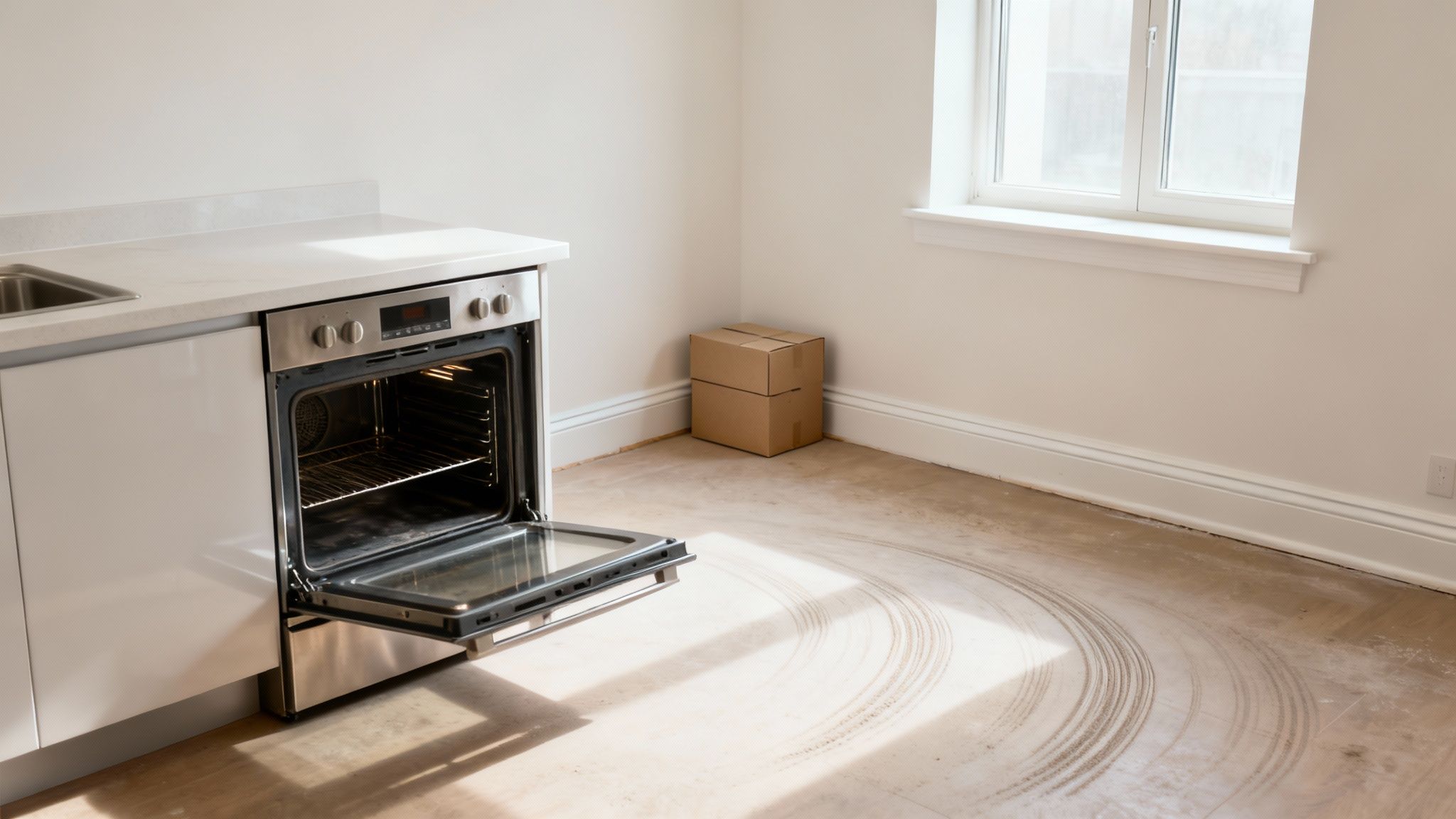
These small details make a huge difference. They create that "professionally clean" look that leaves zero room for debate.
Kitchen Cleaning Deep Dive
The kitchen often requires the most work and gets the most scrutiny during a final walkthrough. It’s where grease, food splatters, and daily life leave their mark. A sparkling kitchen sets a great tone for the rest of the inspection.
Start with the major appliances, as they take the longest.
Oven and Stovetop: This is a big one. Remove the racks and soak them in hot, soapy water. Use a good oven cleaner for the interior, following the instructions carefully. Don't forget to clean the stovetop, removing any burnt-on residue, and wipe down the knobs and control panel.
Refrigerator and Freezer: Empty it completely, then wipe down every single shelf, drawer, and interior wall with a food-safe cleaner. Pull the fridge out (carefully!) to clean the floor underneath and vacuum the coils on the back-it helps the appliance run better and shows you were thorough.
Cabinets and Drawers: Empty everything out and wipe the insides and outsides. Pay special attention to the areas around the handles, which collect fingerprints and grime.
Counters and Sink: Scrub the sink and faucet until they shine, making sure to clear any residue from the drain. Wipe down all countertops so they are free of crumbs and stains.
Bathrooms From Top to Bottom
A clean bathroom is non-negotiable. The goal here is to remove all soap scum, mildew, and any water stains to make the space look fresh and hygienic.
The first step? Remove everything from the room, including the shower curtain.
Shower and Tub: Scrub the tiles, grout, and tub to remove all soap scum. A mixture of vinegar and water can work wonders on hard water stains on the shower door.
Toilet: Clean the inside and the entire exterior, including the base and the area behind it where dust loves to hide.
Sink, Counter, and Mirror: Wipe down the sink and countertop. Clean the mirror until it is completely streak-free.
Floors and Vents: Mop the floor thoroughly, getting into the corners. Don't forget to dust the bathroom exhaust fan cover.
The goal of a move-out clean is to return the property to the condition you received it in, minus normal wear and tear. A landlord is more likely to sign off on your deposit return without hesitation if the first impression is a spotless kitchen and bathroom.
This level of detail is critical. Across major rental markets, cleanliness and damage are the dominant reasons tenants lose their deposits. In fact, one survey reported that 26% of tenants didn't get their full deposit back, with cleaning being a primary issue. Investing in a deep clean significantly reduces the risk of disputes.
Living Areas and Bedrooms
While these rooms are generally easier than kitchens or bathrooms, they still need detailed attention. After all your furniture is out, the empty spaces can reveal dust and scuffs you never noticed before.
The best approach is to start high and work your way down.
Walls and Baseboards: Wipe down all the baseboards. This is a task that’s easy to skip but makes a massive impact. Spot-clean any scuffs on the walls with a magic eraser or a damp cloth.
Windows and Blinds: Clean the interior of the windows and wipe down the sills. Dust each slat of the blinds-it's tedious but necessary.
Closets: Make sure closets are completely empty. Wipe down the shelves and the hanging rod.
Floors: Vacuum carpets thoroughly, paying special attention to the edges. If you have pets or noticeable stains, consider renting a carpet cleaner. For hardwood or tile, give it a final, thorough mopping.
To get your apartment ready for a final inspection, a detailed guide is indispensable. You can consult a comprehensive short-term rental cleaning checklist to cover all essential areas. And for a guide tailored specifically to Madison renters, check out Your Ultimate Madison Move-Out Cleaning Checklist for more local tips.
DIY vs. Professional Move-Out Cleaning
Deciding whether to tackle the move-out clean yourself or hire a professional service like Shiny Go Clean is a common dilemma for Madison renters. Both options have their pros and cons, and the right choice often comes down to your time, energy, and budget.
Here’s a quick breakdown to help you decide.
DIY vs Professional Move-Out Cleaning Comparison
Feature | DIY Cleaning | Shiny Go Clean Professional Service |
|---|---|---|
Cost | Lower upfront cost-just the price of supplies. | Higher upfront cost, but a predictable expense. |
Time Investment | High. A thorough move-out clean can take 8-12 hours or more, spread over several days. | Zero. You get your time back to focus on packing, moving, and settling into your new place. |
Thoroughness & Detail | Variable. Easy to miss small details like baseboards, inside cabinets, or light fixtures. | Guaranteed professional results. We know exactly what landlords look for and clean every corner to that standard. |
Supplies & Equipment | You need to purchase or gather all necessary cleaners, tools, and equipment. | We bring all professional-grade supplies and equipment, including specialized tools for tough jobs. |
Stress Level | High. Juggling cleaning with packing and moving is physically and mentally exhausting. | Low. Handing off the final clean eliminates a major source of move-out stress. |
Deposit Return | Success depends entirely on your effort and attention to detail. | Higher likelihood of a full deposit return. We provide a receipt as proof of a professional clean. |
Ultimately, if you have the time and energy and feel confident in your cleaning skills, the DIY route can save you money. However, if you're short on time, overwhelmed by the move, or just want the peace of mind that comes with a guaranteed spotless result, hiring a professional service is a smart investment that often pays for itself with a full security deposit return.
Document Everything to Protect Your Deposit

After you’ve done the hard work of cleaning and packing, your phone is the most important tool you have left. Solid, undeniable proof is your best defense against unfair deductions. Creating a visual record leaves absolutely no room for arguments about the condition you left the property in.
Think of it as building your own airtight case. A landlord might genuinely misremember the condition of a wall or claim a pre-existing scuff mark is new damage. Without photo or video evidence, it’s just your word against theirs. A detailed visual log, however, speaks for itself and protects your money.
Creating Your Photo and Video Evidence
This isn’t about taking a few quick snapshots on your way out the door. You need to document the apartment with the same critical eye a property manager would use during their final inspection. This should be the very last thing you do after the apartment is completely empty and clean-right before you hand over the keys.
First, take a slow, continuous video of the entire unit. Walk through each room, opening doors, closets, and cabinets as you go. This gives you a fantastic overall view of the property's condition.
Next, it’s time to switch to photos for the details.
Go Room by Room: Take wide shots of each room from a couple of different angles to establish the overall cleanliness and emptiness.
Focus on the Details: Get close-up shots of the areas landlords always check. This means the inside of that sparkling clean oven, the empty and wiped-down refrigerator, and the tracks of sliding glass doors.
Showcase Your Hard Work: Snap pictures of clean baseboards, dust-free blinds, and spotless closet interiors. These are the spots people often miss, so showing they are clean proves how thorough you were.
Reference Your Move-In Form: Pull out your original move-in condition report and take specific close-ups of any pre-existing wear and tear you noted, like a chipped tile or a small carpet stain. This is your proof you didn't cause the issue.
Pro Tip: Turn on the timestamp feature on your phone's camera. A date and time stamped on each photo adds another layer of proof, confirming the images were taken right before you surrendered the property.
Your Professional Paper Trail
Visual evidence is powerful, but pairing it with a professional paper trail makes your position even stronger. Clear, written communication with your landlord creates a record of your actions and intentions, showing that you’ve been a responsible and proactive tenant from start to finish.
Keep your emails polite, concise, and professional. You’re not trying to start a fight; you're simply creating documentation to protect yourself.
Here are a couple of simple templates you can adapt:
Requesting the Final Walkthrough (Send 1-2 weeks before move-out)
Subject: Final Walkthrough Request for [Your Address]
Body: Hi [Landlord's Name], I am scheduled to vacate the property on [Your Move-Out Date]. I would like to schedule a final walkthrough with you on that day after I have finished cleaning. Please let me know what time works best for you. Thanks, [Your Name].
Providing Your Forwarding Address (Send on your move-out day)
Subject: Forwarding Address for Security Deposit - [Your Address]
Body: Hi [Landlord's Name], I have officially vacated the property at [Your Old Address] and have left the keys [where you left them, e.g., on the kitchen counter]. My forwarding address for the return of my security deposit is: [Your Full New Address]. Thank you, [Your Name].
This professional approach, combined with your detailed photo and video evidence, makes it incredibly difficult for a landlord to justify keeping your money. For more insights on what inspectors look for, check out our guide with property inspection cleaning tips for landlords. It’ll help you see your apartment from their perspective and make sure you’ve covered all the bases.
Know Your Rights as a Wisconsin Renter
After you’ve done all the cleaning and taken your photos, your best tool is knowing the rules. Here in Wisconsin, the law lays out clear guidelines that protect renters. Understanding them can be the difference between a frustrating fight and getting your full security deposit back without a hitch.
Landlords in Madison don't get to operate on their own terms. They have to follow a specific timeline and need legitimate reasons for any deductions. This knowledge gives you the confidence to stand your ground if a landlord tries to bend the rules.
The 21-Day Deadline Is Your Best Friend
Wisconsin landlords are on a strict clock. Once you've moved out and officially handed over your keys, that clock starts ticking. They have exactly 21 days to either return your security deposit in full or give you a written, itemized list explaining every single deduction.
If day 22 rolls around and you haven't seen your money or a letter, your landlord has likely violated state law. This is a massive piece of leverage for you. It's not a friendly suggestion-it's a legal requirement.
What Can They Actually Deduct For?
This is where things often get blurry for renters. A landlord can't just keep your money for a vague "cleaning fee" or decide to use it to upgrade the apartment for the next tenant. Any deductions have to be for specific, legitimate costs.
Here are the only valid reasons a landlord can withhold part of your deposit:
Unpaid Rent: This is straightforward. If you owe rent, they can cover it with your deposit.
Damage Beyond Normal Wear and Tear: This covers significant issues like a big hole in the wall, a shattered window, or deep gouges in the hardwood floors. It does not cover minor things like faded paint, small scuffs from furniture, or worn-out carpet from regular foot traffic.
Other Lease Violations: This could include unpaid utility bills that were your responsibility or other specific costs you agreed to in your lease agreement.
A quick but important note: In Wisconsin, landlords generally cannot charge you for routine carpet cleaning. The only exception is if it’s specified in a separate, signed document called a "non-standard rental provision." If you never signed one, that charge is almost certainly invalid.
The Power of "Non-Standard Rental Provisions"
Keep an eye out for anything labeled a "non-standard rental provision" that you might have signed when you first moved in. This is a separate document where a renter might agree to deductions that aren't normally allowed, like professional carpet cleaning or repainting fees. If you didn't sign one, the landlord has to stick to the standard rules.
This legal framework isn't unique to Wisconsin. Many states have laws that set deadlines between 14 and 60 days for a refund or an itemized list. If a landlord can't produce specific, documented costs-backed by invoices or photos that match the move-in checklist-small claims courts often side with the tenant. In some cases, landlords can be ordered to pay double or even triple the amount they withheld. You can learn more about the importance of proper documentation in security deposit disputes to see how crucial this evidence is.
What to Do If Things Go Wrong
If the 21-day deadline comes and goes, or if you get a list of deductions that seem completely unfair, don't panic. You have a clear path forward to fight for your money.
Send a Formal Demand Letter: Your first official move is to send your former landlord a letter. Make sure you send it via certified mail with a return receipt requested-this creates a legal paper trail. In the letter, lay out the facts: your move-out date, the 21-day deadline, and a firm request for the immediate return of your full deposit.
State Your Intentions Clearly: Politely inform them that if you don't receive your deposit by a specific date (giving them about 10 days is fair), you intend to pursue the matter in small claims court. It's powerful to mention that Wisconsin law allows tenants to sue for double the amount wrongfully withheld, plus court costs and attorney fees.
Head to Small Claims Court: If the letter doesn't get a response, filing a claim in small claims court is your next step. The process is designed to be straightforward enough for people to represent themselves. Your move-in checklist, your move-out photos, and that certified mail receipt will be your strongest arguments in front of the judge.
Knowing your rights removes the guesswork from this process. It turns you from a renter hoping for the best into an informed advocate who knows exactly how to get your security deposit back.
When to Call in a Professional Cleaner
You’ve packed the boxes, signed the paperwork for your new place, and now you’re staring down the barrel of the final, most exhausting task: the move-out clean. Sometimes, doing it yourself is the right call. But other times, the smartest move you can make to get your security deposit back is to let a professional handle the dirty work.
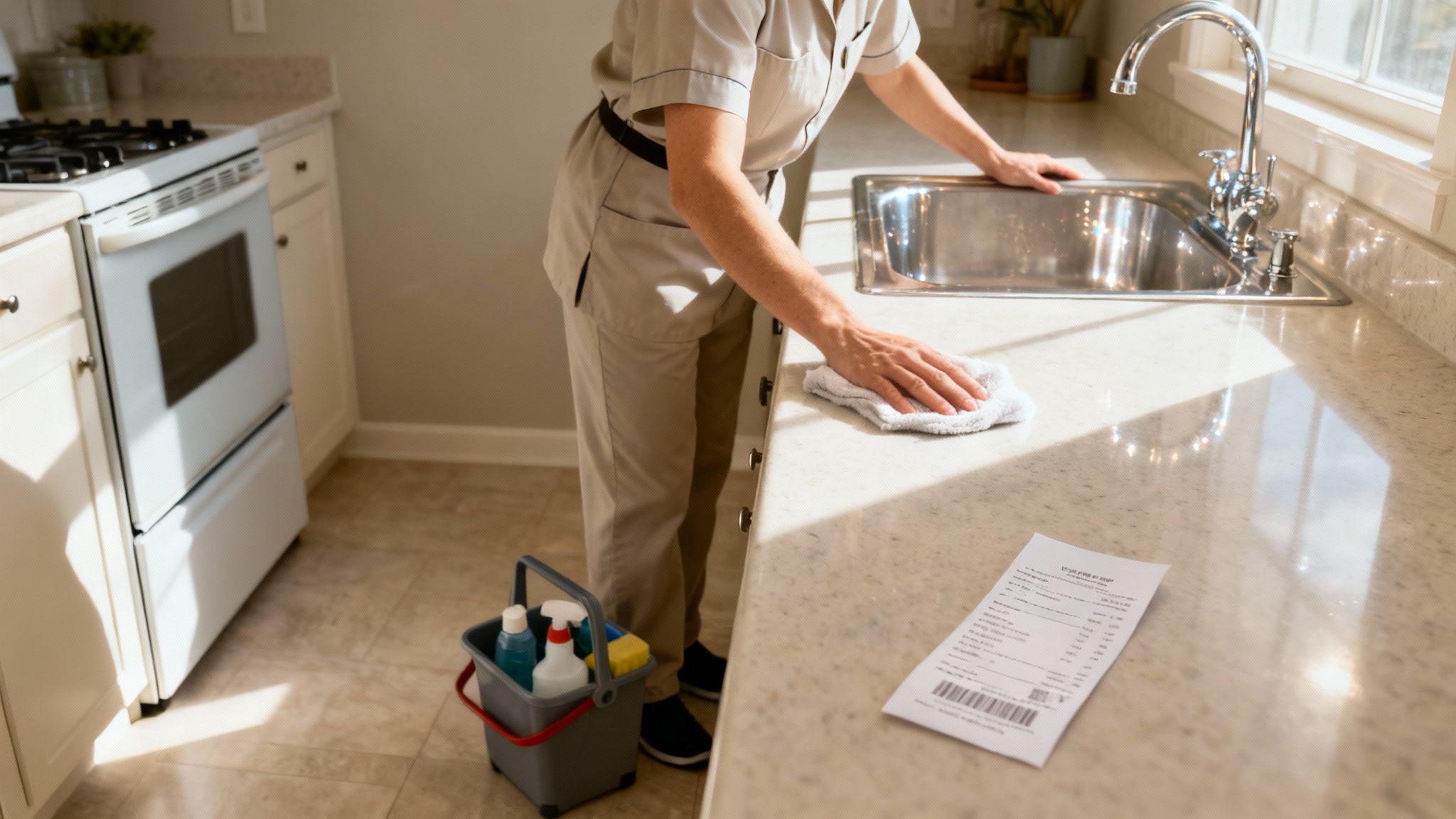
Let's be real-moving is a marathon. By the end, your energy is completely drained. Deciding whether to hire a pro isn't just about the money; it's about valuing your time, your sanity, and maximizing the chance of a full deposit return.
Common Madison Scenarios for Calling a Pro
Life in Madison comes with its own set of challenges, especially during a move. If you see yourself in any of these situations, hiring a professional cleaner like Shiny Go Clean might be your best bet.
You're a UW Student During Finals: It’s the end of the semester, and you're juggling final exams, projects, and packing up your downtown apartment. The last thing you have time or mental energy for is scrubbing an oven or detailing baseboards. A pro service means you can focus on grades while ensuring your apartment passes inspection.
You're Moving for a New Job: A cross-country or even cross-state move is stressful enough. Your focus should be on starting your new chapter, not on cleaning your old one. A professional move-out clean takes one huge task off your plate, giving you the freedom to look forward instead of backward.
You're Simply Exhausted: Packing is physically and emotionally draining. After you’ve moved all your furniture and belongings, the thought of a top-to-bottom deep clean can feel impossible. It’s okay to admit you’ve hit your limit and pass the baton to someone else.
In these cases, a move out cleaning in Fitchburg or Madison isn’t an expense-it’s a strategic move to save you time and stress when you need it most.
When a Professional Clean Is Almost Essential
Some cleaning challenges go beyond a simple lack of time or energy. Certain situations are so tough to handle on your own that a professional is practically a necessity to ensure you get your deposit back.
Think about these tough jobs:
Stubborn Pet Issues: We love our furry friends, but they can leave behind stubborn hair, dander, and odors that are tough to eliminate. A professional team has the right equipment, like high-powered vacuums and specialized techniques, to tackle pet-related messes that landlords are particularly sensitive to.
Seriously Grimy Kitchens: Years of cooking can leave behind a baked-on, greasy mess in the oven and on the stovetop. Getting these appliances back to their original shine can take hours of intense scrubbing with harsh chemicals. Professionals can do it faster and more effectively.
You Want Guaranteed Peace of Mind: Maybe you’re worried you’ll miss a spot, or perhaps your relationship with your landlord is a bit tense. Handing them a receipt for a professional cleaning service sends a clear message: you took your responsibilities seriously. It becomes incredibly difficult for them to dispute the cleanliness of the apartment.
Think of a professional move-out clean as an insurance policy for your security deposit. For a few hundred dollars, you can protect a deposit that might be worth $1,500 or more. The sparkling clean apartment and the professional invoice give your landlord virtually zero reason to make deductions.
When evaluating professional help, you might also need to clear out unwanted items. Consider if you need specialized assistance like professional junk removal services for large item disposal or extensive clear-outs, which can be another crucial step before the final cleaning.
At Shiny Go Clean, we understand what Madison landlords look for. We’ve helped countless renters in Monona, Middleton, and Verona get their full deposits back. We know about the dust that settles near the lakes and the grime that builds up in downtown apartments.
We handle the deep cleaning so you can focus on your move. If you're on the fence, we have a helpful guide that outlines some of the top signs it's time to call move out cleaners that can help you make a final decision.
Ready to take the stress out of your move and protect your deposit? Give Shiny Go Clean a call at (608) 292-6848 or email us at madison@shinygoclean.com. We’re here to help you end your lease on a high note.
Madison Security Deposit Questions We Hear All The Time
Even with the best move-out plan, a few questions always seem to pop up. Getting straight answers can make all the difference when you're trying to hand over your keys with confidence. Here are the ones we hear most often from renters right here in Madison, answered in plain English.
Think of this as your quick guide for those final hurdles. It’s all about knowing your rights and getting your deposit back without any confusion.
What Is "Normal Wear and Tear" in Wisconsin, Anyway?
This is the big one, and for good reason. The line between simply living in a place and actually damaging it can feel a little blurry. In Wisconsin, "normal wear and tear" is just the natural decline of a property from everyday use. Your landlord can't charge you for it.
So, how do you tell the difference?
Normal Wear and Tear: Think faded paint from sunlight, minor scuffs on the wall where your couch sat, or worn carpet in the main walkway. Loose grout in the bathroom tile that's happened over time also fits here.
Damage: This is different. A huge, unpatched hole from a TV mount, your toddler's crayon masterpiece on the wall, a deep gouge in the hardwood floor, or a cracked window-that's damage.
Basically, if it happened gradually just from living your life, it's wear and tear. If it was caused by an accident, carelessness, or something intentional, it counts as damage.
Can My Landlord Actually Charge Me for Painting?
Generally, no. Painting is almost always considered part of a landlord's cost of doing business. It's routine maintenance to get an apartment ready for the next person. After a year or two, walls naturally get minor scuffs and the paint loses its freshness. This falls squarely under normal wear and tear.
But there are a few exceptions. If you caused serious damage to the walls that goes way beyond simple touch-ups, you might be on the hook for the cost.
For example, if you painted a room a dark, dramatic color without permission and didn't paint it back to the original neutral, your landlord can absolutely charge you to repaint it. The same goes for walls covered in extensive scuffs, drawings, or holes that need more than a quick patch and a single coat of paint.
What if My Landlord Just Ghosts Me?
You've moved out, dropped off the keys, and sent your forwarding address. The 21-day deadline is getting closer, and all you've heard is crickets. It's frustrating, but it happens more than you'd think. The key is to stay calm and start building a paper trail.
If your calls and emails are going unanswered, it's time to get a bit more formal.
Write a Formal Letter: Draft a polite but firm letter. Remind your landlord of their legal duty to return your deposit or send an itemized list of deductions within the 21-day period required by Wisconsin law.
Send It via Certified Mail: This is the most critical step. Sending the letter by certified mail with a return receipt requested gives you legal proof that they received it. That little piece of paper is powerful evidence if you end up in small claims court.
State Your Intentions Clearly: In the letter, mention that if you don't hear back, you'll have no choice but to pursue the matter legally to get back the amount that was wrongfully withheld.
This formal approach often gets a landlord's attention fast. It shows them you're serious and you know your rights as a renter. It’s a simple, effective way to protect your money.
Feeling buried under your move-out to-do list? Let Shiny Go Clean take the final clean off your plate. Our professional move-out cleaning service is designed to meet the high standards of Madison landlords, giving you peace of mind and a much better shot at getting your full security deposit back. Book your move-out clean today!