How To Remove Grease From Cabinets: A Des Moines Homeowner's Guide
- Jan 25
- 12 min read
That sticky film on your kitchen cabinets is a frustration every Des Moines homeowner knows well-it’s just an unavoidable part of daily cooking. But the simplest method often works best: a few drops of dish soap in warm water applied with a microfiber cloth can cut through most daily grease, restoring that clean, smooth finish without harsh chemicals.
Why Your Kitchen Cabinets Feel So Sticky
That tacky layer on your cabinets isn't just annoying; it’s a magnet for dust, pet dander, and everyday grime. Every time you fry bacon, sauté vegetables, or simmer a sauce, tiny airborne grease particles settle on the surrounding surfaces. This is especially true for the cabinets directly above or next to your stove.
Over time, this nearly invisible mist builds up into a stubborn, sticky film that makes your whole kitchen feel less than clean. For busy families, especially in neighborhoods from West Des Moines to Ankeny, this buildup happens faster than you'd think.
The Science Behind The Grime
It’s a common problem for a reason. In family homes where cooking happens frequently, grease particles cling to cabinet surfaces, creating that signature sticky film. This buildup isn’t just an eyesore; it can cause real damage over time.
Statistics show that 68% of homeowners report kitchen cabinets as their top grease complaint area, and untreated buildup can lead to 25% faster surface degradation over five years. You can find more insights on the kitchen cleaner market on datainsightsmarket.com.
This degradation can dull the finish on wood, cause paint to yellow, and make laminate surfaces look permanently grimy. Knowing how to remove grease from cabinets isn't just about appearance-it's about protecting your investment.
To help you choose the right approach for your cabinets, here’s a quick rundown of common cleaning solutions.
Quick Guide To Cabinet Grease Removers
This table compares some of the most effective grease-fighting solutions, so you can pick the best one for your specific cabinet type and the level of grime you're dealing with.
Cleaning Solution | Best For | How To Use | Surfaces To Avoid |
|---|---|---|---|
Dish Soap & Warm Water | Daily wipe-downs and light, fresh grease. | Mix a few drops in warm water, wipe with a microfiber cloth, then rinse and dry. | None-safe for most sealed surfaces |
Vinegar & Water | Cutting through moderate, slightly sticky grease buildup. | Mix a 50/50 solution, spray on, let sit for a few minutes, then wipe clean. | Unsealed wood, natural stone |
Baking Soda Paste | Stubborn, caked-on grease spots and hardware. | Mix baking soda and water into a paste, apply, let sit, then gently scrub and wipe. | High-gloss finishes, delicate paint |
Commercial Degreaser | Heavy, old, and polymerized grease. | Follow product instructions carefully, spray, let sit, then wipe and rinse thoroughly. | Check label-some are harsh on wood |
Remember to always test any cleaner on a small, hidden spot first to make sure it doesn’t damage your cabinet’s finish.
From Daily Splatters To Caked-On Buildup
The real challenge begins when the grease ages. Fresh grease is relatively easy to wipe away, but once it has time to harden and collect dust, it becomes much more difficult to remove. This is where many homeowners run into trouble, often reaching for abrasive scrubbers or harsh chemicals that can cause permanent damage to their cabinet finish.
Throughout this guide, we'll walk you through the right methods for every situation. We will cover:
Gentle, everyday solutions for routine upkeep.
More robust DIY techniques for stubborn, years-old grime.
Tips for preventing grease buildup in the first place.
Whether you're tackling a quick cleanup or a major deep clean, you'll have a clear plan. And if the job feels too big, we're here to help. Shiny Go Clean provides expert deep cleaning services in Des Moines to restore your kitchen's sparkle without you lifting a finger.
Choosing The Right Cleaner For Your Cabinet Type
Not all cabinets are the same, and grabbing the wrong cleaner can do more harm than good-stripping a finish, dulling the paint, or even warping the wood. The real trick to getting grease off kitchen cabinets is to match your cleaning solution to the cabinet material itself. What works on a sleek laminate door in a downtown East Village apartment could easily damage the classic wood cabinets you’d find in a Johnston family home.
So, before you start scrubbing, take a second to figure out what your cabinets are actually made of. It’s a simple step that prevents a lot of headaches and costly mistakes down the line.
This flowchart is a great way to quickly see where you should start, based on how much grime you're dealing with.
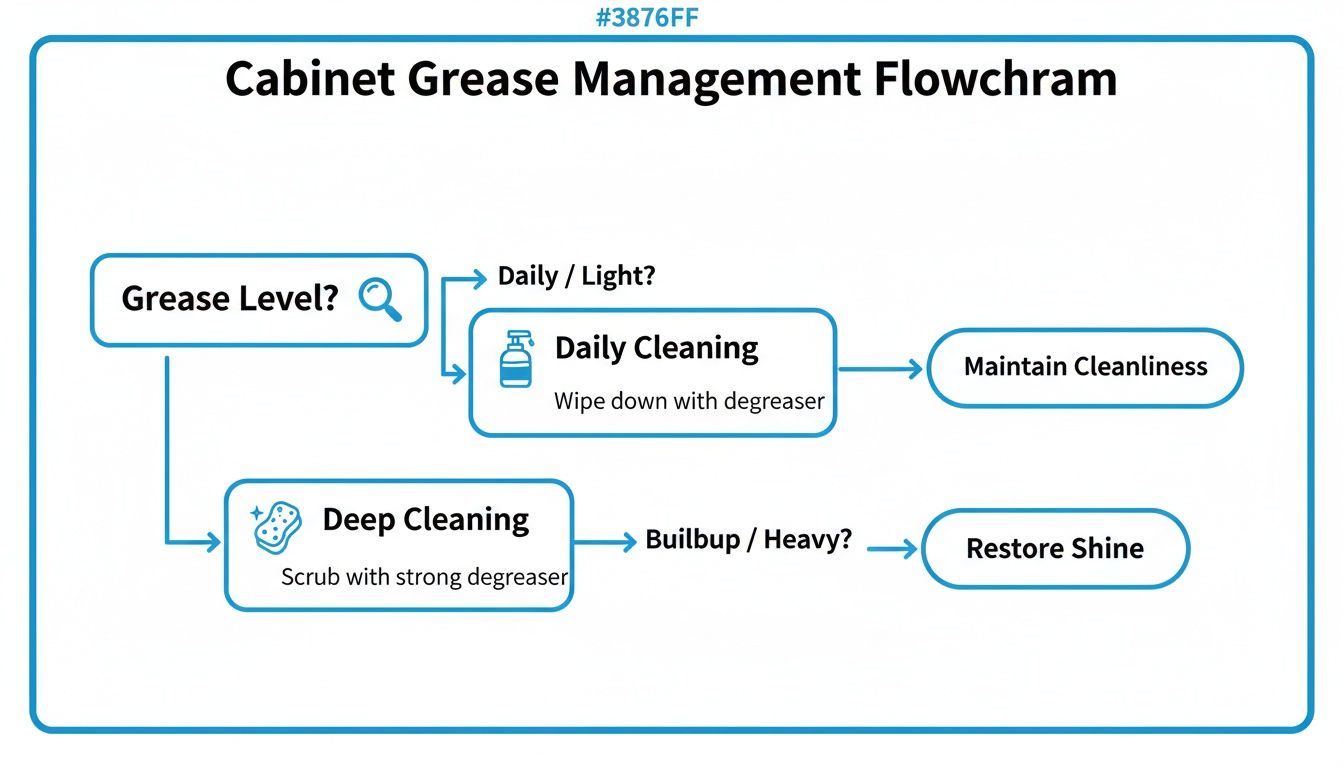
As you can see, the game plan is to start gentle for the daily stuff and only bring out the stronger solutions when you’re up against those stubborn, built-up layers.
For Classic Wood Cabinets
Wood cabinets bring a certain warmth to a kitchen, but they're also a bit sensitive. Their finishes, whether it's a stain, varnish, or wax, are easily damaged by anything too acidic or abrasive.
Your best bet here is usually the simplest. Just mix a few drops of a mild dish soap into a bowl of warm water. The solution is pH-neutral, so it’s strong enough to dissolve fresh grease without messing with the wood’s protective coat.
What to Use: A soft microfiber cloth dipped in the soapy water.
Technique: Always wipe with the grain of the wood. This helps avoid streaks and lets the cleaner get into the wood’s natural texture.
Crucial Final Step: After you clean a spot, go back over it with a different cloth dampened with plain water. Then, immediately dry everything with a clean towel. This prevents water spots and keeps moisture from seeping into the wood.
For Painted Cabinet Surfaces
Painted cabinets are a popular choice in homes across Waukee and West Des Moines for their clean, modern vibe. The main goal here is to lift the grease without dulling the sheen or, worse, chipping the paint.
A mild dish soap solution is a great place to start, but for those stickier grease spots, a diluted vinegar mix can give you a little more cutting power. You just have to make sure you dilute it enough to protect the paint.
Pro Tip: A 50/50 mix of white vinegar and warm water is usually safe for most modern, professionally applied cabinet paints. But always test it first on a small, hidden spot-like the inside of a cabinet door-to make sure it doesn’t cause any discoloration.
For Laminate And Metal Cabinets
If your kitchen has laminate or metal cabinets, you can afford to be a bit more assertive. These surfaces are non-porous and built to handle stronger degreasers without any trouble.
A vinegar and water solution works great here, cutting right through grease and leaving a nice, streak-free shine. For the really tough, baked-on stuff, you can even make a gentle scrubbing paste.
DIY Paste: Mix baking soda with just enough water to form a thick paste.
Application: Apply the paste directly to the greasy area and let it sit for a few minutes. This gives it time to break down the grime before you gently wipe it away with a soft cloth.
Many of these homemade solutions use simple ingredients you probably have on hand. If you want to learn more about why they're so effective, you might find our guide on natural cleaning products that actually work interesting.
A Practical Process for Degreasing Kitchen Cabinets
Ready to get started? Here’s a practical, hands-on process for degreasing your cabinets without the overwhelm. Following a systematic approach not only makes the job easier but also ensures you get that satisfyingly smooth, non-sticky finish you’re aiming for.
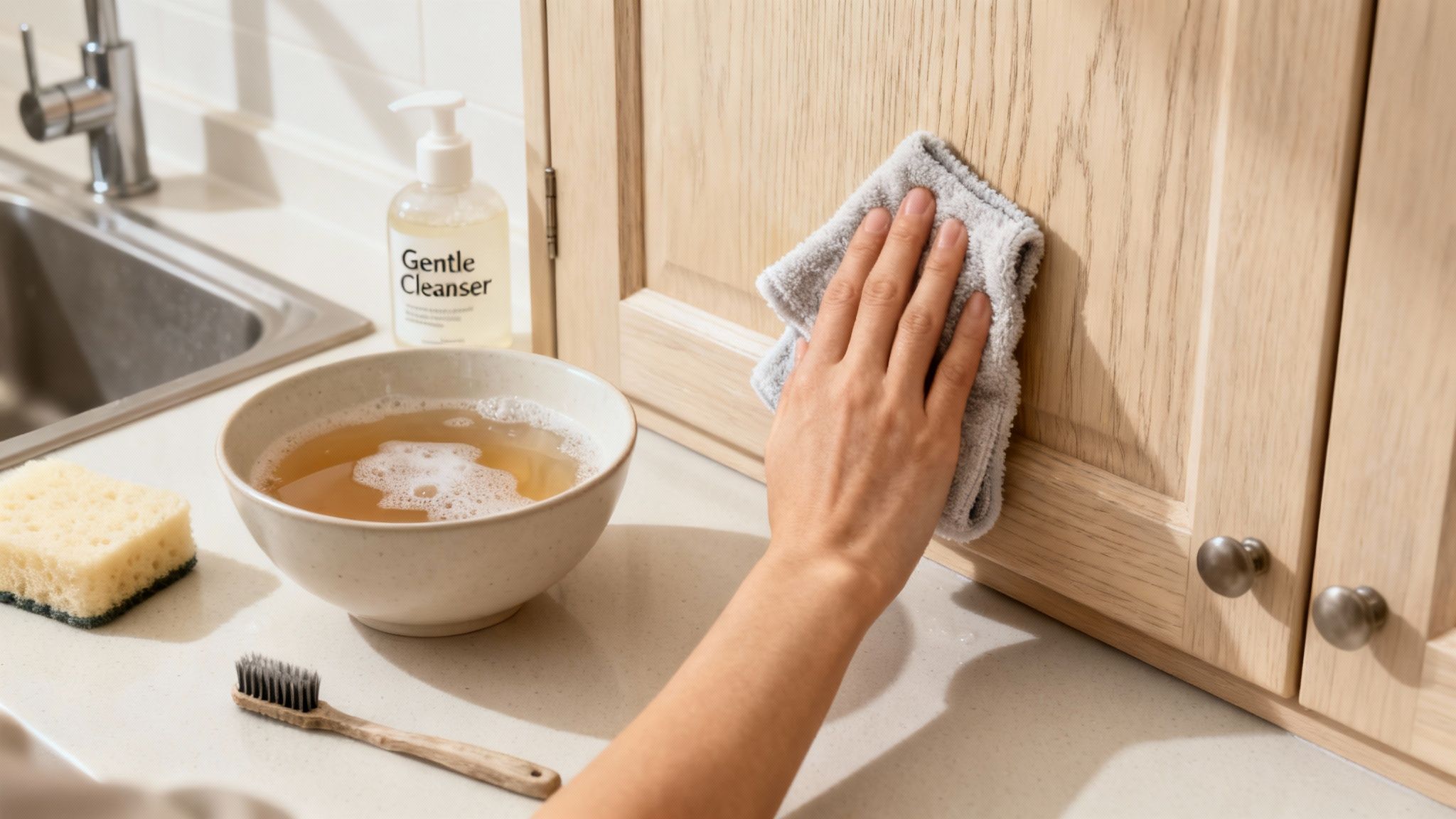
This is the same method our Shiny Go Clean teams use to deliver spotless, consistent results in homes across the Des Moines metro. It’s all about working smart, not just hard.
Prepare Your Space and Gather Supplies
First things first, get your workspace ready. This small step saves a ton of cleanup time later. Clear everything off your countertops and lay down an old towel or a few sheets of newspaper to catch any drips or spills.
Next, gather your simple but effective toolkit. You don’t need a lot of fancy equipment to get professional-level results.
Your Chosen Cleaner: Whether it's the mild dish soap solution, a vinegar mix, or a commercial degreaser.
Microfiber Cloths: Have at least three on hand-one for cleaning, one for rinsing, and one for drying.
A Soft Sponge: For any spots that need a little extra attention without being abrasive.
An Old Toothbrush: This is your secret weapon for getting into the detailed areas around handles, hinges, and cabinet trim.
Having everything within arm's reach means you can stay focused on the task instead of running back and forth.
Work in Small, Manageable Sections
The biggest mistake homeowners make is trying to tackle the entire kitchen at once. That approach is overwhelming and often leads to missed spots or streaky finishes. Instead, break the job down.
The Professional Approach: Focus on one or two cabinet doors at a time. This allows you to complete the full clean-rinse-dry cycle on a small area before moving on, ensuring a flawless, even result without cleaner drying on the surface.
Apply your cleaning solution to your cloth or sponge-not directly onto the cabinet-and gently wipe the surface. If you have wood cabinets, always move with the grain to help lift grime from the texture of the wood. Use your toothbrush to carefully scrub around hardware where grease loves to hide.
The Non-Negotiable Rinse and Dry
After you’ve cleaned a section, the rinse is absolutely crucial. This is the step that removes any leftover cleaning residue, which is often the culprit behind that lingering sticky feeling even after you've scrubbed.
Take a fresh, clean cloth, dampen it with plain water, and wipe down the area you just cleaned. You might need to rinse your cloth and wipe the surface a second time to remove all traces of the cleaner.
Finally, immediately dry the cabinet completely with your third, perfectly dry microfiber cloth. This prevents water spots from forming and leaves a polished, streak-free shine. It also protects wood cabinets from potential moisture damage, a common concern after dealing with muddy floors during the thaw season.
This systematic process is how our pros at Shiny Go Clean achieve that signature clean look. If the job feels like too much, we’re always ready to help. Give us a call at (515) 446-9726 to get your kitchen looking its best.
Tackling Stubborn Grease And Preventing Future Buildup
Every kitchen has them-those extra-sticky, stubborn spots, usually on the cabinets right above the stove where grease and heat conspire. When a simple cleaning solution isn't cutting it, it’s time for a slightly stronger, yet still gentle, approach.
Gentle Solutions For Tough Grime
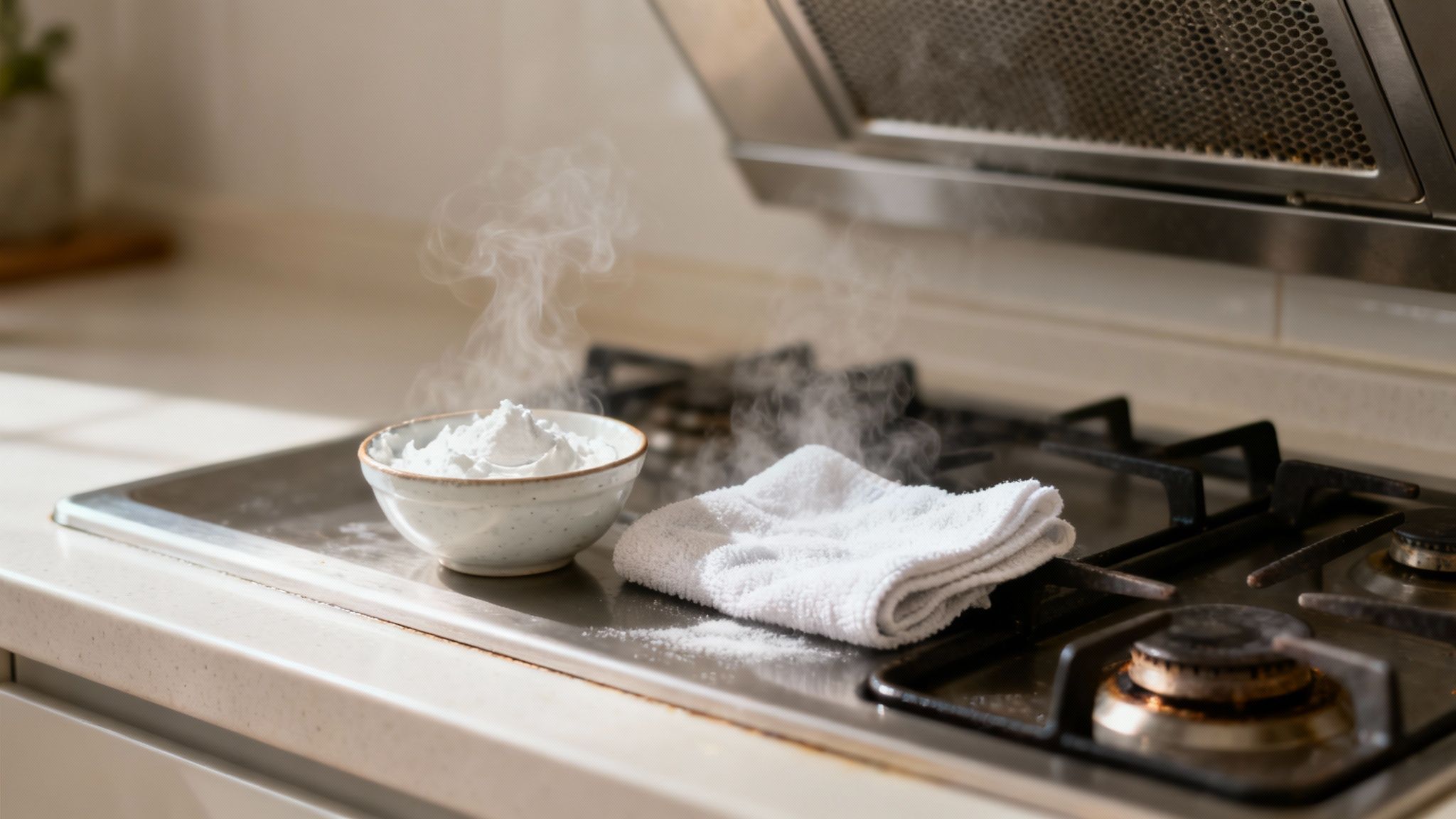
For those hardened layers of grime, a simple paste made from baking soda and water offers gentle abrasive power. It can lift thick grease without scratching most cabinet surfaces. Just apply the paste, let it sit for a few minutes to work its magic, and then gently wipe it away with a damp microfiber cloth.
Another pro tip is to use a cloth soaked in very hot water (be careful!) to warm and soften the hardened grease before you even start scrubbing. This heat helps loosen its grip, making your job much easier.
If you're also dealing with a greasy stovetop, check out our guide on cleaning a stainless steel stovetop like a pro for more helpful tips.
For renters and homeowners in Des Moines prepping for move-ins or outs, this kind of buildup can slash a property's appeal by 30% according to realtor surveys. Our teams at Shiny Go Clean specialize in these situations, using proven baking soda paste methods that lift grime and neutralize odors, extending cabinet life. Learn more about cost-effective grease removal solutions on wasteinmotion.com.
The Best Strategy Is Prevention
While knowing how to remove grease from cabinets is important, preventing it in the first place saves you a lot of time and effort. Making a few small habits part of your regular routine can stop heavy buildup before it even starts.
The single most effective preventative measure is to always use your range hood fan when cooking. It’s designed to pull grease particles, steam, and cooking odors out of the air before they have a chance to settle on your cabinets.
Even with the fan running, some grease will escape. Here are a few more easy habits to adopt:
Wipe Down After Frying: After cooking something particularly greasy, give the cabinets nearest the stove a quick wipe-down with a damp cloth. It only takes a minute.
Regular Light Cleaning: Incorporate a quick cabinet wipe into your weekly kitchen cleanup routine. This stops the grease from ever getting to the stubborn, sticky stage.
Cook with Lids: When possible, cover your pots and pans. This contains splatters and dramatically reduces the amount of grease that escapes into the air.
These simple steps are perfect for busy families in Urbandale or Johnston who want a clean kitchen without needing a major deep cleaning project every few months.
When To Call A Professional Cleaner In Des Moines
DIY methods are fantastic for day-to-day upkeep, but let's be honest-sometimes life gets in the way, or the job is just too big to handle alone. That’s when calling a professional cleaner in Des Moines is the smart, stress-free move.
We see it all the time. A homeowner spends hours scrubbing away, only to be left with a sticky, uneven finish that just doesn’t look right. If you're facing years of caked-on grease, prepping for a move out cleaning in West Des Moines, or simply want to reclaim your weekend, a professional service is your best bet.
A team like Shiny Go Clean tackles the entire kitchen, ensuring a consistent, deep clean from the cabinet faces to the backsplashes. It’s a comprehensive approach that restores your kitchen's sparkle without you having to lift a finger.
When The Job Is Too Big To Handle
Sometimes, the buildup is more than a simple wipe-down can fix. It might be time to call us if you're dealing with:
Years of Neglect: A thick, sticky layer of polymerized grease that simple household cleaners just won't touch.
Move-Out Cleaning: You need the property spotless to get your security deposit back, and there's no room for error.
Time Constraints: You're a busy parent or professional who needs a clean home without sacrificing precious family time.
Health and Safety: You want a deeply sanitized kitchen without the physical strain of a major cleaning project.
For realtors and property managers in Waukee and Altoona, a professional clean makes a property instantly market-ready. For new parents, it’s about creating a healthy, welcoming home without the hassle.
In major markets like Iowa, 70% of property managers rely on professional turnover services to meet strict standards. Shiny Go Clean's flat-rate model wins trust, with experienced pros consistently delivering spotless results. You can read more about the growth of safe, effective cleaning services on openpr.com.
We offer straightforward deep cleaning and move-out services with transparent, flat-rate pricing. You get a pristine kitchen without any surprises. To see what a detailed service includes, you can review the ultimate professional deep cleaning checklist we use for homes right here in Des Moines.
Ready to hand over the scrubbing? Call us at (515) 446-9726 to get a quote.
Answering Your Cabinet Cleaning Questions
We get a lot of calls from folks in Des Moines about the best way to handle that stubborn kitchen cabinet grease. It’s a super common problem, and knowing how to tackle it can save you a ton of time and elbow grease. Here are a few of the questions we hear most often, along with our straightforward advice.
Can I Really Use Vinegar on All My Kitchen Cabinets?
Vinegar is a fantastic natural degreaser, but it's not a one-size-fits-all fix. It works wonders on most laminate and painted cabinets, especially when you dilute it with an equal amount of warm water.
However, you need to be careful with wood cabinets. Because vinegar is acidic, it can dull or even damage the finish over time, particularly if the wood is unsealed or has a wax coating. A much safer bet for wood is a simple, pH-neutral cleaner-think a few drops of mild dish soap in warm water.
No matter what you're cleaning, always test a new solution on a small, hidden spot first. The inside of a cabinet door is perfect for this. It’s a simple step that ensures you won’t cause any accidental damage.
How Often Should I Be Cleaning My Kitchen Cabinets?
Honestly, this all comes down to how you cook. If you're frying or cooking with a lot of oil every day, a quick wipe-down of the cabinets closest to your stove once a week is a great habit. It stops that sticky film from ever getting a foothold.
For a deeper, all-over clean, we usually recommend doing it seasonally, or about every 3-4 months. This keeps grease from hardening into that tough, tacky layer that’s such a pain to remove. For busy families here in Des Moines, setting up a recurring house cleaning can take this chore right off your plate.
What’s the Best Tool for Scrubbing Cabinets Without Scratching Them?
A soft microfiber cloth is your best friend for this job. It's designed to grab onto grease and dirt particles without being abrasive, which is exactly what you need to protect your cabinet’s finish.
For those extra stubborn spots that need a bit more convincing, a non-scratch sponge or a soft-bristled brush works perfectly. An old toothbrush is great for getting into tight corners and around hardware. Just be sure to avoid steel wool, scouring pads, or anything gritty-they will leave permanent scratches on almost any cabinet surface. Remember to let the cleaning solution do the heavy lifting, not aggressive scrubbing.
Why Do My Cabinets Still Feel Sticky After I’ve Cleaned Them?
That frustrating sticky feeling usually points to one of two things: either there’s still a little grease residue left behind, or a film from the cleaner wasn’t fully rinsed off. The fix is pretty simple.
First, make sure your cleaning solution has had enough time to work. After you've wiped the grime away, the most important step is to rinse the surface thoroughly with a separate, clean cloth dampened with just plain water. Go over it a couple of times, rinsing your cloth in between wipes.
Finally, dry the cabinet completely with a fresh, dry microfiber cloth. This final rinse-and-dry combo is the secret to getting a truly smooth, non-sticky finish and prevents water spots, which is especially helpful after dealing with Iowa winter slush and salt.
If you’ve tried everything and are still struggling, or you’d rather spend your weekend enjoying Des Moines than scrubbing cabinets, Shiny Go Clean is here to help. We provide reliable, high-quality deep cleaning services that restore the shine to your kitchen. Book your cleaning in 60 seconds and let our pros handle the grime for you.