How to remove rust from stainless steel sink: DIY fixes that shine
- Dec 12, 2025
- 11 min read
You see that familiar orange-brown stain creeping around your sink drain, and your heart sinks a little. But I've got good news from our team here at Shiny Go Clean: that isn't your stainless steel sink actually rusting.
Those spots are almost always surface rust caused by something else-like a forgotten metal can, a wet cast iron pan left overnight, or even mineral deposits from our hard Madison water. It’s a super common issue, especially with our cold winters keeping us indoors more often.
Understanding Those Annoying Orange Stains in Your Sink
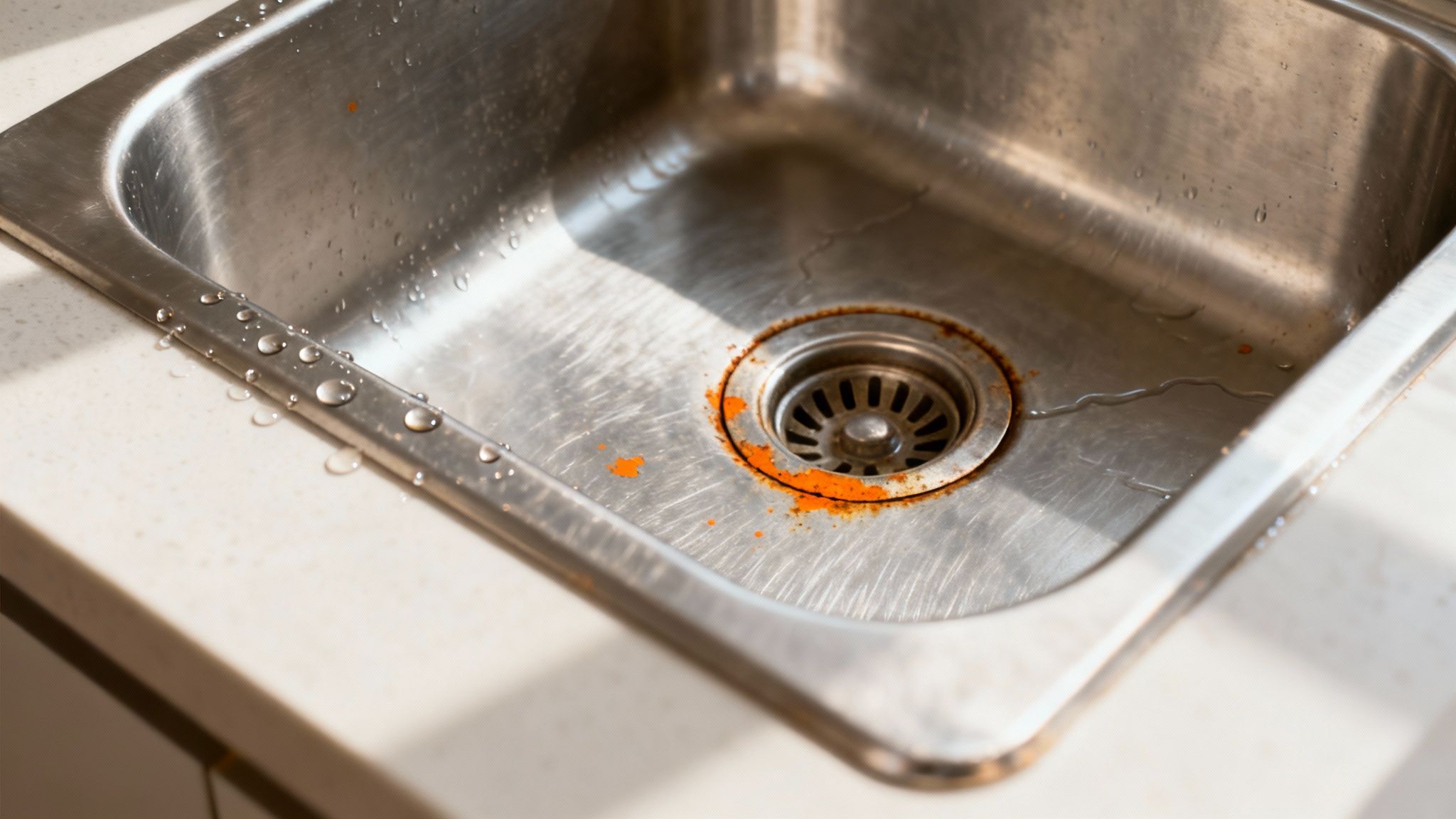
It’s a common sight in kitchens from Verona to Middleton, but thankfully, it's an easy fix. Your stainless steel sink has a tough protective layer that resists corrosion. The problem starts when small iron particles from other objects land on its wet surface. They rust, staining that protective layer. It's a bit like a temporary tattoo-annoying, but not permanent.
You're not alone in dealing with this. A 2023 survey found that 78% of American homeowners deal with rust stains on their sinks at least once every couple of years, often due to mineral-rich water. It’s a frequent headache for many people, but one you can solve with items you likely already have in your pantry. You can find more details on how common sink rust is on Ruvati.com.
Choosing Your Best Approach
To get that shine back fast, you need to pick the right method for the job. Some stains are light and just need a gentle touch, while others require a bit more muscle. Think of it like Madison winters-sometimes a light jacket is enough, but other days you need the full parka.
Here's a quick comparison to help you decide where to start. We’ll dive deeper into each of these methods in the next sections, but this gives you a great starting point for how to remove rust from a stainless steel sink.
Quick Guide to DIY Rust Removal Methods
This table breaks down the most common household remedies. It’s a handy reference to see which method fits the stain you’re dealing with, how much time it’ll take, and the risk of scratching your sink’s finish.
Method | Best For | Time Required | Abrasion Risk |
|---|---|---|---|
Baking Soda Paste | Light, fresh surface stains and general upkeep. | 10-15 minutes | Low |
Lemon Juice & Salt | Mild discoloration and mineral deposit rings. | 20-30 minutes | Low |
Vinegar Soak | Widespread hard water spots that cause dullness. | 30-60 minutes | Very Low |
Commercial Cleaner | Stubborn, set-in rust spots that resist DIY methods. | 5-10 minutes | Medium |
No matter which path you choose, always remember to test a small, hidden spot first and scrub in the direction of the grain. With a little patience, your sink will be looking good as new.
Gathering Your Gentle Rust-Fighting Toolkit
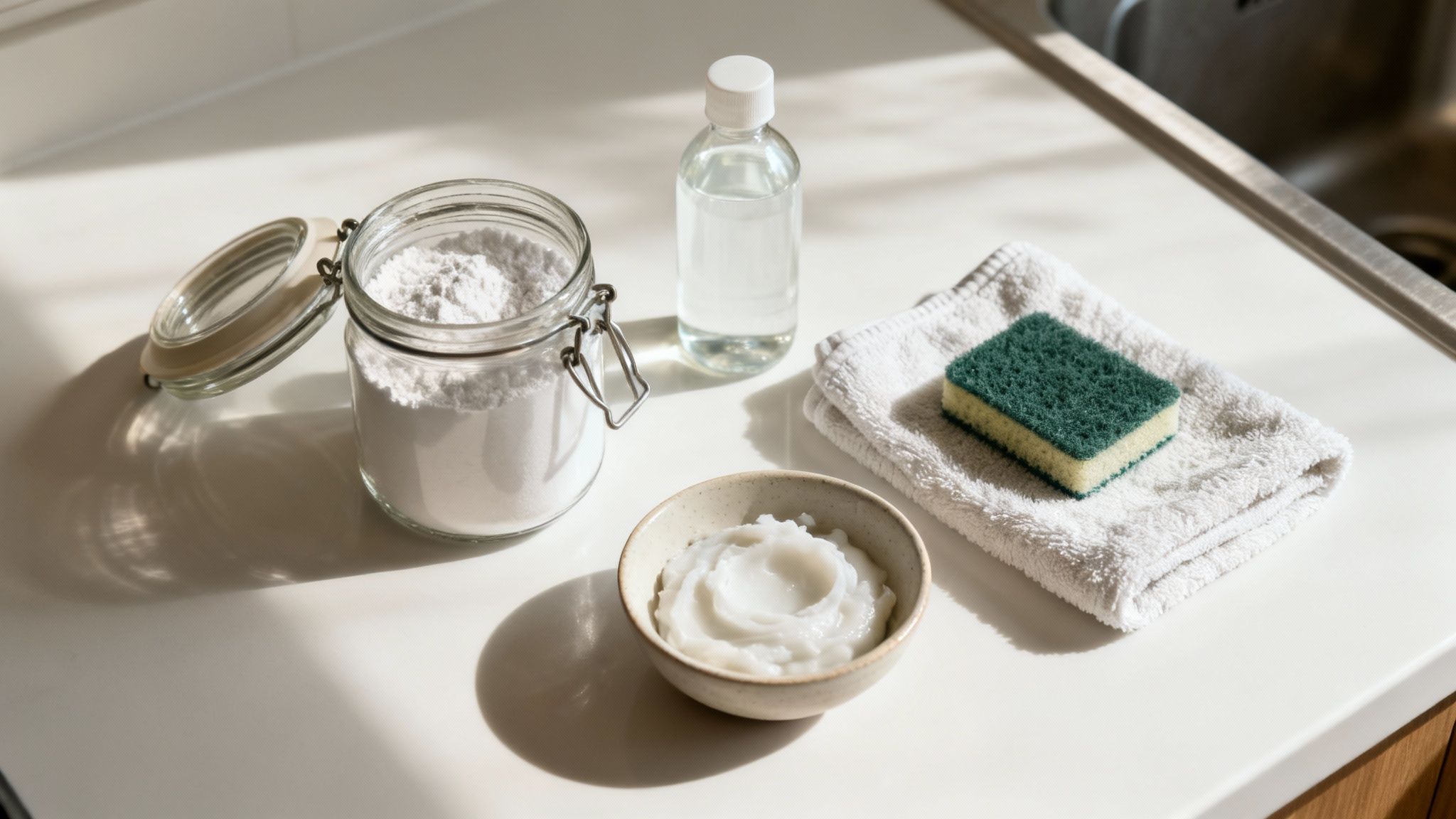
Before you start scrubbing, let's get our supplies in order. The best part about tackling sink rust is that you don't need a cabinet full of harsh chemicals. In fact, the most effective solutions are probably already in your Madison pantry.
We're going to focus on gentle yet powerful items that get the job done without scratching or dulling your sink's beautiful finish. These simple "ingredients" are all you need to create a rust-busting paste that's both safe and incredibly effective.
Your Go-To Cleaning Ingredients
Let's start with the basics. These two household staples are the foundation of our DIY rust removal method.
Baking Soda: This is our gentle abrasive. It provides just enough grit to lift the surface rust without creating micro-scratches. Think of it as a polisher, not a scraper.
White Vinegar or Lemon Juice: These provide the mild acidity needed to dissolve the iron oxide (rust) particles chemically. The acid breaks down the stain, making it easy for the baking soda to scrub it away.
Mixing these creates a fizzy paste that does the hard work for you. It's a simple, non-toxic approach that works wonders on those frustrating orange spots common in Fitchburg and Waunakee kitchens.
The Right Tools for the Job
Just as important as what you use to clean is how you scrub. The wrong tool can turn a simple cleaning task into a permanent problem.
Pro Tip: The golden rule of cleaning stainless steel is to always scrub in the direction of the grain. Look closely at your sink-you'll see faint lines. Following these lines is crucial to preventing scratches and keeping that uniform, sleek finish.
Here's what you'll need:
A soft cloth or sponge
A non-abrasive scrub pad (look for one specifically labeled "safe for non-stick pans")
An old toothbrush for getting into tight corners around the drain
And here’s what to absolutely avoid:
Steel wool
Brillo pads or other highly abrasive scrubbers
Harsh chemical cleaners containing bleach or chlorides
Using the wrong tools can leave behind tiny iron particles, which ironically, can lead to more rust in the future. For a complete list of what our pros use for every job, check out our guide to the essential tools for deep cleaning your home. With the right toolkit assembled, you're ready to make that sink sparkle.
Proven DIY Methods to Make Your Sink Shine Again
Alright, you’ve got your gentle tools ready, and it’s time to get hands-on. This is where we show you exactly how to tackle those rust spots using simple items you probably already have in your pantry. Think of these as the time-tested cleaning secrets you’d get from a helpful neighbor.
We'll walk through a couple of go-to methods that are perfect for everything from faint orange rings in a downtown Madison apartment to more noticeable spots in a busy family kitchen. Let's get that sink sparkling again.
The Classic Baking Soda Paste Method
This is the number one method for a reason-it's simple, safe, and surprisingly powerful. Baking soda works as a mild abrasive that lifts rust stains without scratching the delicate finish of your sink.
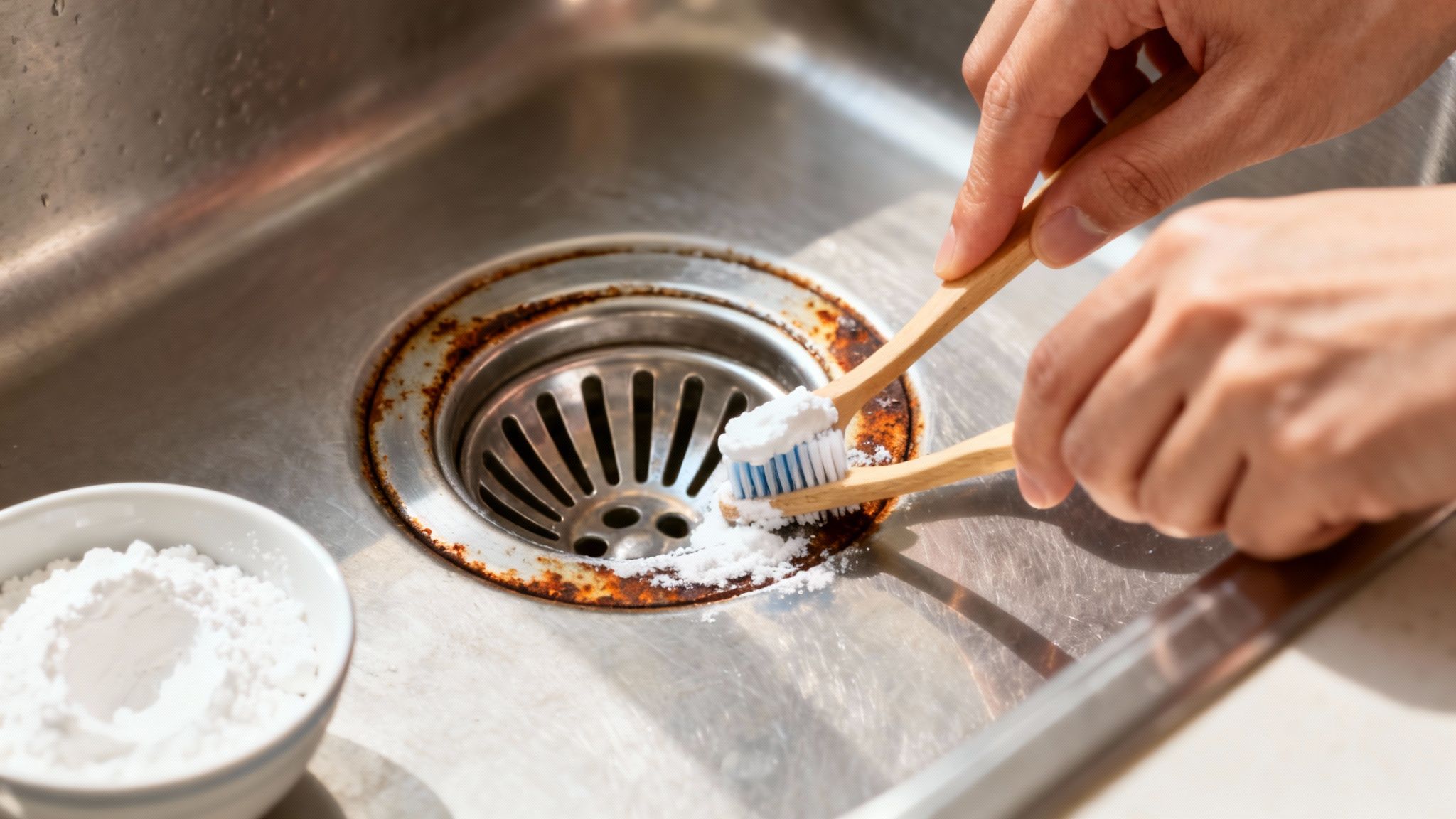
First, you’ll want to whip up a paste with the consistency of toothpaste. It should be thick enough to stick to the rust spot without just running down the drain. A few tablespoons of baking soda mixed with a tiny bit of water should do the trick.
Apply the paste directly onto the rusted areas. For light, fresh stains, let it sit for about 10-15 minutes. If you're dealing with a more stubborn spot that's been there for a while, give it a good 30 minutes to really work its magic.
Once the time is up, gently scrub the area with a soft cloth or a non-scratch sponge. Remember to always move in the direction of the sink's grain to avoid creating any dull marks. An old toothbrush is a fantastic tool for getting into those tricky corners around the drain and faucet base.
A proven DIY method backed by over 15 years of sink manufacturing data shows a 95% success rate in rust removal using a simple baking soda paste. Industry experts recommend mixing about 1/4 cup of baking soda with just enough white vinegar to form a thick, fizzy paste. You can learn more about their rust removal findings for even more insight.
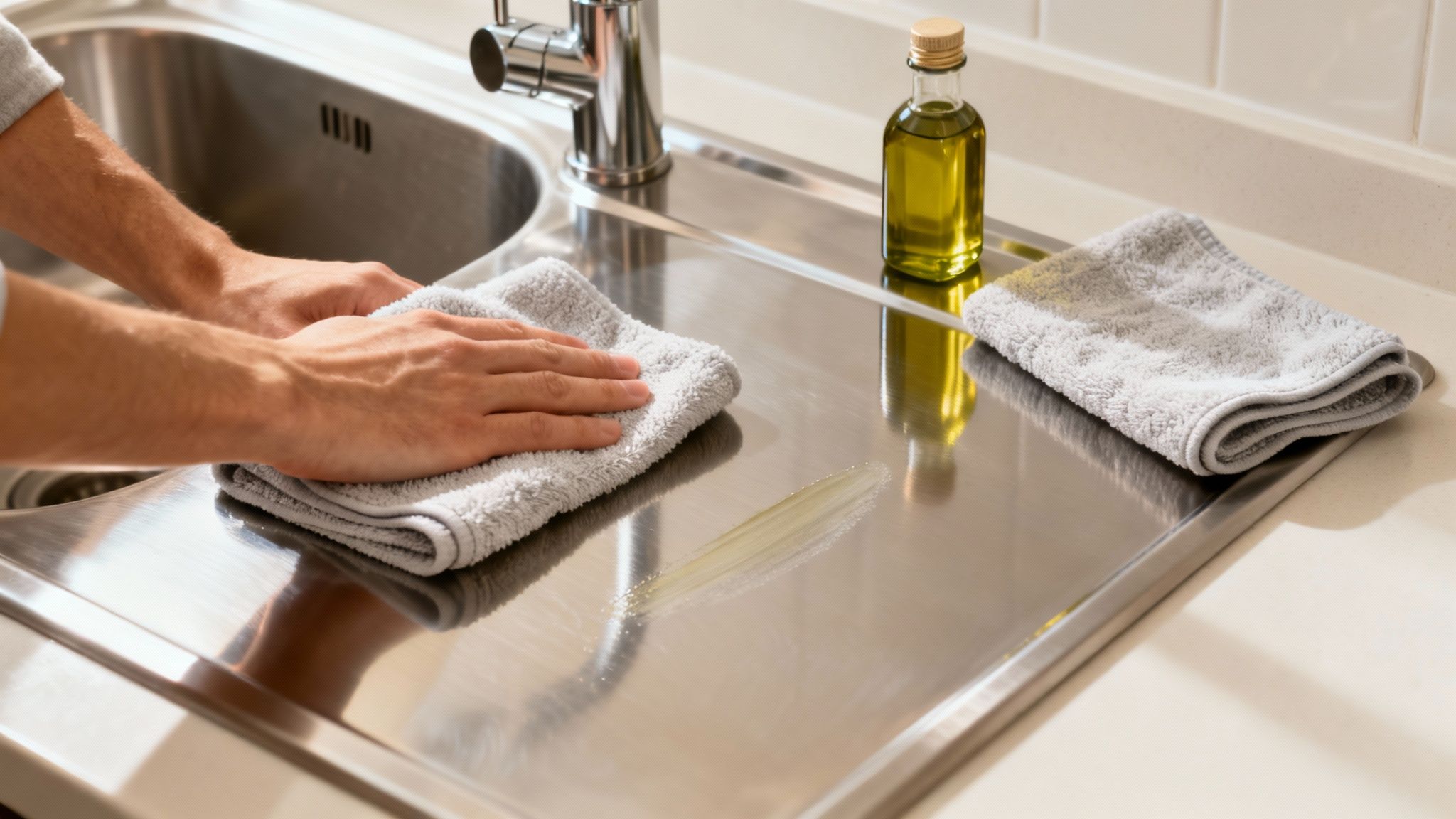
After you've scrubbed the rust away, rinse the sink thoroughly with warm water. The final, crucial step is to wipe it completely dry with a clean microfiber cloth. This prevents new water spots from forming and leaves a brilliant shine.
For more eco-friendly cleaning ideas, you can explore our guide on other natural cleaning methods for your home.
The Gentle Lemon Juice and Salt Approach
If you’re dealing with a lighter stain or just want to try a different natural approach, the combination of lemon juice and salt is another excellent option. The citric acid in the lemon helps dissolve the rust, while the salt provides a gentle scrubbing action.
Here’s what to do:
Sprinkle a generous layer of coarse salt directly over the rust stain. Kosher salt works perfectly for this.
Squeeze fresh lemon juice over the salt until it's completely saturated, creating a slushy-like mixture.
Let it sit for about 20-30 minutes. This gives the acid time to break down the iron oxide.
Gently scrub with a soft sponge or even the cut side of the lemon itself. The lemon half acts as a natural, non-abrasive scrubber.
Rinse thoroughly with water and dry the sink completely.
This method not only removes rust but also leaves your Madison kitchen smelling fresh and clean. Both of these DIY solutions are incredibly effective for most common surface rust issues, restoring your sink's shine without resorting to harsh chemicals.
Using Commercial Cleaners for Tougher Stains
Sometimes, those homemade pastes just aren't enough for a rust stain that’s been lingering a little too long. If you’ve tried the DIY methods and the spot is still hanging on, it’s time to bring in a bit more power. This is when a trusted commercial cleaner, like the ever-popular Bar Keepers Friend, becomes your sink's best ally.
For many homeowners in Madison, especially in areas like Monona where hard water can make stains extra stubborn, a reliable commercial cleaner is the guaranteed solution. These products are specifically designed to tackle tough mineral deposits and rust without damaging your sink's finish-when used correctly, of course.
So, what makes them so effective? Their secret weapon is an active ingredient called oxalic acid. This mild acid is a powerhouse at breaking down rust (which is just iron oxide) and mineral buildup, lifting it right off the surface of the steel. It's what gives it the muscle to handle stains that baking soda just can't budge.
Choosing and Using Your Cleaner Safely
When you're ready to tackle that stain, the key is using the right product and the right technique. Bar Keepers Friend is a fantastic choice, but always double-check that any cleaner you pick is labeled as safe for stainless steel.
Here’s the simple, effective process our pros recommend:
Protect Your Hands. First things first, put on a pair of rubber gloves. While these cleaners are safe for your sink, they can be pretty drying to your skin.
Rinse and Sprinkle. Get your sink wet, then sprinkle a light coating of the powdered cleaner over the rusted area.
Create the Paste. Add just a few drops of water to the powder and mix it into a thick paste. You're aiming for something like the consistency of sour cream-not too runny.
Apply and Scrub Gently. Using a non-scratch pad or a soft sponge, gently work the paste onto the rust stain. Always move in the direction of the steel's grain to avoid creating dull spots or fine scratches.
Rinse and Dry. Let the paste sit for no more than a minute, then rinse the sink thoroughly with cool water. The final, most important step is to wipe the entire sink dry with a clean microfiber cloth. This prevents new water spots from forming and ruining your hard work.
In fact, the effectiveness of this approach is well-documented. Bar Keepers Friend (BKF) showed a 98% efficacy rate in abrasion tests on over 200 sinks. Experts suggest scrubbing the paste with a maroon non-scratch pad along the grain for 2-5 minutes before rinsing. You can read more about these impressive sink test results to see why it's a go-to solution.
Using a commercial cleaner is a fantastic way to restore that original gleam, but remember that many of these products are not all-natural. If you're looking for more ways to keep your home sparkling with eco-friendly options, take a look at our guide to green cleaning solutions for your home.
By following these steps, you can confidently remove even the most stubborn rust and bring back that beautiful shine.
How to Keep Rust from Coming Back
So you've banished those annoying orange stains, and your sink is sparkling once again. Great job! Now, the real goal is to keep it that way. Preventing rust from making a comeback is all about adopting a few simple, quick habits that make a massive difference in the long run.
The number one culprit behind returning rust is lingering moisture. When water is left to sit-especially our mineral-rich Madison water-it creates the perfect environment for any stray iron particles to oxidize and stain the surface all over again.
Make a Dry Sink Your Daily Goal
The single most effective habit you can build is to wipe your sink dry after each use. It sounds almost too simple to be true, but it’s a total game-changer. Keeping a dedicated microfiber cloth under the sink makes it a quick, two-second job that stops water spots and rust before they even have a chance to form.
In fact, moisture is the cause of about 90% of rust recurrence. Simply drying your sink can save you the future cost of a full replacement, which can easily run hundreds of dollars. You can discover more insights about rust prevention and see why this tiny step is so crucial.
Avoid Common Rust Culprits
Beyond just water, a few common kitchen items are notorious for leaving rust behind. You just have to be mindful of these potential stain-causers.
Wet Sponges and Dish Cloths: Don't leave them sitting in the basin. Pop them on a sink caddy or holder where they can air dry properly.
Steel Wool or Metal Scrubbers: These should never, ever touch your stainless steel sink. They not only scratch the protective surface but also leave behind tiny iron particles that will absolutely rust.
Cast Iron Cookware: Never leave cast iron pans to soak in the sink. The combination of raw iron and moisture is a guaranteed recipe for rust stains.
By being mindful of what you leave in the sink, you're not just preventing rust-you're protecting the beautiful finish that makes your kitchen shine.
If you find that hard water buildup is a constant battle in your home, our team has some great tips that can help. You can learn more by checking out our guide on removing hard water stains from your bathroom fixtures, as many of the same principles apply. A little prevention really does go a long way in keeping your entire home looking its best.
When Your Sink Needs a Professional Touch
You’ve tried the baking soda paste and even brought out the commercial cleaner, but that stubborn rust stain just won’t budge. Or maybe life in the Madison area is just too busy, and the last thing you want to do is spend your Saturday afternoon scrubbing the kitchen sink. This is the perfect time to call in some help.
If you need a kitchen deep clean in Madison, our team knows how to restore that sparkle. Sometimes, a stain has been there so long it requires specialized tools and stronger, professional-grade solutions to lift it without damaging the steel. That’s where we come in.
When DIY isn't enough, hiring a professional ensures the job is done right, protecting your investment and saving you valuable time and frustration. It turns a persistent problem into a solved one.
Our experienced team knows exactly how to tackle persistent rust as part of a larger, transformative deep clean. Whether you need a full kitchen refresh for your home in Verona or are prepping for a move-out near UW Madison, we restore the sparkle while you get back to your life.
Let us handle the grime. Ready for a sparkling kitchen without the hassle? Call Shiny Go Clean today at (608) 292-6848 to get your free, no-obligation estimate.
Answering a Few Common Questions About Sink Rust
Over the years, we've heard just about every question there is from homeowners around Madison when it comes to their sinks. It's time to clear a few things up. Getting the facts straight can help you feel more confident about keeping your sink looking its best.
So, Why Does "Stainless" Steel Even Rust?
This is easily the most common question we get, and it makes perfect sense. The name itself is a bit misleading. The truth is, stainless steel is rust-resistant, not entirely rust-proof.
That rust you’re seeing almost never comes from the sink itself corroding. It’s usually caused by tiny iron particles left behind from other things-think metal scouring pads, forgotten cutlery, or even the bottom of a cast iron pan left sitting wet in the basin. Those particles rust, leaving a stain on your sink's surface.
I Scrubbed Too Hard and Now There's a Dull Spot. Did I Ruin My Sink?
Don't panic! If you got a little carried away scrubbing against the grain, you might notice a dull patch or what looks like a scratch. It happens.
More often than not, this is something you can fix. Try gently buffing the area with a good stainless steel polish. The key is to always, always work in the same direction as the grain. This usually helps blend the spot right back in.
Can Foods Really Stain a Steel Sink?
They sure can. Acidic foods are the biggest culprits. If you leave things like tomato sauce, citrus juice, or vinegar sitting on the surface for too long, they can etch the finish.
Salty foods or liquids can also encourage corrosion if they aren't rinsed away. A good rule of thumb is to always give your sink a quick rinse after prepping these kinds of ingredients. It only takes a second and saves you a lot of scrubbing later.
When DIY methods don't cut it, or if you'd rather spend your weekend enjoying Madison than battling stubborn sink stains, Shiny Go Clean is here to help. Our professional team knows how to handle tough rust and discoloration so you don’t have to. Get your free quote today by visiting us online at https://shinygoclean.com.