Why Are Your Floors Sticky After Mopping and How to Fix It
- Dec 28, 2025
- 11 min read
You've just finished mopping, expecting clean, smooth floors. Instead, your feet stick with every step. Sound familiar? That tacky, frustrating residue is a surprisingly common problem here in Madison, and it's usually not from leftover dirt-it’s from the cleaning process itself.
Why Your Floors Feel Tacky After Cleaning
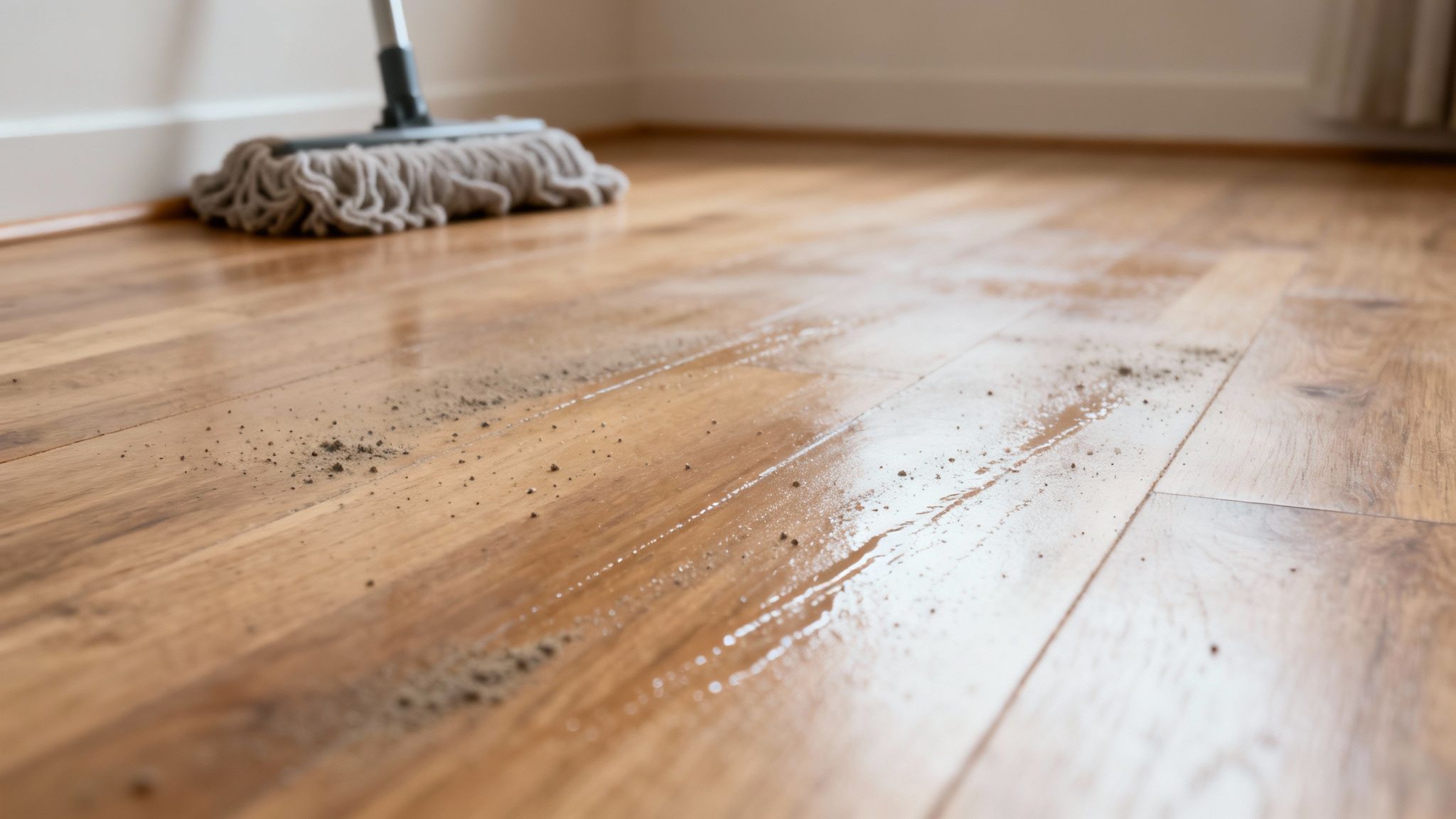
It’s a situation we see all the time in Madison homes. You put in all that effort to get things clean, but the result feels even dirtier than when you started. That sticky feeling is almost always caused by something left behind, like a thin film of soap that acts like a magnet for new dust and footprints.
Let's break down the most frequent culprits so you can pinpoint what's happening.
Too Much Cleaning Solution
This is, without a doubt, the number one reason floors get sticky. It’s so tempting to think that more soap means a deeper clean, but when it comes to mopping, the opposite is true.
When you pour in more cleaner than the directions recommend, your mop water can't fully rinse it all away. What’s left behind is a soapy film that dries into that tacky layer you feel under your feet. It's a widespread issue-cleaning industry reports show up to 68% of homeowners run into this problem, mostly from overusing detergent. If you're using 2-3 times the suggested amount, you're pretty much guaranteeing a sticky finish.
The Wrong Cleaner for Your Floor Type
Not all floor cleaners are created equal, and grabbing the wrong bottle can cause some serious residue problems. When it comes to choosing the best cleaning products for hardwood floors versus, say, vinyl, the differences are critical.
Using the wrong formula can leave behind a film that’s tough to get rid of.
All-purpose cleaners often have ingredients that are too harsh for sealed hardwood, which can strip the finish and leave a dull, sticky film.
Oil-based soaps might sound nice, but on vinyl or laminate, they just create a slippery, gummy buildup that attracts even more dirt.
Even homemade vinegar-and-water solutions can be problematic if the ratios are off, leaving floors feeling tacky.
It's so important to use a pH-neutral cleaner designed specifically for your floor material. For extra guidance, we put together a guide on finding the right pet-safe, non-toxic hardwood floor cleaner for your Madison home that can help you avoid this common mistake.
The Professional Secret to a Residue-Free Clean
If there’s one single technique that separates a frustrating, sticky floor from a truly professional, residue-free shine, it’s a method we swear by at Shiny Go Clean. It’s called the two-bucket method, and honestly, it’s a total game-changer for preventing that tacky feeling.
Think about it-if you only use one bucket, after the first few dips, you’re just swishing your mop around in a murky soup of dirt, cleaner, and grime. You're essentially putting the mess right back onto the floor. We call this "grime recycling," and it's a fast track to sticky floors.
The concept is brilliantly simple yet incredibly effective. You use one bucket for your clean, properly diluted cleaning solution and a separate bucket filled with plain, clean water just for rinsing your dirty mop head. This ensures that every time your mop touches the floor with cleaner, it’s actually clean.
Why This Method Works So Well
The magic of the two-bucket system is that it breaks the cycle of contamination. Instead of your mop water getting progressively dirtier, your cleaning solution stays pristine. You dip your mop in the clean solution, wash a section of the floor, and then rinse all the collected grime out in the rinse bucket before you even think about getting more cleaner.
This separation is crucial. A recent global home care survey revealed a stunning fact: dirty rinse water is the hidden culprit in 40% of sticky floor complaints. As mop water gets cloudy, it redistributes a fine layer of grime that dries into a tacky film, attracting three times more dust within hours. You can discover more about how residue forms and why clean water is so vital. This is precisely why our pros use this method without fail.
The rule of thumb in our business is simple: if the rinse water looks cloudy, it's time to change it. After a tough Madison winter when you’re dealing with salt and slush, you might need to change it every room.
Setting Up for Success
Ready to try it? Here’s how to set it up perfectly:
Bucket One (The Solution): Fill this bucket with warm water and the correct amount of a pH-neutral floor cleaner. Remember, less is more!
Bucket Two (The Rinse): Fill this bucket with plain, clean warm water. This is your rinsing station.
The process is straightforward: Mop with the solution, rinse the mop thoroughly in the rinse bucket, wring it out completely, and then dip back into the solution to continue. By adopting this simple habit, you'll stop spreading residue and start achieving a genuinely clean surface. For more tricks of the trade, check out our guide on 10 expert ideas for professional home cleaning.
Your Action Plan for Fixing Sticky Floors
Alright, you've figured out why your floors feel like the bottom of a movie theater. Now what? Let's get them back to feeling smooth and clean under your feet. This isn't about scrubbing for hours-it's about using the right technique for your specific floor type, something we’ve learned from years of cleaning homes all across the Madison area.
From the historic homes in Verona to the new builds in Fitchburg, different floors need different kinds of care. Here’s a simple, actionable guide to removing that tacky film for good.
First, a quick pro-tip. The two-bucket method is a game-changer for preventing sticky floors from ever coming back. It's what the pros use to make sure you're not just spreading dirty water around.
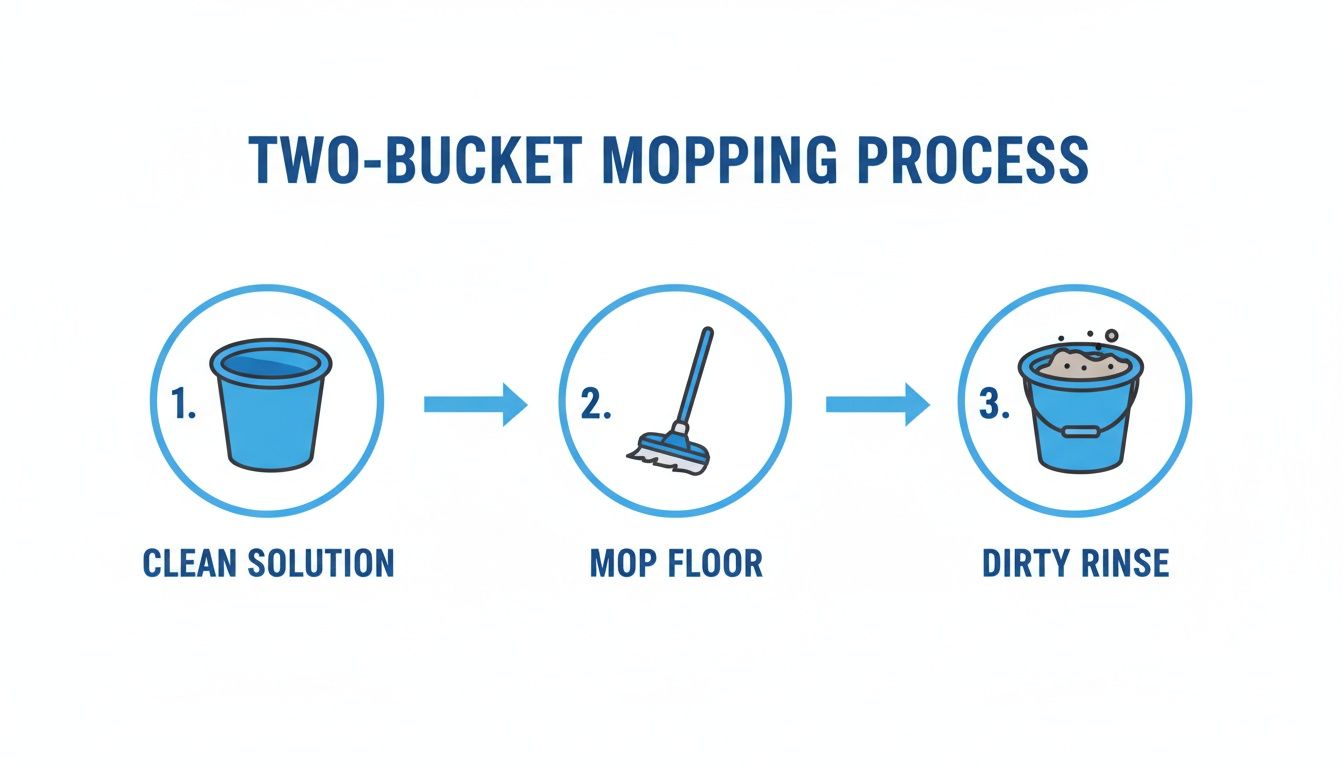
Separating your clean solution from your dirty rinse water is the secret. Simple, but it works.
Tackling Tile And Vinyl Floors
Tile and vinyl are pretty resilient, which is great news. The stickiness here is almost always a simple case of soap residue, and the fix is wonderfully straightforward.
Start by mixing a solution of one part plain white vinegar to three parts hot water. Vinegar is a fantastic natural degreaser that cuts right through soap scum. Mop the floor with this mix, then dump it and refill your bucket with plain, clean hot water. One final pass with just water will rinse away any leftover vinegar and loosened grime.
Restoring Sealed Hardwood Floors
Hardwood requires a much gentler touch. The wrong products can not only cause stickiness but can also strip the protective finish right off. First, make sure your floors are actually sealed-place a single drop of water on them. If it beads up, you're good to go.
For sticky sealed hardwood, a heavily diluted vinegar solution is your best friend. Mix about a quarter-cup of white vinegar into a full gallon of warm water. You want just enough acidity to break down the film without harming the finish.
Always use a microfiber mop that's been wrung out until it's just damp, never soaking wet. After mopping, it’s a good idea to go over the floor with a dry, soft towel to prevent water spots. If you suspect years of polish are the real problem, this guide on removing wax buildup from hardwood floors offers a more in-depth approach.
Fixing Sticky Laminate Floors
Laminate is super sensitive to moisture, so the "less is more" rule is crucial. Too much water can seep into the seams and cause swelling or bubbling. Big trouble.
For laminate, your go-to is hot water with just a tiny splash of vinegar-think one tablespoon per gallon. The heat does most of the work lifting the residue. As with hardwood, use a barely damp microfiber mop and dry the floor with a towel immediately afterward.
And don't forget, Madison's notoriously hard water can make things worse. If you see white, chalky spots along with the stickiness, mineral deposits are part of your problem. You can learn more about tackling this in our detailed guide on how to clean hard water stains in Madison.
To make it even clearer, here’s a quick-glance table of what to use (and what to run from) for each floor type.
Safe Sticky-Floor Solutions by Floor Type
Floor Type | Safe to Use | Avoid at All Costs |
|---|---|---|
Tile & Vinyl | Diluted vinegar, pH-neutral floor cleaner, hot water rinse. | Oil-based cleaners, wax, harsh abrasives. |
Sealed Hardwood | Heavily diluted vinegar, Bona Hardwood Floor Cleaner. | Bleach, ammonia, steam mops, excessive water. |
Laminate | Hot water with a tiny splash of vinegar, laminate-specific cleaners. | Soapy water, polish, wax, steam, any standing water. |
Choosing the right cleaner is half the battle. Sticking to these recommendations will save you a lot of headaches and potential damage down the road.
Sometimes, the buildup is just too stubborn, or you simply don't have the time to deal with it. If you’d rather have a professional handle it, our maid service Madison WI is always here to help. Just give us a call at (608) 292-6848, and we’ll get your floors feeling their absolute best.
Keeping Your Floors Clean and Non-Sticky for Good
Now that you’ve done the hard work of getting that stubborn residue off, the last thing you want is for it to come right back. Keeping your floors from getting sticky again is all about building a few simple, consistent habits that stop buildup before it even has a chance to start.
These aren't complicated chores-just small adjustments to your routine that make a massive difference. Think of it as preventative maintenance for your floors, saving you from another deep-scrubbing session down the road.
Start with a Clean Slate Every Time
One of the most effective habits you can adopt is to thoroughly sweep or vacuum before you mop. This might sound like a no-brainer, but it’s a step people often rush through or skip entirely.
When you don't, your wet mop just turns loose debris like crumbs, pet hair, and dust into a gritty, muddy paste. As that slurry dries, it creates a whole new layer of stickiness. By getting all the loose particles up first, your mop only has to deal with surface grime, not a full-on mess.
Master the Art of Drying
Never underestimate the power of proper drying, especially with our humid Wisconsin summers. Letting floors air-dry seems convenient, but it can leave behind water spots and mineral deposits from Madison’s hard water, contributing to that slightly tacky feel.
Your secret weapon here is a clean, dry microfiber cloth or towel. After mopping a section, just give it a quick pass to soak up any excess moisture.
For hardwood and laminate: This step is non-negotiable. It protects the planks from potential water damage and ensures you get a streak-free, smooth finish.
For tile and vinyl: While they’re more water-resistant, a quick dry-down prevents those hazy mineral spots and helps you achieve that perfect, non-sticky shine.
Pro Tip: Cracking a window or turning on a ceiling fan can seriously speed up drying time. This gives humid air less of a chance to settle on your damp floors, which can slow down evaporation and lead to a tacky finish.
Choose Your Cleaner Wisely
The battle against sticky floors is often won or lost right there in the cleaning aisle. Reading labels is your best defense against products that are designed to leave something behind.
Look for formulas specifically labeled “pH-neutral” and “residue-free.” These cleaners are made to lift dirt without leaving a film. It's best to avoid products that promise a high-gloss "shine," as they often contain waxes or acrylic polymers that build up over time, creating a gummy layer that is a real pain to remove. A simple, gentle cleaner is always the better choice for preventing that dreaded floors sticky after mopping feeling.
When to Call a Professional for Your Madison Home
You’ve tried the vinegar rinse, adopted the two-bucket method, and even bought a brand-new microfiber mop. But what if your floors are still sticky? Sometimes, no matter how much effort you put in, the problem is bigger than a simple residue film.
That’s when it’s time to consider calling in the pros. It’s not about giving up-it’s about making a smart, strategic choice for your home and, just as importantly, for your own sanity. The battle against sticky floors can be exhausting, and your time is valuable.
Signs It’s Time for Professional Help
Sometimes the stickiness is a symptom of a much deeper issue that DIY solutions just can’t touch. Years of wax-based polish buildup, stubborn residue from old cleaning products, or grime that has worked its way deep into the flooring can require specialized equipment and commercial-grade products to remove safely.
You might need a professional touch if:
The Stickiness Returns Immediately: If you get the floors clean but they feel tacky again within a day, there's likely a deep-seated buildup that your regular cleaning can't penetrate.
You See a Dull, Hazy Film: This often points to layers of old floor polish or wax that have degraded over time, creating a permanently gummy surface.
You're Simply Overwhelmed: Life is busy. Between work, family, and trying to enjoy a beautiful Madison weekend, spending hours scrubbing floors might be the last thing you want to do.
A professional cleaning isn't just about cleaning; it's about restoring. We have the tools and expertise to safely strip away years of buildup without damaging your floors, giving you a truly fresh start.
Perfect Times to Hire a Madison Cleaner
Certain life events in the Madison area make calling a professional a no-brainer. Think about those big moments when you need your home to be absolutely perfect, but you have zero time to spare.
This is especially true for the annual controlled chaos of the UW Madison move-out season. Getting your security deposit back often depends on leaving the apartment spotless, and floors are a major inspection point. If you need a reliable move out cleaning Fitchburg team, we know exactly what landlords are looking for. Likewise, if you’re moving into a new home in Middleton, you want to start with a truly clean slate, not someone else’s leftover grime.
And let’s not forget about a post-winter deep clean. After months of tracking in salt and slush, your floors need a serious reset that goes beyond a standard mop. If you're tired of fighting the sticky floor battle, you can find deep cleaning services near you in Madison, WI and let us handle the heavy lifting.
Reclaiming your weekends and enjoying a home that feels consistently clean is a worthy investment. When you’re ready to hand over the mop, give Shiny Go Clean a call at (608) 292-6848. We’re here to help.
Still Have Questions About Sticky Floors?
We get it-dealing with a tacky floor can be frustrating, and it brings up a lot of questions. As your local Madison cleaning experts, we’ve heard just about all of them over the years. Here are a few of the most common ones we hear from our neighbors, along with some straightforward answers to help you get that perfect, non-sticky finish.
Can I Just Use Hot Water to Mop My Floors?
For light, routine cleaning on sealed floors like tile or vinyl, hot water is often your best bet. It’s surprisingly good at dissolving minor grime and is the surest way to avoid leaving behind any kind of residue. You’d be surprised at how well it works on its own.
But for greasy kitchen spills or the mess tracked in after a long Wisconsin winter, you might need a little extra help. If you do reach for a cleaner, go for something pH-neutral and use it sparingly. A single capful in a full gallon of water is usually more than enough. When you're done, it's always a good idea to do a quick rinse with a separate mop and plain water, just to be safe.
Why Are My Hardwood Floors Sticky Even Though I Use a Wood Cleaner?
This is a classic problem, and you’re definitely not alone. Many popular wood floor cleaners you find on store shelves contain oils, waxes, or acrylic polymers designed to add shine. While they can look great at first, these ingredients build up over time.
This buildup creates a sticky, dulling film that actually attracts more dust and dirt. The only way forward is to gently strip that layer away. You can do this with a mixture of one part white vinegar to four parts warm water. After that, switch to a simple, residue-free cleaning method, and your hardwood will thank you.
Remember, the goal with hardwood is to clean the surface, not to add layers of polish. A simple, pH-neutral cleaner or a heavily diluted vinegar solution is all you need for a beautiful, natural shine that isn’t sticky.
How Can I Book a Maid Service in Madison, WI?
When you’re ready to hand the mop over to a professional, we make it incredibly easy. You can get a transparent, flat-rate quote and book our services in just a couple of minutes right on our website. It’s perfect for busy homeowners in Madison, Fitchburg, Verona, and the surrounding areas.
If you’d rather chat with a real person, we’d love to hear from you! Just give us a call at (608) 292-6848. We’re always happy to answer any questions about our standard cleaning, deep cleaning, or specialized services for your home.
Tired of battling sticky floors and ready for a consistently clean home? Let Shiny Go Clean take care of it for you. Get your free quote and book your first cleaning today!