Your Guide to Non Toxic Hardwood Floor Cleaners in Madison
- Jan 2
- 16 min read
Hey there, Madison! We all love the classic look of hardwood floors in our homes. But keeping them clean, especially during the long winters when we’re all cooped up inside, means choosing the right cleaners. For your family, your pets, and the floors themselves, non toxic hardwood floor cleaners are the way to go. The best ones rely on simple, plant-derived ingredients and skip the harsh chemicals, giving you a safe, spotless shine without messing with your home's air quality.
Keeping Your Madison Home Safe and Spotless

Here in Madison, from Fitchburg to Middleton, our hardwood floors see it all. They're the backdrop for game nights, the playground for kids and pets, and the first thing guests notice. Keeping them clean shouldn't mean bringing aggressive chemicals into your living space, especially with little ones and furry friends around.
This guide is your friendly neighborly advice on how to pick gentle, effective ingredients over the harsh stuff that can strip your wood's finish and pollute your indoor air. Think of this as your first step toward a healthier, shinier home. You don't need a complicated chemical cocktail to get great results-in fact, simpler is almost always better for preserving the life and luster of your hardwood.
The Growing Demand for Safer Cleaning
This isn't just a local Madison trend. Homeowners everywhere are looking for safer ways to clean. The global market for floor cleaners, including non-toxic options, was valued at USD 15.43 billion and is only expected to grow. This massive shift shows that families are more aware than ever about chemical safety and environmental impact.
This demand for healthier alternatives is exactly why we focus on using the safest products possible. We get it. For Madison families, especially those with kids, pets, or allergies, what’s left behind after cleaning matters just as much as the dirt that’s taken away.
Choosing non-toxic cleaners is about more than just clean floors; it’s about creating a healthy living space where your family can thrive without worry. It’s a proactive step toward better indoor air quality and peace of mind.
Making this switch is easier than you might think. It all starts with understanding which common household ingredients are friends to your floors and which are definite foes. Our goal is to give you the know-how to either mix up your own simple solutions or understand what to look for in a professional service. For a deeper dive, check out our complete guide to an eco-friendly house cleaning service in Madison.
What Non-Toxic Really Means for Your Floors
The term “non-toxic” gets thrown around a lot, but what does it actually mean for the hardwood floors your kids and pets are rolling around on every day? Here in Madison, especially during those long, cold winters when the windows are shut tight, the air quality in our homes is incredibly important.
Think of it this way-you wouldn't wash your hands with a harsh engine degreaser, right? You'd choose a gentle soap that cleans effectively without stripping your skin. The same exact logic applies to your beautiful hardwood floors. A non toxic hardwood floor cleaner is simply one that gets the job done without using aggressive, potentially harmful chemicals.
The Chemicals to Avoid
Many conventional cleaners rely on harsh ingredients that can do more harm than good. They might clean a spot, but they can also release fumes, irritate sensitive family members, and slowly wear away your floor's protective finish.
Here are the main culprits to watch out for:
Ammonia: A common ingredient in glass and all-purpose cleaners, ammonia is far too harsh for wood. It can damage the surface and even dissolve the lignin that holds wood fibers together.
Bleach: While a powerful disinfectant, bleach is a definite no-go for hardwood. It can quickly discolor the wood, leaving permanent spots and damaging the finish beyond repair.
Phthalates: Often hidden in synthetic fragrances, phthalates are chemicals that can be released into the air and have been linked to health concerns. A cleaner with a strong, artificial scent might contain them.
Choosing cleaners free from these ingredients is a big step toward a healthier home. This is part of a larger movement toward safer home care. To grasp the full scope of what non-toxic truly means, it's helpful to look at broader trends like the shift from chemicals to conscious choices in overall home management.
The Gentle Ingredients to Look For
So, if you're avoiding the harsh stuff, what should you be looking for instead? True non-toxic cleaners rely on simple, effective, and often plant-derived ingredients that are tough on dirt but gentle on your floors and family.
The goal of a great non-toxic cleaner is to lift away dirt and grime without leaving behind a chemical footprint. It's about cleaning your home in a way that contributes to its overall health and well-being.
Look for formulas that are:
Plant-Based and Biodegradable: Ingredients derived from plants break down naturally, reducing their environmental impact. They clean effectively without relying on harsh synthetics.
pH-Neutral: Your floor's finish acts as its shield. Cleaners that are too acidic (like undiluted vinegar) or too alkaline can slowly eat away at this protective layer, leaving your floors looking dull and vulnerable to damage. A pH-neutral formula is perfectly balanced to clean without stripping.
Understanding the difference between these types of ingredients is key. For more on this, you can learn more about how natural cleaning products actually work in our detailed guide. It all comes down to choosing cleaners that respect both your home's surfaces and the people living within it.
Matching the Cleaner to Your Hardwood Finish
Not all hardwood floors are created equal. Using the wrong cleaner is like trying to put a square peg in a round hole-it just doesn't work and often causes damage. Before you even think about mixing a DIY solution or grabbing a bottle off the shelf, the most important step is figuring out what kind of finish is protecting your floors. This single piece of information dictates which non toxic hardwood floor cleaners are safe to use.
Think of the finish as your floor's raincoat. A modern polyurethane finish is like a durable, waterproof jacket, while a delicate wax finish is more like a light sweater that needs gentle care. Using an acidic cleaner like vinegar on a waxed floor can strip it bare, leaving the wood exposed and vulnerable. That's why identifying your finish isn't just a suggestion; it's the golden rule of hardwood care.
The Simple Water Drop Test
You don’t need to be a flooring expert to figure this out. Here’s a super simple test you can do right now in an out-of-the-way spot, like inside a closet or under a big piece of furniture.
Place a Single Drop of Water: Put just one small drop of water onto the floor.
Watch and Wait: Observe what happens to the drop for about 10 minutes.
Analyze the Result: * If the water beads up and stays on the surface, you likely have a modern, well-sealed finish like polyurethane or urethane. These are the most common in Madison homes and are quite resilient. * If the water drop slowly soaks in, leaving a dark spot, you probably have a penetrating oil finish. These floors need specific oil-based cleaners to nourish the wood. * If the water immediately soaks in and stains the wood, or if a white spot appears when you wipe it away, you most likely have an older, unsealed, or waxed finish. These require the most delicate, solvent-based care.
This quick test gives you the crucial information you need to move forward safely.
This decision tree helps visualize the right path to take when selecting a cleaner for your family's health and your floor's safety.

The flowchart clearly shows that for homes with kids, pets, or a preference for natural solutions, non-toxic cleaners are the recommended choice.
Cleaner Recommendations for Each Finish Type
Now that you know your finish, let's match it with the right kind of cleaner. This is where homeowners' preferences are making a big impact on the market. The hardwood floor cleaner market is a massive USD 1.2 billion segment, driven by a shift toward natural tones and finishes that require gentler care.
Nearly half of wood flooring pros report rising demand for natural-looking wood, which makes specialized, non-toxic formulations more valuable than ever for protecting these beautiful investments. You can explore more about these market trends and their impact on cleaning product development.
Matching the cleaner to the finish isn't just about cleaning; it's about preserving the life and beauty of your flooring investment for years to come.
Here’s a quick guide:
For Polyurethane/Sealed Finishes: You have the most flexibility. A pH-neutral, plant-based commercial cleaner is perfect. A highly diluted solution of water and white vinegar (about a quarter cup of vinegar to a gallon of water) is also a safe DIY option.
For Penetrating Oil Finishes: Stick to manufacturer-recommended cleaners or products specifically designed for oiled floors. These often contain vegetable oils that clean and replenish the finish simultaneously. Avoid water-based cleaners entirely.
For Waxed or Unsealed Finishes: These are the most sensitive. Never use water or vinegar. Instead, use a solvent-based liquid wax cleaner made for this specific purpose. Regular buffing is more important than "mopping" for these floors.
Taking a few minutes to get this right will save you from potential heartache and costly repairs down the road, ensuring your floors-whether in your Fitchburg home or a downtown Madison apartment-stay beautiful.
Simple DIY Cleaner Recipes for Madison Homes
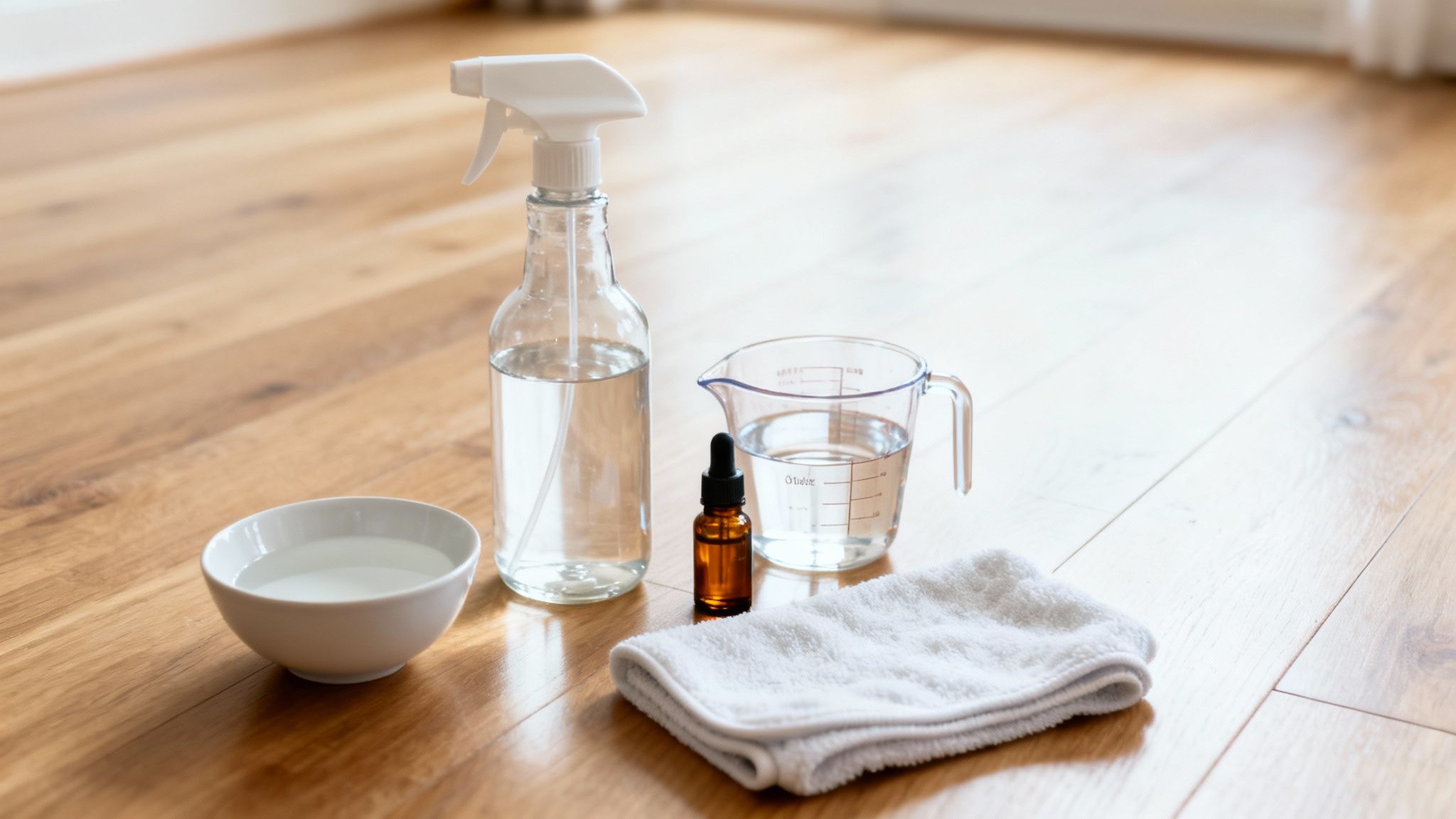
Ready to mix up your own safe and powerful cleaner? You don't need a chemistry degree to create effective non toxic hardwood floor cleaners. In fact, you probably have everything you need in your pantry right now.
Going the DIY route gives you total control over what touches your floors, ensuring there are no hidden chemicals or harsh fragrances that could bother your family or pets. It's a simple, budget-friendly way to keep your home healthy-especially here in Madison, where we track in everything from summer pollen to winter salt and slush.
The Go-To All-Purpose Vinegar Cleaner
This is the classic, tried-and-true recipe that works wonders on most modern, sealed polyurethane finishes. It’s incredibly simple, effective, and costs just pennies to make. The white vinegar gently cuts through grime, while the distilled water leaves a perfect streak-free finish behind.
Recipe and Instructions:
Gather Your Supplies: You'll need a clean spray bottle, distilled water, and plain white vinegar.
Mix the Solution: Combine one gallon of warm distilled water with 1/4 cup of white vinegar. This highly diluted ratio is the key to its safety and effectiveness. It's crucial not to use too much vinegar, as its acidity can dull the finish over time.
Add a Fresh Scent (Optional): For a pleasant aroma, add 3-5 drops of a pet-safe essential oil like lavender or lemon. It’s a great way to freshen up a room after a long Madison winter.
This solution is perfect for weekly cleaning, but always remember to use it with a barely damp mop-never saturate your floors. To learn more about the science behind these simple solutions, you can explore other natural cleaning methods for your home in our other guides.
A Gentle Castile Soap Cleaner for Extra Grime
Sometimes you need a little more muscle, especially in high-traffic areas like the kitchen or entryway. If your floors are looking a bit grimy or have sticky spots, a castile soap-based cleaner is an excellent alternative to vinegar. Castile soap is a gentle, vegetable-based soap that lifts dirt without stripping your floor's protective finish.
Think of a castile soap solution as a gentle shampoo for your floors. It cleans deeply without being harsh, making it perfect for homes with active kids and pets who always seem to be tracking something in.
This recipe is especially good for those lake-area homes in Madison that accumulate a fine layer of dust and pollen.
Recipe and Instructions:
Combine Ingredients: Mix one gallon of warm distilled water with just 1-2 teaspoons of unscented liquid castile soap. A little goes a very long way here; too much soap can leave a sticky residue.
Mix Gently: Swirl the water to combine the soap without creating too many suds.
Optional Scent: Again, a few drops of your favorite essential oil can be added for a fresh, clean scent.
This mix has a bit more "oomph" for breaking down grease and grime than the vinegar recipe, but it’s still gentle enough for regular use on sealed polyurethane finishes.
If you want to keep things even simpler, here are our top recipes at a glance.
DIY Non-Toxic Hardwood Cleaner Recipes
These simple, effective, and safe DIY cleaner recipes use exact measurements for different floor finishes and cleaning needs.
Recipe Name | Ingredients and Ratios | Best For Floor Finish | Pro Tip |
|---|---|---|---|
The Everyday Refresher | 1 gallon warm distilled water + 1/4 cup white vinegar | Sealed polyurethane or polycrylic | Add 3-5 drops of lemon essential oil for a fresh scent. Never use on oiled or waxed floors. |
The Grime Buster | 1 gallon warm distilled water + 1-2 tsp castile soap | Sealed polyurethane or polycrylic | Perfect for high-traffic areas. Use sparingly to avoid soap buildup and rinse with a damp cloth if needed. |
The Squeaky Clean | 1 gallon warm water + 2 tbsp rubbing alcohol | Sealed polyurethane | The alcohol helps the solution evaporate quickly, preventing streaks on glossy or dark floors. |
The Wax & Oil Polish | 1 cup olive oil + 1/2 cup lemon juice (for cleaning) | Oiled or Waxed finishes | Apply a very thin layer with a soft cloth, then buff with a dry cloth until it shines. Test in a small spot first! |
Always remember to label your DIY cleaning solutions clearly and store them out of reach of children and pets.
How to Apply Your DIY Cleaner Correctly
The way you apply the cleaner is just as important as the recipe itself. The number one rule for hardwood floors is to avoid excess water. Wood and water are not friends-too much moisture can cause swelling, warping, and permanent damage.
Follow these steps for a perfect, safe clean every time:
Always Sweep or Vacuum First: Get rid of all the loose dirt, pet hair, and debris before you even think about mopping. Mopping a gritty floor just pushes those particles around, which can scratch the finish.
Use a Spray Bottle and Microfiber Mop: Instead of a sloppy bucket and string mop, lightly mist a small section of your floor with your cleaner. You can also spray the cleaner directly onto your microfiber mop pad.
Mop with a Damp Pad: Your mop pad should be damp, not dripping. If you can wring any water out of it, it’s too wet.
Work in Sections: Clean small areas at a time, moving with the grain of the wood. This simple trick helps prevent streaks.
Dry if Necessary: If you see any puddles or wet spots, wipe them up right away with a dry, clean microfiber cloth. Your floors should air-dry in just a minute or two.
Your Weekly Hardwood Cleaning Routine
The real secret to gorgeous hardwood floors isn't some marathon scrubbing session. It's consistency. A simple weekly routine is all it takes to keep them looking their best and head off the kind of grime that turns into a weekend-long project. Think of it as quick maintenance-just a few minutes a week to protect your investment and keep your Madison home looking sharp.
This little plan is built for real life. It’s all about getting rid of the daily grit that can scratch and dull your floor's finish over time. Grab the right tools and your favorite non toxic hardwood floor cleaner, and this will feel less like a chore and more like a quick win.
Step 1: Start with a Thorough Sweep or Vacuum
Before a drop of cleaner hits the floor, you have to get the loose stuff up. Dust, crumbs, pet hair, and tiny bits of dirt act like sandpaper underfoot, creating micro-scratches that slowly but surely dull the finish. Getting rid of them is your first and best line of defense.
If you vacuum, make sure you’re using a soft brush attachment made for hard surfaces. A vacuum’s beater bar-that rotating brush designed to rough up carpet fibers-is way too aggressive for wood and can easily leave scratches.
If you sweep, a soft-bristled broom or a dry microfiber dust mop is perfect. These tools are fantastic at trapping dust without just kicking it up into the air.
Don't skip this step. It’s what makes sure your mop is actually cleaning the floor, not just pushing a gritty slurry around.
Step 2: Mop the Right Way with Less Water
Now it's time to mop, using your DIY solution or a store-bought non-toxic cleaner. The golden rule for hardwood has always been less is more when it comes to water. Wood is porous, and too much moisture can get into the seams and cause warping, cupping, or discoloration.
The goal is a damp mop, not a wet one. Your floor should air-dry in just a minute or two. If you're seeing puddles or streaks of water, you’re using way too much.
Follow this simple method for a perfect, streak-free clean every time:
Mist Your Mop Pad Lightly: Instead of spraying the floor, give your microfiber mop pad a light spritz with your cleaner. This puts you in total control of how much liquid you're using.
Work in Small Sections: Mop a small area at a time, moving with the grain of the wood. This helps prevent streaks and keeps the clean even.
Handle Madison-Specific Messes: Our tough winters mean tracking in salt residue is inevitable. A damp cloth with your non-toxic cleaner is usually all you need to lift it. Just be sure to tackle those spots right away to keep them from damaging the finish.
This gentle, steady approach is what keeps hardwood looking brand new. It’s a method that fits right in with how people want to clean their homes today-safely and mindfully. In fact, the market for floor care chemicals was recently valued at a massive USD 9.3 billion, with North America’s professional cleaning services expected to claim a huge piece of that pie. It just goes to show how much homeowners are looking for safer products and services they can trust. You can learn more about the growth of safer floor cleaning solutions and what's driving the trend.
When to Call the Professionals for Your Hardwood Floors
A good DIY cleaning routine is perfect for keeping your hardwood floors looking great from week to week. But sometimes, life gets busy, or your floors just need a level of care that goes beyond what a simple mop can deliver. Knowing when to call in a professional is the best way to protect your flooring investment and save yourself a ton of time and stress.
Think of it like this-you might trim your own hedges, but you'd call an expert to handle a big tree removal. It's the same idea with your floors. When you're facing a deep clean after a long, slushy Madison winter or dealing with stubborn scuffs that your homemade solutions won’t even touch, a professional touch makes all the difference.
Signs It’s Time for Expert Help
Sometimes the signs are pretty obvious, like when you’re getting ready for a big family event or trying to manage a move-out clean. Other times, your floors just seem to have lost their shine, and you're not quite sure why. Here are a few clear signals that it's time to let the team at Shiny Go Clean step in.
Stubborn Scuffs and Buildup: If you notice a hazy film or scuff marks that just won’t budge with regular cleaning, it could be residue from old products or deeply ground-in dirt. Our professional-grade equipment and non toxic hardwood floor cleaners can safely break down this buildup without damaging your floor's finish.
Preparing for a Move: Whether you're a renter near UW Madison hoping to get your security deposit back or a homeowner in Verona prepping your house for sale, a professional deep clean ensures your floors are absolutely spotless. We handle the nitty-gritty details so you can focus on the move itself.
Seasonal Deep Cleaning: After a long Madison winter of tracked-in salt and grime, or during the high-pollen spring season near the lakes, a deep clean is practically essential. We can restore that fresh, clean feeling to your home and get rid of the gunk that’s settled in.
You're Simply Too Busy: Let’s be honest, life is busy. If cleaning the floors feels like one more chore you just don’t have time for, that’s the perfect reason to call us. You can reclaim your weekend and let our trained, background-checked team handle it for you.
Hiring a professional isn't about giving up; it's a smart decision to protect one of your home's most valuable assets. We bring the right tools, the right non-toxic products, and the expertise to do the job safely and efficiently.
What to Expect from a Professional Service
Here at Shiny Go Clean, we keep the process easy and straightforward. Our friendly teams use powerful, yet gentle, equipment and premium non-toxic products to safely bring back your floor’s natural beauty. We get the unique challenges of Madison homes, from downtown apartments to family houses out in Waunakee.
If your floor's issues go beyond cleaning and are leaning toward actual damage, you might need to explore options like professional flooring sales and installation services for more extensive work.
We know that choosing a cleaning service is a big decision. To help you feel completely confident, we've even put together a guide on how to choose the right cleaning service in Madison that walks you through what to look for.
Ready to see your floors shine again? Give your friendly neighbors at Shiny Go Clean a call at (608) 292-6848 or send a quick note to madison@shinygoclean.com. We’d love to help.
Common Questions About Non-Tox Floor Care
You’ve got questions, and we have answers. Here are a few things our Madison neighbors often ask us about keeping their hardwood floors looking great with non toxic hardwood floor cleaners. We hope these quick tips help you feel more confident in your floor care routine.
Is a Vinegar and Water Solution Truly Safe for All Hardwood Floors?
No, it’s definitely not a one-size-fits-all solution. A heavily diluted vinegar mix is generally okay for modern, sealed polyurethane finishes, which are common in homes across Madison and Middleton. However, that same mixture can be a disaster for older waxed or penetrating oil floors because the acid can strip their protective layer.
It’s crucial to know what kind of finish you’re working with before mixing up any DIY cleaner. When in doubt, always test it on a small, hidden spot-like inside a closet-just to be safe.
How Often Should I Mop My Hardwood Floors?
For most households, mopping with a non-toxic cleaner about once every one to two weeks is plenty to keep things looking fresh. Of course, high-traffic areas like kitchens and entryways in Fitchburg homes might need a bit more attention, especially during those slushy Wisconsin winters.
The most important thing is to sweep or vacuum up loose debris regularly. Preventing scratches from grit and dirt will do more for your floor's longevity than frequent mopping ever will.
Can I Use Essential Oils in My DIY Floor Cleaner?
Yes, you absolutely can! A few drops of essential oil like lemon, lavender, or pine can be a wonderful touch, leaving behind a fresh, natural scent. It’s a great way to freshen up the house, especially after having the windows closed all winter.
Just be sure to use them sparingly-a little goes a long way. About 3-5 drops per gallon is usually enough to do the trick. Too much oil can leave a slick residue on your floors. Also, if you have pets, make sure to double-check which essential oils are safe for them before adding anything to your mix.
What's the Biggest Mistake People Make When Cleaning Hardwood?
Hands down, the most common and damaging mistake we see is using too much water. Wood is a natural material, and it will soak up moisture. That can cause it to swell, warp, or even discolor over time, leading to some serious long-term damage.
Always use a damp-never a soaking wet-mop. Your floor should air-dry within a minute or two after you pass over it. Wring your mop pad out until it’s just lightly moist to the touch.
This is exactly why spray mops with microfiber pads are so highly recommended for hardwood. They give you total control over how much liquid hits the floor, ensuring a safe and effective clean every single time. It's the best way to protect your beautiful flooring investment.
Sometimes, your floors need more than just a quick mop. For those deep seasonal cleans or when life just gets too busy, Shiny Go Clean is here to help. Our professional, background-checked teams use the best non-toxic products to make your hardwood floors shine safely. Get your free estimate and reclaim your weekend.