Your Guide to Non Toxic Wood Floor Cleaner for a Brilliant Shine in Madison
- Jan 18
- 15 min read
When you hear non toxic wood floor cleaner, what really comes to mind? It’s not about fancy marketing terms or pictures of leaves on a bottle. At its core, a truly non-toxic cleaner is all about simple, plant-based ingredients and a pH-neutral formula that safely lifts dirt without messing with your floor’s finish or your family's health. It’s the real secret to getting that brilliant shine without inviting harsh chemicals into your home.
Keeping Your Madison Floors Beautiful and Safe
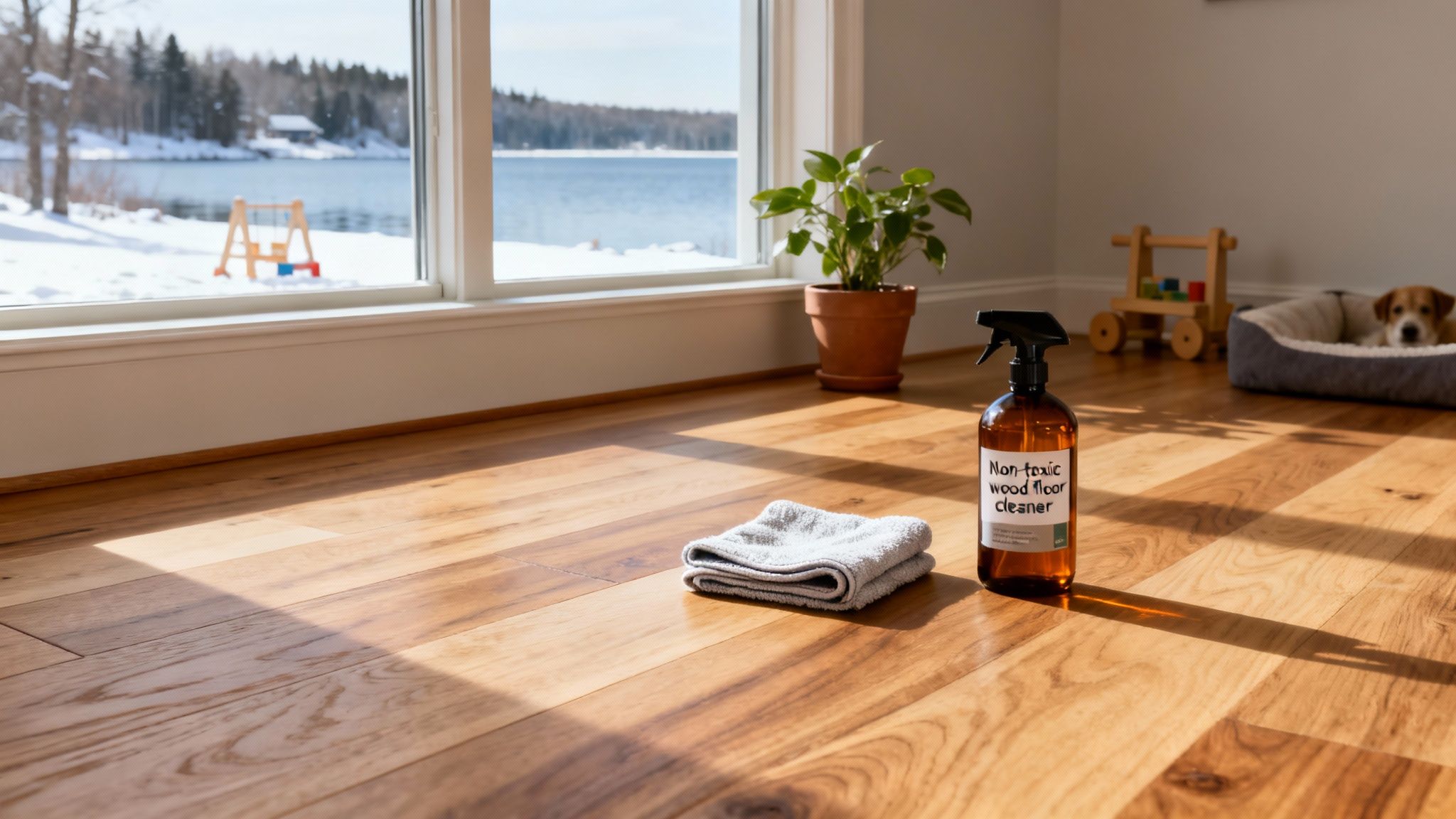
Here in Madison, our homes are our sanctuaries, especially during those long, cold winters when every window is sealed tight. The last thing any of us want is to trap harsh chemical fumes inside with our families and pets. This is why choosing a non-toxic wood floor cleaner isn’t just a trend-it's a smart, healthy choice for your home.
Think of your floor’s protective finish like your own skin. You wouldn't scrub it with a harsh, abrasive chemical, right? The same logic applies to your beautiful hardwood floors. A non-toxic cleaner works gently, using ingredients that are tough on grime but kind to your floor's sealant, your pets' paws, and your kids' playtime on the floor.
What Makes a Cleaner Truly “Non-Toxic”?
So, what should you actually be looking for on a label? A genuinely safe cleaner is built on a foundation of simple, understandable ingredients.
Plant-Based Ingredients: These cleaners harness the power of nature, using surfactants derived from sources like coconut or corn to lift away dirt and grime effectively.
pH-Neutral Formula: This is a big one. A cleaner that’s too acidic or too alkaline will slowly eat away at your floor's protective finish, leaving it dull and vulnerable to damage. A pH-neutral solution cleans without stripping that essential barrier.
No Harsh Chemicals: This means saying no to ammonia, chlorine, phthalates, and formaldehyde. These ingredients not only damage wood over time but can also pollute your indoor air quality.
For a clearer picture, here’s a quick breakdown of what to avoid and what to look for.
Toxic vs Non-Toxic Wood Floor Cleaner Ingredients
Ingredient to Avoid | Potential Risk | Safe Alternative |
|---|---|---|
Ammonia | Strips floor finish, irritates lungs | Plant-based surfactants (from coconut, corn) |
Phthalates | Endocrine disruptors, adds artificial fragrance | Essential oils (lavender, lemon) for scent |
Formaldehyde | Known carcinogen, causes respiratory issues | Plant-derived solvents |
Chlorine Bleach | Can discolor wood, harsh on lungs | Water and pH-neutral soap |
This simple switch helps protect your investment in your hardwood floors while creating a healthier living space.
It’s clear that more and more homeowners are making this shift. The global market for hardwood floor cleaners, largely driven by the demand for safer formulas, was valued at USD 1.2 billion and is projected to hit USD 2.5 billion by 2034. This growth isn't just a statistic; it shows a real preference for products that protect both our homes and our health.
This move toward safer products is part of a larger, positive change in how we care for our homes. If you're looking to expand your commitment to a safer home, you might be interested in learning more about the revolution of eco-friendly cleaning practices.
Harmful Chemicals to Avoid in Floor Cleaners
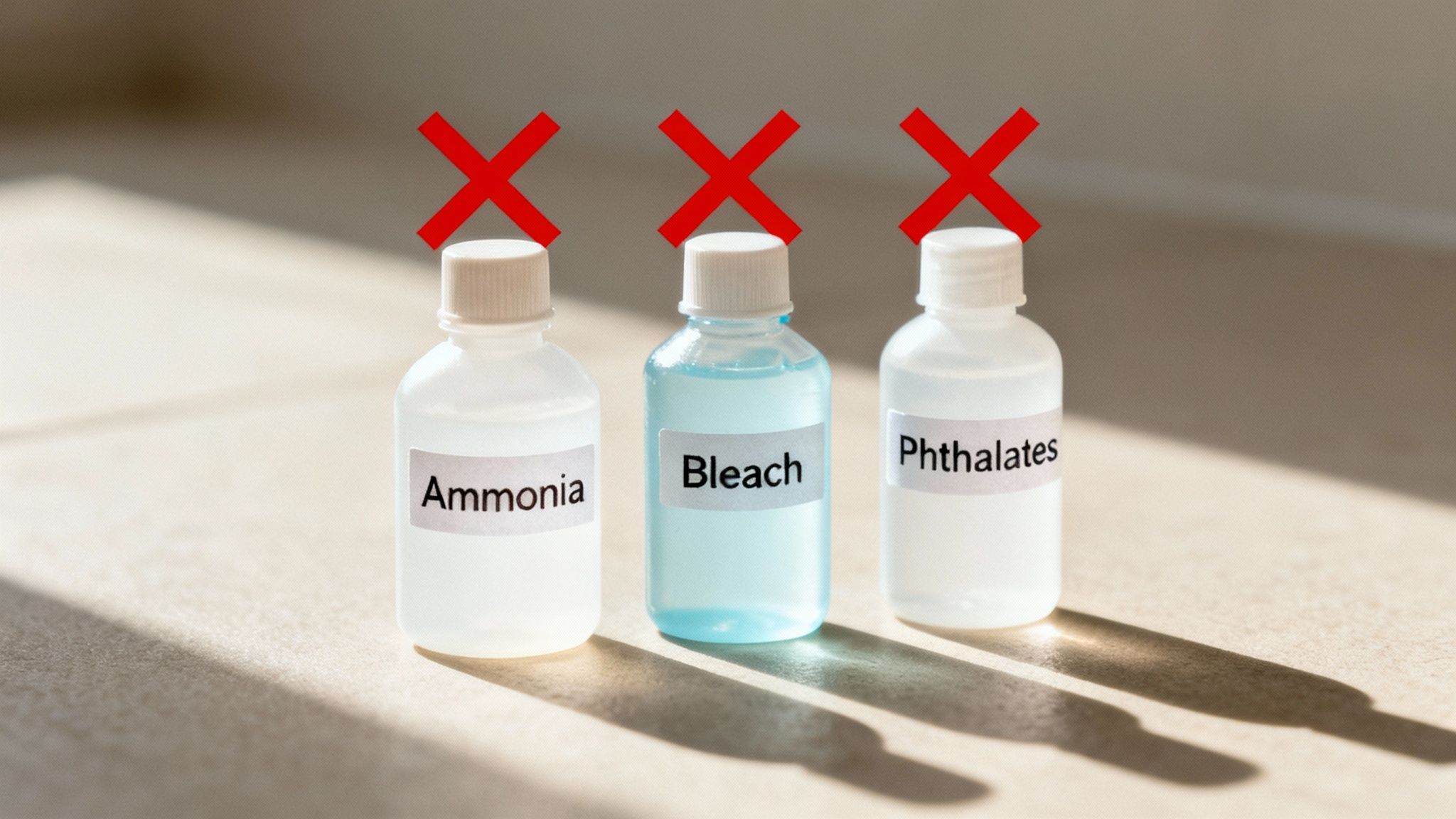
Walking down the cleaning aisle can feel like a pop quiz. Dozens of bottles promise a perfect, streak-free shine, but what’s really inside them? When we talk about finding a truly non toxic wood floor cleaner, it’s less about what a product has and more about what it doesn’t have. Knowing which ingredients to sidestep is your first real move toward protecting your floors and your family.
Think of your wood floor’s finish as a delicate shield. Some chemicals are just too aggressive, acting like harsh abrasives that strip away that protection, leaving your beautiful wood dull, hazy, and vulnerable to damage. Many of these ingredients also impact the air you breathe-a big concern for Madison families, especially during those long winters when we’re all cooped up indoors.
This isn't just about being overly cautious; it's a huge shift in how we think about clean. Consumer demand for safer products is set to grow the floor cleaner market from USD 1.39 billion to USD 2.42 billion, with an estimated 70% of households with kids or pets now actively seeking out non-toxic options.
The Big Three to Sidestep
To keep things simple, let’s focus on a few of the most common culprits you’ll find in conventional cleaners. Spotting these on a label is your signal to put the bottle back on the shelf and walk away.
Ammonia: This is a classic "stripper." While it’s great at cutting through heavy grease, it's far too harsh for most wood floor finishes. Using a cleaner with ammonia is like washing your hands with sandpaper-it scours away the protective layer, leading to a lifeless, worn-out look over time. It’s also a powerful respiratory irritant.
Chlorine Bleach: Bleach is a potent disinfectant, but it has no business anywhere near your hardwood. It can easily discolor or lighten wood, creating patchy spots that are impossible to fix without a full refinish. The fumes are also incredibly harsh, which is the last thing you want circulating through your home.
Phthalates (Fragrance): This one is sneaky. Phthalates are often hidden under the generic term "fragrance" on an ingredient list. They help scents last longer, but they are known endocrine disruptors. When you smell that strong, artificial "clean" scent, there’s a good chance you’re breathing in chemicals you’d be better off without.
A Quick Tip from Your Neighbor: If a product's ingredient list just says "fragrance" without explaining where it comes from (like essential oils), it's a good idea to be wary. Truly non-toxic brands are proud of their plant-based scents and will say so!
Why These Chemicals Are Bad News for Wood
Beyond the health concerns, these ingredients can cause real, visible damage to your flooring. Harsh chemicals break down the polyurethane or wax finish sealing your wood, exposing the raw material to moisture, grit, and dirt.
This creates a frustrating cycle: the floor gets dirtier faster, you clean it more often with the same harsh products, and the damage just gets worse. You end up scrubbing harder to get a shine that never quite returns.
Choosing a safer alternative isn't just about what's trendy; it’s a practical, long-term decision for your home’s health and appearance. If you're curious about how gentle solutions can still be powerful, you might like our take on why natural cleaning products actually work.
Making a conscious choice to read labels and understand what you’re bringing into your home is the key. It empowers you to maintain that warm, beautiful wood glow you love-safely and effectively.
The Best Safe Ingredients for Sparkling Wood Floors
Alright, we’ve covered what to leave on the shelf. Now for the good stuff. The best non toxic wood floor cleaner solutions don’t work by blasting away dirt with harsh chemicals. They use smarter, gentler ingredients that cooperate with your floor's finish instead of fighting against it.
Think of your floor’s protective finish like its skin. It needs to be cleansed, not scorched. The idea is to lift away the grime from daily life-like muddy paw prints from a walk around Lake Monona or dust from a downtown apartment-without stripping its protective layer.
The Power of pH Balance
One of the most important ideas in safe floor cleaning is pH balance. It might sound a little high school chemistry, but it's actually pretty simple. The pH scale just measures how acidic or alkaline something is, from 0 (very acidic) to 14 (very alkaline), with 7 being neutral.
Your wood floor's finish is happiest right there in the middle, at a neutral pH. Using a cleaner that’s too acidic (like straight-up vinegar) or too alkaline (like ammonia) can slowly eat away at this finish, leaving it dull and vulnerable.
A pH-neutral cleaner is like a gentle, hydrating soap for your skin. It cleanses away dirt and oils without stripping away moisture or causing irritation, leaving the surface clean, balanced, and healthy. That’s exactly what we want for our wood floors.
The All-Stars of Safe Cleaning
So, what are these wonder ingredients? You’ll find they are often simple, surprisingly effective, and usually come from nature. Here are the key players to look for on a label:
Plant-Derived Surfactants: These are the real workhorses. Sourced from things like coconut or corn, surfactants are molecules that help water grab onto dirt and grease, so you can easily wipe it all away. No brute force required.
Diluted White Vinegar: When it’s mixed with water, white vinegar is a fantastic degreaser. Its mild acidity cuts through grime and can even help with mineral deposits from hard water. The key here is dilution-a little goes a very long way.
Plant-Based Oils: A few drops of the right oil in a formula can help condition the wood, leaving behind a subtle, natural shine. Think of it as a light moisturizer that brings out the wood's warmth without making your floors greasy or slick.
These ingredients work as a team to give you a powerful clean that’s completely safe for your Madison home. For an even deeper dive into natural solutions, check out our guide to natural floor cleaners for a maid service deep clean in Madison. It's packed with tips for keeping your entire home sparkling safely.
A Simple DIY Non-Toxic Wood Floor Cleaner
Want to try your hand at a homemade cleaner? It’s incredibly easy and uses things you probably already have. This recipe is perfect for sealed hardwood floors.
Here’s what you’ll need:
One gallon of warm water: This is your base, helping to dissolve and lift dirt.
A half-cup of white vinegar: This is your gentle-but-mighty cleaning agent that cuts through grime.
A few drops of essential oil (optional): Add a little lemon or lavender for a fresh, natural scent without any synthetic fragrances.
Just mix it all in a bucket. Dip in your microfiber mop, wring it out until it’s barely damp, and you're good to go. This simple blend proves that a powerful, non toxic wood floor cleaner doesn’t need to be complicated or expensive at all.
How to Choose the Right Cleaner for Your Wood Floors
Take a walk through the historic neighborhoods near UW Madison, and you’ll find gorgeous homes with original hardwood that tells a story. Then, head to a newer condo downtown, and you'll find sleek, modern maple or bamboo. The one thing they all have in common? They all need a different approach to cleaning.
Choosing the right non-toxic wood floor cleaner isn't a one-size-fits-all deal. What really matters is your floor’s finish-that protective layer that seals the wood from daily wear and tear. Using the wrong product on the wrong finish is like trying to wash a wool sweater in hot water; you can accidentally cause permanent damage.
The two main categories you'll run into are sealed floors and unsealed or penetrating-finish floors. Figuring out which one you have is the key to keeping them looking great for years to come.
Sealed vs. Unsealed Floors: What’s the Difference?
Most modern hardwood floors here in Madison are sealed with a surface finish like polyurethane, polyacrylic, or urethane. This creates a durable, water-resistant barrier that sits on top of the wood. Think of it as a clear coat of armor protecting the timber underneath.
On the other hand, older homes or floors with a more natural look might have a penetrating finish, like tung oil or a hardwax oil. These finishes soak right into the wood fibers to protect them from within, leaving a more natural, low-sheen feel you can actually touch.
So, why does this matter? A gentle, pH-neutral cleaner is perfect for a sealed floor because it cleans the protective coating without ever touching the wood. But that same cleaner could be a disaster for an oiled floor, which needs special products that nourish the wood and won’t strip its natural finish. Great non-toxic cleaners, like the Abode Timber Floor Cleaner with Atlas Cedar, use plant-based ingredients to get a safe, brilliant shine on the right type of floor.
Always Patch Test First! Before you mop your entire floor with a new cleaner, find a hidden spot-like inside a closet or under a big rug-and test it out. Apply a small amount, let it dry completely, and check for any dullness, discoloration, or sticky residue. It’s a simple five-minute step that can save you a massive headache.
To make things even clearer, this table breaks down the best non-toxic approaches for the common floor finishes you'll find in homes all over our area.
Non-Toxic Cleaning Guide by Wood Floor Finish
Before grabbing any cleaner, it’s best to match the product to the protective finish on your floors. This simple guide covers the most common types and what they need to stay in top shape.
Floor Finish Type | Best Non-Toxic Approach | What to Avoid |
|---|---|---|
Polyurethane / Urethane (Sealed) | A pH-neutral cleaner or a highly diluted solution of water and white vinegar. | Harsh chemicals like ammonia, oil-based soaps that leave residue, and excessive water. |
Hardwax Oil | Manufacturer-recommended soaps and maintenance oils designed to clean and replenish the finish. | All-purpose cleaners, vinegar, and any product that isn't specifically for oiled floors. |
Penetrating Oil (like Tung Oil) | A dry or barely damp microfiber mop for regular cleaning. Use cleaners made for oiled floors for deeper cleans. | Water-based cleaners, vinegar, and anything that could strip the oil from the wood. |
Wax Finish | Regular dusting and buffing. For cleaning, use a solvent-based liquid or paste wax made for wood floors. | Water and vinegar, which will cause white marks and break down the wax finish. |
Matching your cleaning method to your finish type is the single most important step in protecting your investment and keeping your home looking its best.
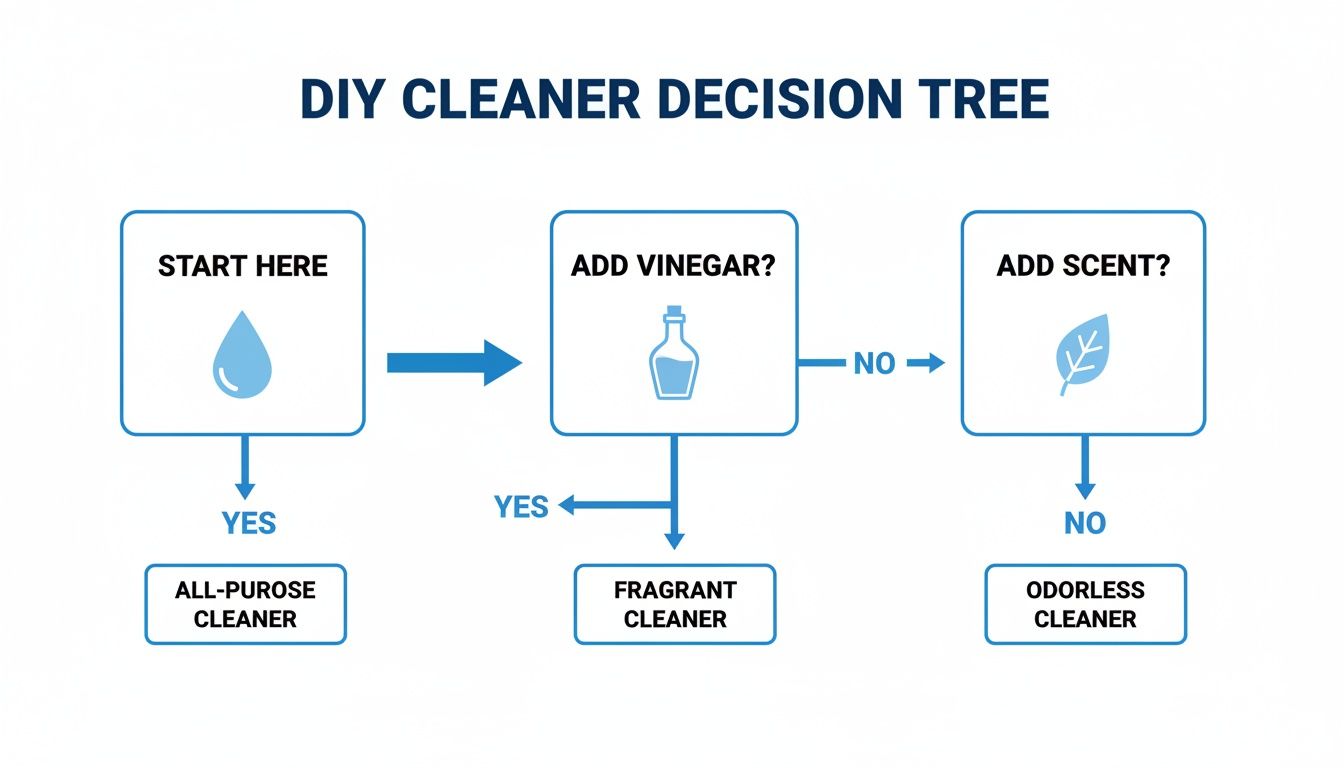
As you can see, creating a safe cleaner for sealed floors is a simple, step-by-step process that starts with water as the base. The real takeaway is that knowing your floor type is everything. It protects your investment and keeps your Madison home looking beautiful.
Proven Techniques for a Streak-Free Shine
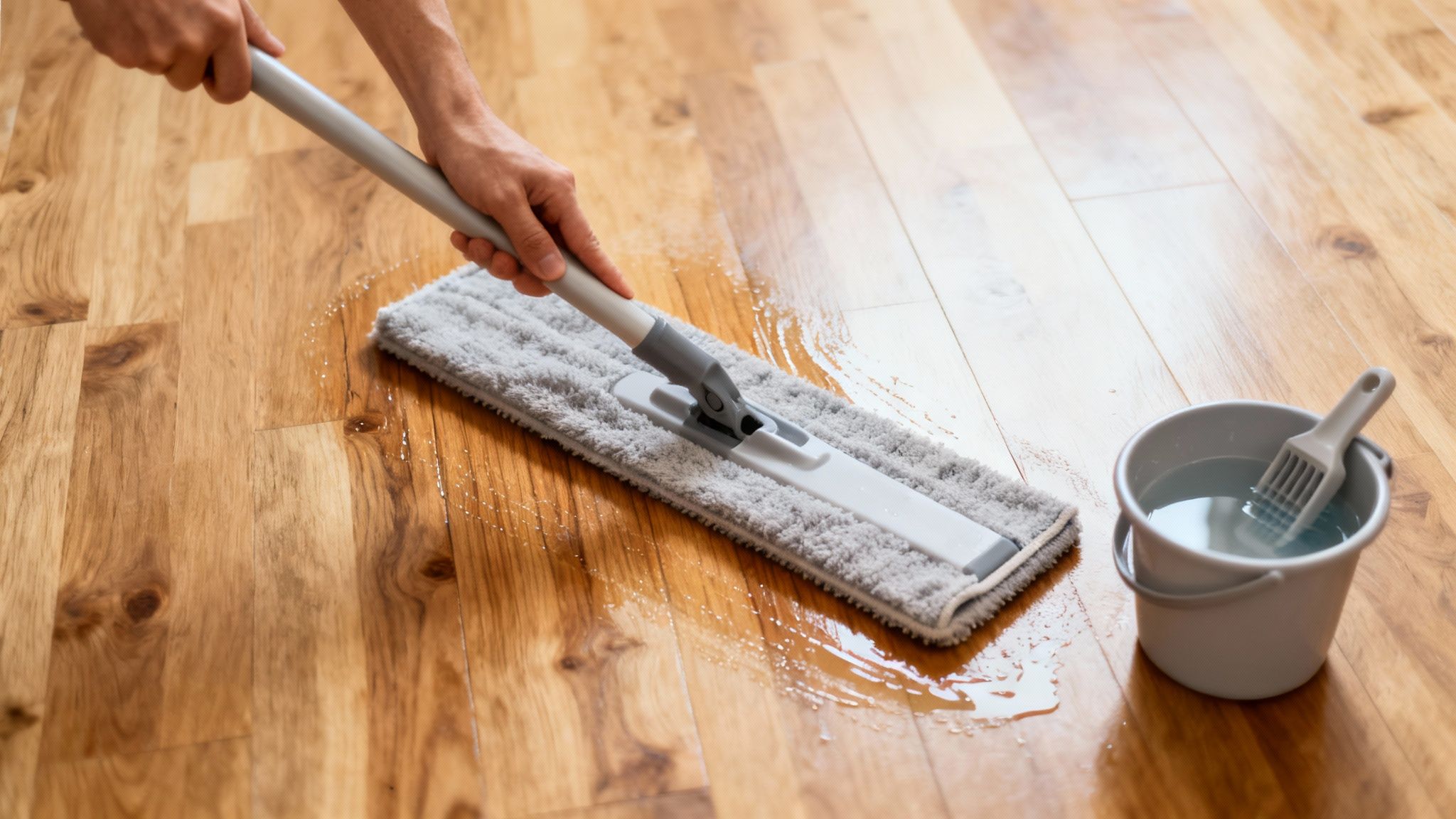
Having the right non toxic wood floor cleaner is a great first step, but how you use it is what really brings out that flawless, streak-free finish. It’s a common frustration-even the best products can leave floors looking hazy or streaky if the technique is off. The good news is, getting a professional-level shine is surprisingly simple once you know the right moves.
Think of it like washing a dusty car. You wouldn't just splash water on it and call it clean; you'd get the loose dirt off first. The same idea applies to your beautiful hardwood floors. The goal is to gently lift the grime away, leaving nothing behind but a clean, glowing surface.
Prep Your Floors for Success
Before a single drop of cleaner hits the floor, you have to deal with all the loose debris. Dust, pet hair, and tiny bits of grit tracked in from Madison sidewalks can act like fine sandpaper under your mop, creating micro-scratches in the finish.
Start with a quick but thorough pass using one of these tools:
A vacuum with a hardwood floor attachment: This is key. Make sure the beater bar-that rotating brush-is turned off so it doesn't scratch the surface.
A dry microfiber dust mop: These are fantastic for grabbing onto dust and pet hair instead of just kicking it all into the air.
This simple first step is non-negotiable for a scratch-free and streak-free result. It lets your cleaner focus on lifting grime instead of just pushing grit around.
Master the Damp-Mop Method
Here’s the single most important rule for cleaning wood floors: damp, not wet. Water is the number one enemy of hardwood. Too much of it can seep between the boards, causing them to swell, warp, and suffer long-term damage.
Think of it like giving your floors a quick sponge bath, not a soaking shower. Your mop should be just damp enough to clean the surface, not so wet that it leaves puddles or standing water.
For the best results, always reach for a microfiber flat-head mop. They hold the perfect amount of moisture and are gentle on your floor's finish. It's best to avoid old-school string mops, as they almost always hold way too much water for wood.
Follow these simple steps for a perfect clean every time:
Dilute Properly: If you're using a concentrated cleaner, follow the bottle's instructions exactly. Adding too much soap is a common mistake that leads to that sticky, dulling residue everyone hates.
Apply to the Mop, Not the Floor: Lightly spray your non toxic wood floor cleaner solution right onto the microfiber mop pad until it feels evenly damp. Never spray directly on the floor-that’s how you get oversaturation and potential water damage.
Mop with the Grain: Follow the direction of the wood planks as you mop. This little detail helps prevent streaks and ensures you’re cleaning inside the wood's subtle grooves.
Ensure Quick Drying: Good ventilation is your best friend here. Crack open a window or switch on a ceiling fan to help the floor dry quickly and evenly. A fast dry time is your best defense against water spots and lingering residue.
By sticking to these techniques, you'll be amazed at how easy it is to get that coveted streak-free shine, keeping your Madison home's floors looking their absolute best.
When to Call Your Local Cleaning Professionals
Taking care of your floors yourself is a great way to handle the day-to-day upkeep, but sometimes life in Madison gets ahead of us. Between packed work schedules, family life, and just trying to enjoy our beautiful city, a deep floor cleaning can easily slide to the bottom of the list. That’s when calling in a friendly professional isn’t just a luxury-it’s a smart way to get your time back and a truly exceptional clean.
You might get that feeling it's time for help when a big project pops up, like a move out cleaning Fitchburg rental where your deposit is on the line. Or maybe you just need a deep clean to wash away the grit after a long, slushy winter. Sometimes, it’s as simple as wanting your weekends back for walks around Lake Monona instead of spending them mopping floors.
When Our Expertise Makes the Difference
At Shiny Go Clean, we often see floors that need a bit more than a quick wipe-down. Homeowners sometimes find themselves dealing with stubborn scuffs that won’t budge, a persistent hazy film left behind by the wrong cleaners, or dirt that’s worked its way deep into high-traffic areas. That’s where a professional touch makes all the difference.
We come prepared with the right tools and premium, high-quality non toxic wood floor cleaner solutions that are perfectly matched to your specific flooring.
We handle situations like:
Deep Grime Removal: We safely lift away the built-up grime that regular mopping just can't reach.
Post-Renovation Clean-Up: We tackle that fine, sneaky dust that settles everywhere after a home project.
Seasonal Deep Cleans: A thorough floor cleaning is the perfect way to refresh your home for spring or get ready for holiday guests.
Move-In/Move-Out Perfection: Making sure floors are spotless for the next residents is one of our specialties.
Your Local Madison Cleaning Experts
We get the unique cleaning challenges Madison homes face, from the dust that blows in off the lakes to the salt and slush tracked inside all winter. We’re not a faceless national chain; we’re your neighbors. That’s why we pride ourselves on transparent, flat-rate pricing with no surprises, so you know exactly what you’re paying for.
Our commitment to safe, effective cleaning is part of a bigger shift. The global market for neutral floor cleaners-those pH-balanced formulas that are perfect for wood-is expected to grow from USD 6.85 billion to USD 9.94 billion by 2032, as more and more people demand plant-based solutions. We bring that same forward-thinking commitment right into your home.
If your floors need that professional touch, let us help. We invite you to experience the peace of mind that comes from a sparkling clean home. We offer top-tier maid service Madison WI can count on for every type of home, from downtown condos to family houses in Verona.
Ready for floors that truly shine? Give us a call at (608) 292-6848 or email us at madison@shinygoclean.com for a free, no-obligation quote.
Common Questions About Non-Toxic Floor Cleaning
We get it-when it comes to your beautiful hardwood floors, you want to do things right. Here in Madison, we’ve heard just about every question there is about keeping wood floors clean without harsh chemicals.
Our goal is to give you clear, practical answers so you can clean with total confidence. Let’s dive into what Madison homeowners are asking.
Is Vinegar Really Safe for All Hardwood Floors?
Vinegar can be a fantastic non toxic wood floor cleaner, but it comes with a big asterisk. Because it’s acidic, it has to be heavily diluted-think no more than a half-cup of white vinegar to a full gallon of warm water. This mix works well on modern, sealed floors with a polyurethane finish.
But you should avoid it completely on unsealed, waxed, or oiled floors. The acid can slowly eat away at these more delicate finishes. When in doubt, always test it in a hidden corner first.
How Often Should I Clean My Wood Floors?
This really comes down to foot traffic. For busy spots like your kitchen or the entryway where you kick off snowy boots, a light cleaning once a week is a great idea. For rooms that see less action, like a home office or guest bedroom, cleaning every two to four weeks is usually plenty.
The most important thing? Sweep or vacuum regularly. Getting rid of that daily grit and dust is your best defense against scratches and means you won't have to mop as often.
Will a Non-Toxic Cleaner Actually Get My Floors Clean?
Yes, absolutely! The idea that you need harsh chemicals for a deep clean is a total myth. Modern non-toxic cleaners use smart, plant-based ingredients called surfactants that are incredibly effective.
These gentle powerhouses work by breaking the surface tension of dirt and grime, lifting it right off the floor so your mop can easily wipe it away. You get a powerful, sparkling clean without any toxic fumes or sticky residue left behind.
What Is the Best Mop to Use on Hardwood Floors?
Your best friend for hardwood floors is a microfiber flat-head mop, hands down. The soft pads are experts at grabbing dust, pet hair, and dirt without being abrasive or scratching your floor’s finish.
Most importantly, they give you perfect control over the moisture, helping you achieve that "damp, not wet" clean that’s so crucial for wood. We recommend staying far away from traditional string mops-they almost always hold way too much water, which can seriously damage your floors over time.
Ready to let the professionals handle it? Shiny Go Clean offers reliable, high-quality cleaning with trusted, background-checked teams who know just how to care for Madison homes. Get your free time back and enjoy floors that truly shine.
Book your first cleaning today at https://shinygoclean.com and use code SHINY30 for $30 off
Comments