Your Guide to Toilet Bowl Cleaner Safe for Septic Tanks in Des Moines
- Jan 23
- 12 min read
If you live in Des Moines or the surrounding suburbs like Ankeny and Waukee, your septic system is the unsung hero of your home. But using the wrong toilet cleaner can turn that hero into a costly villain in a hurry. So, what actually makes a toilet bowl cleaner safe for septic tanks?
It really comes down to one simple thing: avoiding harsh chemicals like chlorine bleach and ammonia. These ingredients are designed to kill germs, and they don't know the difference between the bad stuff in your toilet and the good bacteria your septic system needs to survive.
Protecting Your Home's Septic System in Des Moines
A septic system isn't just a tank buried in your yard- it's a living, breathing wastewater treatment plant. It depends on a thriving colony of bacteria to break down solid waste, separating it from the water that eventually filters back into the soil. When harsh chemicals go down the drain, that whole process can grind to a halt.
Think of it like a tiny, self-sustaining garden in your backyard. The beneficial bacteria are the hardworking gardeners, diligently turning waste into harmless stuff. A septic-safe cleaner is like gentle, organic compost that helps them do their job. On the other hand, a cleaner with bleach is like pouring weed killer all over your garden- it wipes out the very workers you rely on.
The Real Cost of the Wrong Cleaner
Protecting this delicate balance isn't just an eco-friendly choice; it's a smart financial move for homeowners across the Des Moines metro. Nearly one in five American households rely on septic systems, and according to the U.S. EPA, improper use of household cleaners contributes to a shocking 36% of all septic system failures each year.
Those failures can lead to repairs averaging between $3,000 and $7,000- a huge expense for any family. That statistic alone shows why choosing the right toilet bowl cleaner is so important for busy families in Des Moines, Waukee, and Ankeny. Learn more about these septic-safe solutions.
This guide will walk you through everything you need to know, from deciphering product labels to mixing your own effective DIY solutions. We’ll show you how to keep your toilets sparkling without risking your plumbing, giving you peace of mind. And for those who'd rather leave it to the pros, Shiny Go Clean offers expert house cleaning in Des Moines, IA using products that protect your home's most vital systems.
Understanding Safe vs. Harmful Cleaner Ingredients
To pick a toilet bowl cleaner that won’t wreck your septic tank, it helps to think like your system does. Picture your tank as a tiny, bustling city of good bacteria, working around the clock to break down waste. The right ingredients help this city thrive, but the wrong ones can cause a total blackout.
Simply put, septic-safe ingredients are the ones that biodegrade easily and don’t mess with this delicate bacterial world. On the other hand, harmful ingredients are harsh, antimicrobial chemicals designed to kill everything they touch- including the good bacteria your system needs to function. For homeowners in Urbandale or Johnston, knowing this difference is key to avoiding a septic nightmare down the road.
What you pour down the toilet has a direct line to the health of your septic system’s hardworking microorganisms.
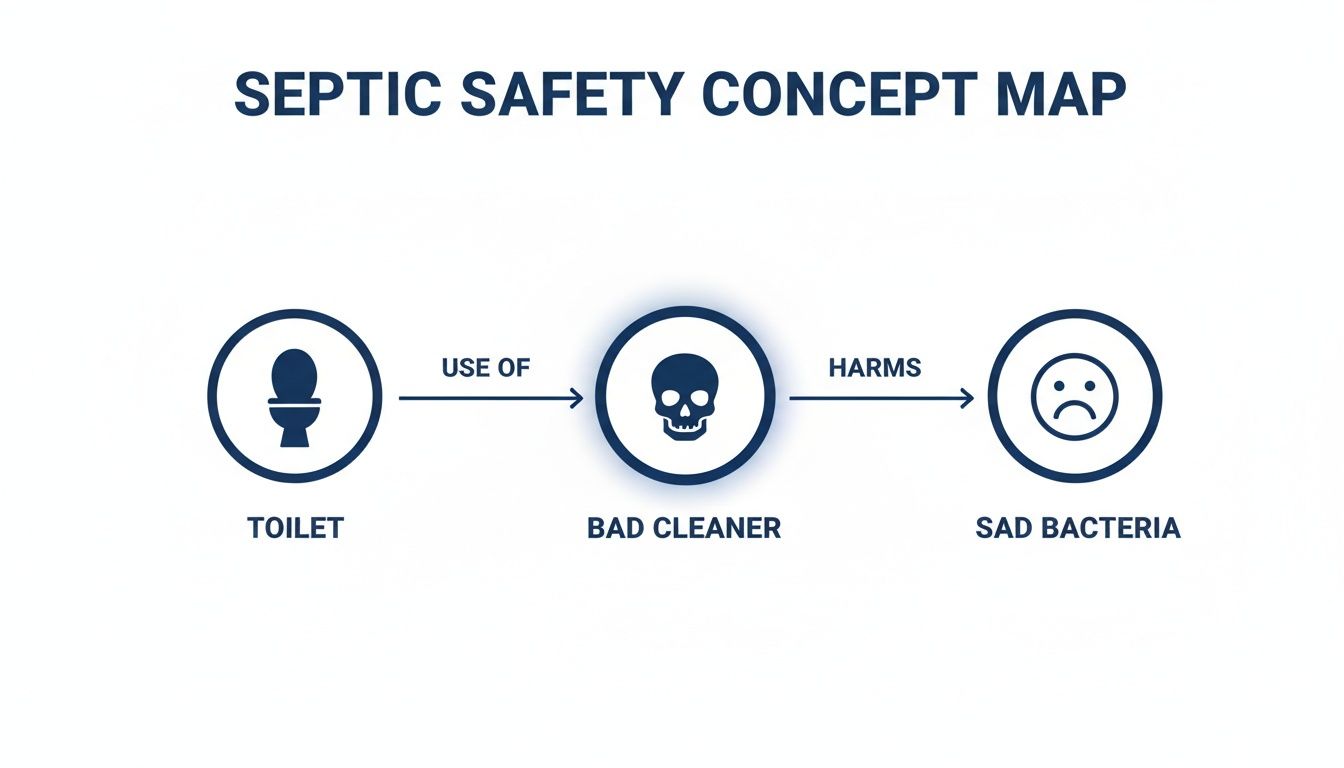
It’s a straightforward connection: harsh chemicals go in, and the essential bacteria that break down waste get wiped out.
The Good Guys: Plant-Based and Mineral-Based Cleaners
Septic-safe cleaners draw their power from ingredients that are tough on stains but gentle on your pipes and tank. These ingredients work with nature, not against it, breaking down into harmless bits and pieces once their job is done.
Look for products that lean on ingredients like these:
Plant-based surfactants: These create the suds and lifting action you need, but they come from sources like coconut or corn and biodegrade with ease.
Citric acid: Pulled from citrus fruits, this is a fantastic natural acid for dissolving mineral deposits and hard water stains without being overly aggressive.
Enzymes: These are biological proteins that zero in on specific types of waste (like proteins and starches), helping to break them down just like the bacteria in your tank do.
Baking soda (Sodium bicarbonate): A mild alkali and gentle abrasive that helps scrub away grime and zap odors.
These are the ingredients that clean your toilet effectively without declaring war on your septic tank’s bacterial workforce.
The Bad Guys: Chemicals to Avoid at All Costs
On the other side are the ingredients that can bring your septic system to a screeching halt. These are potent, broad-spectrum chemicals that completely disrupt the natural decomposition process. In fact, just two gallons of chlorine bleach can kill all the functioning bacteria in a standard 1,000-gallon septic tank.
The most common culprits in conventional toilet bowl cleaners are chlorine bleach, ammonia, and antibacterial agents. While they’re great at sterilizing surfaces, that’s the very reason they pose a direct threat to the living ecosystem inside a septic tank.
To help you spot the difference on product labels, here's a quick reference guide comparing common ingredients and their impact.
Septic-Safe vs Septic-Harmful Cleaner Ingredients
Ingredient | Effect on Septic System | Recommendation |
|---|---|---|
Chlorine Bleach | Kills beneficial bacteria, disrupting the waste breakdown cycle. | Avoid Completely |
Ammonia | Toxic to the bacterial environment and can contaminate groundwater. | Avoid Completely |
Antibacterial Agents | Designed to kill bacteria, which is the exact opposite of what your septic tank needs. | Avoid Completely |
Plant-Based Surfactants | Biodegrade quickly and do not harm the system's bacteria. | Embrace |
Citric Acid | Breaks down mineral stains without disrupting the tank's ecosystem. | Embrace |
Enzymes & Bacteria | Actively help break down waste, supporting the septic system's natural process. | Embrace |
By understanding these key differences, you can confidently choose a toilet bowl cleaner that keeps your bathroom sparkling and your septic system running just the way it should.
How to Choose the Right Septic-Safe Cleaner
Knowing which ingredients to steer clear of is a great start, but standing in the cleaning aisle can still feel a bit overwhelming. How do you actually spot the right product for your home in West Des Moines or Waukee? The good news is that manufacturers are making it easier than ever to pick a toilet bowl cleaner safe for septic tanks.
Your best strategy is to become a quick and effective label reader. A few key phrases and symbols can instantly tell you if a product is a friend or foe to your home’s plumbing.
Look for Clear Indicators
When you're scanning the shelves, keep an eye out for labels that explicitly say the product is "septic-safe." This is the most direct confirmation you can get. It also helps to look for cleaners that are biodegradable and phosphate-free, as these terms signal that the ingredients will break down naturally and won't harm the good bacteria.
Another powerful symbol to watch for is the EPA's "Safer Choice" logo.
This certification means the U.S. Environmental Protection Agency has reviewed every single ingredient in the product. It confirms the cleaner meets their strict criteria for both performance and safety for human health and the environment. Think of it as a gold standard for septic-friendly products.
Trusted Brands and Formulations
You don’t have to stick to niche, hard-to-find brands to protect your septic system. Many mainstream companies have reformulated their products to be safer and more effective. For example, some formulations of Lysol Toilet Bowl Cleaner have been a reliable choice since they were updated in the early 2000s. Their labels now confirm they’re safe for all plumbing types, thanks to biodegradable ingredients.
In a 2023 evaluation of over 20 top toilet bowl cleaners, septic-safe models like those from Lysol scored high for effectiveness, removing 95% of stains and killing 99.9% of germs without harming delicate systems. This performance stands in contrast to many bleach-based rivals that underperformed in septic compatibility tests. You can learn more about these septic-safe cleaner findings.
Besides reformulated classics, there are plenty of excellent plant-based options available that deliver a powerful clean. Brands that use citric acid, enzymes, and plant-derived surfactants are fantastic choices. These cleaners prove that "septic-safe" doesn't mean sacrificing a brilliant shine. For a deeper look into the power of natural ingredients, check out our guide to plant-based bathroom cleaners.
By knowing what to look for on the label, you can easily choose a product that keeps your toilet sparkling and your septic system healthy.
Effective DIY Septic-Safe Toilet Cleaner Recipes
For Des Moines homeowners who love a good DIY project or just need a quick cleaning fix from the pantry, you don't have to buy a special product. It’s surprisingly easy to whip up a powerful and completely septic-safe toilet bowl cleaner using a few common household items. These recipes get the job done, are easy on the wallet, and give you total control over what goes down your drains.
The real magic here is just simple science. Ingredients like baking soda act as a gentle, deodorizing abrasive, while the mild acidity in white vinegar works wonders on mineral deposits and hard water stains- a common headache in many Iowa homes, especially after dealing with our hard water.
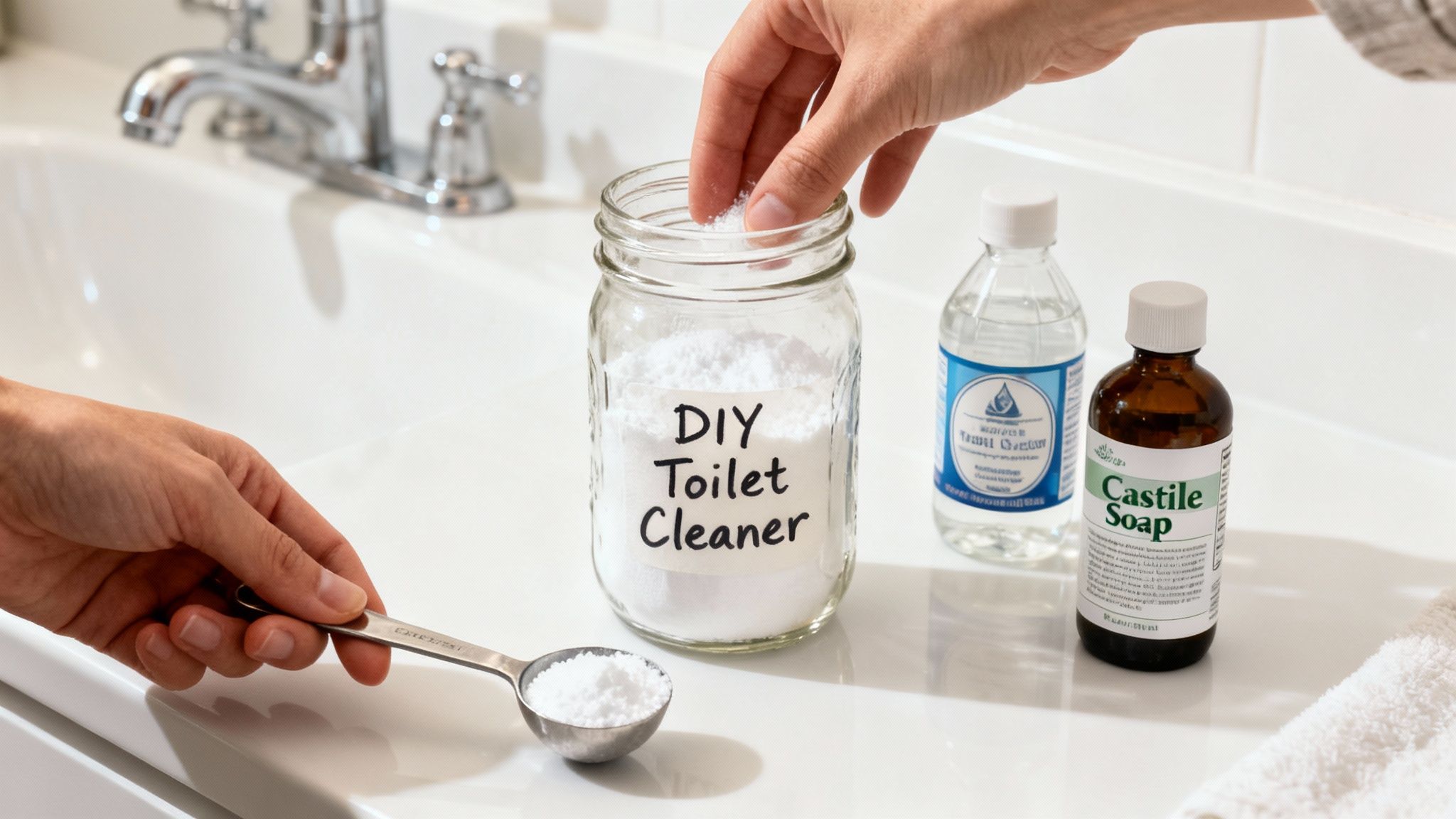
Simple Scouring and Deodorizing Cleaner
This is the go-to recipe for routine cleaning. It uses two powerhouse ingredients to keep your toilet bowl fresh without disrupting the delicate ecosystem in your septic tank.
Step 1: Pour about one cup of white vinegar into the toilet bowl. Swish it around with your toilet brush to make sure you coat all the sides.
Step 2: Sprinkle about half a cup of baking soda right into the bowl. You’ll see a satisfying fizzing reaction as the two get to work.
Step 3: Let the mixture sit for 10-15 minutes. This gives it enough time to break down grime and knock out odors.
Step 4: Give the bowl a thorough scrub with your brush, then flush.
If you're dealing with more stubborn spots, you might want to check out our guide on how to remove tough toilet ring stains, which has extra tips that are also septic-safe.
Heavy-Duty Stain Removing Paste
For more challenging stains or mineral buildup, a thicker paste gives you more scrubbing power. This recipe takes a tiny bit more effort but delivers excellent results for a deep clean.
Combine a half-cup of baking soda with just enough liquid castile soap to form a thick, scrubbable paste. Apply it directly to the stained areas of the bowl, let it sit for 15-20 minutes, then scrub away with a toilet brush before flushing. The baking soda provides the grit, while the castile soap helps lift and wash away the grime.
Best Practices for Total Septic System Maintenance
Picking the right toilet bowl cleaner is a huge step in the right direction, but keeping a septic system healthy involves more than just smart cleaning choices. Think of it like a car- you can use the best oil, but you still have to check the tires and get a regular tune-up. Taking care of the whole system helps you dodge costly emergencies and keeps your home running without a hitch.
This is especially true for homeowners all over the Des Moines metro area, from busy family neighborhoods in West Des Moines to the new builds in Waukee. A little bit of preventative maintenance goes a long way in protecting your investment.
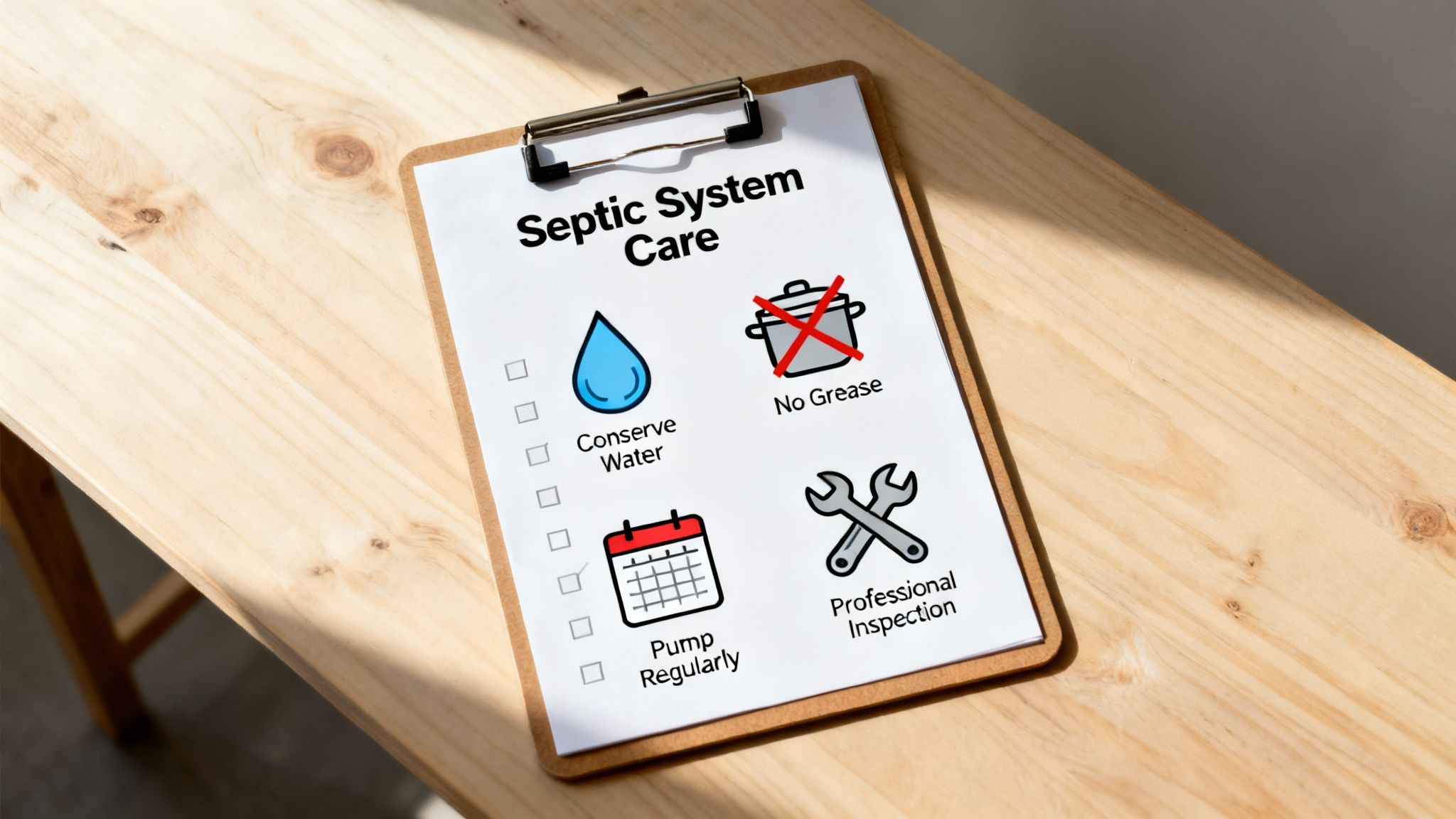
A Simple Septic Health Checklist
You don’t have to do a ton of work to keep your system happy- just a few smart habits will do the trick. Weaving these practices into your daily routine can seriously reduce the strain on your tank and add years to its life.
Here are a few key tips every homeowner with a septic system should live by:
Watch What Goes Down the Drain: Your toilet is not a trash can. The only things that should ever get flushed are human waste and toilet paper. Steer clear of flushing items like so-called "flushable" wipes, paper towels, dental floss, and feminine hygiene products. They just don't break down and can cause some nasty clogs.
Keep Grease Out of the Kitchen Sink: Cooking grease, fats, and oils are public enemy number one for a septic system. When they go down the drain, they cool off and turn solid, creating blockages in your pipes and drain field. The better move is to pour used grease into a disposable container and toss it in the trash once it hardens.
Conserve Water: The less water you send down to your septic tank, the better it can do its job. Pushing too much water through the system doesn't give it enough time to properly treat waste. Simple fixes like repairing leaky faucets, putting in high-efficiency toilets, and spreading out your laundry loads can make a massive difference.
The Importance of Professional Care
Even if you follow all the rules, your septic system still needs a professional's touch now and then. Just like you'd call a mechanic for your car, you need to lean on septic pros for inspections and maintenance.
Most experts recommend having your septic tank professionally inspected every one to three years. During an inspection, a pro will check for leaks, look at the sludge and scum layers, and make sure all the mechanical parts are in good working order.
On top of that, your tank will need to be pumped every three to five years, though the exact timing depends on how big your household is and how much water you use. Pumping gets rid of all the built-up sludge and scum, stopping it from clogging your drain field- a problem that can lead to an expensive and messy system failure. This proactive approach is hands-down the best way to make sure your septic system remains a reliable, unseen hero for your home.
Let Des Moines Professionals Keep Your Home Sparkling
For busy Des Moines families, juggling work, school, and life’s other demands is a full-time job. Keeping up with the cleaning is tough enough, let alone adding “research every toilet bowl cleaner for septic safety” to the to-do list. It’s no surprise that scrubbing toilets often falls to the bottom of the list when weekends are your only chance to unwind.
That’s where bringing in a professional can make all the difference. It’s not just about getting a clean home; it’s about reclaiming your time and getting the peace of mind that the job is done right- without accidentally harming your home’s septic system.
Your Trusted Partner for Septic-Safe Cleaning
Choosing a cleaning service that gets the specifics of a septic system is key. The wrong team might grab a bottle of something harsh off the shelf, not realizing it could disrupt your tank’s delicate ecosystem and lead to bigger problems down the line. You need a partner who understands and respects your home’s infrastructure.
At Shiny Go Clean, our teams are trained to use septic-safe products and methods that protect your home. We serve homeowners across the Des Moines metro, from Johnston to Altoona, with reliable service you can count on. Whether it’s a one-time deep clean, a detailed move-out cleaning, or a recurring maid service, we adapt to what your home needs. We're happy to work with products you provide or use our own trusted, septic-friendly solutions.
We believe in making your life easier with transparent, flat-rate pricing and a satisfaction guarantee. You won’t find any surprise fees or awkward upsells here- just a consistently clean home.
It’s time to take back your weekends and enjoy a spotless home without the worry. We handle the details so you can focus on what really matters. If you're ready to learn more, our guide on how to keep your house sparkling with local cleaning is a great place to start. Give us a call today at (515) 446-9726 or book your service online in just a few minutes.
Got a Septic System? Quick Answers to Your Cleaning Questions
Even with the best intentions, it's easy to second-guess what’s safe to use when you have a septic tank. To finish up, here are some straightforward answers to the questions we hear most often from homeowners in Des Moines.
Are "Flushable" Wipes Really Okay for a Septic Tank?
Simply put, no. Most wipes labeled “flushable” just don't break down the way toilet paper does. They can clump together and create serious clogs in your pipes and tank, leading to backups that are messy and expensive to fix. It's always a safer bet to toss all wipes in the trash, no matter what the package says.
How Often Can I Clean My Toilets with a Septic System?
Using a septic-safe toilet bowl cleaner once or twice a week is completely fine and won't throw your system out of balance. The key is moderation and choosing the right product. A gentle, regular cleaning schedule actually prevents the kind of heavy buildup that makes people reach for harsh chemicals in the first place.
What About Bleach Alternatives or "Color-Safe" Bleach?
Yes, oxygen-based bleaches are a much better choice for septic systems than standard chlorine bleach. Products that use ingredients like hydrogen peroxide break down into simple water and oxygen, so they don't harm the good bacteria your tank relies on. Just like with any cleaner, follow the directions and don't overdo it.
Worried you’ll have to micromanage your cleaning service to protect your septic tank? You shouldn't have to. At Shiny Go Clean, we’re happy to use specific septic-safe products you provide, or we can bring our own approved cleaners to get the job done right.
Will Hiring a Cleaning Service Harm My Septic System?
Not if you hire a team that gets it. A professional service like Shiny Go Clean understands the delicate balance required for homes with septic systems all over the Des Moines metro. Just give us a heads-up that you have a septic tank when you book your service.
We make sure our cleaning methods protect your system, leaving you with a home that shines and zero worries. Give us a call at (515) 446-9726 to talk about your home's needs.
Ready to get your time back and enjoy a sparkling home without wondering if you're harming your septic tank? The professional team at Shiny Go Clean is here to help. Book your Des Moines house cleaning service online in just a few minutes.
Comments