Cleaning Refrigerator with Vinegar: Your Quick Guide to a Sparkling Fridge
- Jan 12
- 13 min read
Cleaning your refrigerator with vinegar is one of those simple, food-safe cleaning hacks that actually works. All you need is a spray bottle with equal parts white vinegar and water to cut through sticky messes and knock out funky odors. It’s the perfect DIY cleaner for one of the most important appliances in your kitchen.
But sometimes, life gets busy, and a full fridge clean-out feels like a huge project. If you're looking for a professional touch, especially for a move out cleaning in Fitchburg, our team at Shiny Go Clean is just a call away.
Why Vinegar Is Your Fridge's Best Friend
Before you start scrubbing, it’s worth knowing why vinegar is such a secret weapon for a truly clean fridge. It’s not just a pantry staple- it's a safe, natural, and surprisingly powerful alternative to the harsh chemicals that have no business being near your food.
For those of us here in Madison who prefer eco-friendly and healthy home solutions, using vinegar is a total game-changer. It gives you confidence that you're making a smart, effective choice for your home, using something you probably already have in the cupboard.
The Science Behind the Sparkle
The magic is all in its main ingredient: acetic acid. This natural acid gives white vinegar its cleaning muscle, letting it cut through sticky spills, dissolve greasy fingerprints, and neutralize stubborn smells with ease. Think about that forgotten container of leftovers or the sticky ring from a jelly jar- vinegar is practically made for those messes.
Beyond just cleaning, vinegar is also a decent disinfectant. Its acidity creates an environment where a lot of common bacteria just can't survive.
Research shows that standard white vinegar, with its 5% acetic acid, can kill up to 80% of certain viruses and bacteria. Studies have even highlighted its power against food-borne pathogens like E. coli and Salmonella. You can learn more about vinegar's cleaning effectiveness and its properties.
Safe for Your Family and Food
One of the best reasons to clean a refrigerator with vinegar is that it's completely non-toxic. Unlike commercial cleaners that can leave behind chemical residues, a simple vinegar-and-water mix is totally food-safe once it dries. That’s a big deal for the very surfaces where your produce, dairy, and meats will sit.
Here’s why it’s a smarter choice for Madison homes:
No Harsh Fumes: You won't be breathing in strong chemicals, which is a relief, especially during our long cold winters when all the windows are shut tight.
Cost-Effective: A big bottle of distilled white vinegar is incredibly cheap and can be used for dozens of cleaning tasks all over the house.
Eco-Friendly: Vinegar is biodegradable, making it a much greener choice than chemical-based products that can harm the environment.
When you're trying to keep a healthy home, especially in a place like a downtown Madison apartment where ventilation might be limited, choosing a natural cleaner is a simple step with a big impact.
Assembling Your Natural Cleaning Toolkit
Getting everything ready beforehand is the secret to a quick, painless cleaning session. Think of it as your mission prep before tackling the job. Having all your supplies within arm’s reach means no frantic searching for a sponge or spray bottle mid-clean.
The star of the show is, of course, distilled white vinegar. You don’t need the fancy apple cider kind for this job- the basic stuff works perfectly. You'll also want a clean spray bottle to mix your solution, a few microfiber cloths for trapping grime without leaving lint behind, and maybe a small cooler to keep your food safe and cold while you work.
Your Fridge Cleaning Toolkit
Before you start pulling things out of the fridge, take a minute to gather your gear. Here's a simple checklist to make sure you have everything you need.
Item | Recommended Type | Why You Need It |
|---|---|---|
Cleaning Agent | Distilled White Vinegar | A natural acid that cuts grease, kills bacteria, and deodorizes. |
Mixing Container | Clean Spray Bottle | For easy application of your vinegar solution onto surfaces. |
Wiping Cloths | Microfiber Cloths (3-4) | They grab onto dirt and grime instead of just pushing it around. |
Scrubber | Non-Abrasive Sponge | For tackling stubborn, stuck-on food without scratching plastic. |
Small Brush | Old Toothbrush or Grout Brush | Perfect for getting into tight corners and cleaning the door seals. |
Food Storage | Cooler with Ice Packs | Keeps perishables safely chilled while you clean. |
With these items ready to go, the entire process will feel less like a chore and more like a satisfying refresh for your kitchen.
Your Simple and Effective Cleaning Solution
The best recipe for cleaning your refrigerator with vinegar is one part white vinegar to one part warm water. This 50/50 ratio is strong enough to cut through sticky messes and neutralize odors but gentle enough that it won't damage the plastic surfaces inside your fridge.
Just mix them in your spray bottle, give it a good shake, and you're ready to go. While this solution is a fantastic starting point, it's not the only option. We cover more great, simple recipes in our guide to which natural cleaning products actually work.
Pro Tip: Add a few drops of lemon or lavender essential oil to the spray bottle. It won’t boost the cleaning power, but it will leave behind a pleasant, fresh scent instead of that initial vinegar smell.
Once you have your toolkit assembled, you're all set for a smooth, organized process. And beyond vinegar, you can always explore other all natural cleaning methods to keep your entire Madison home feeling fresh and toxin-free.
Your Action Plan for a Sparkling Fridge
Alright, with your vinegar solution mixed and your cloths at the ready, it's time to get down to business. This is the fun part- seeing your fridge go from cluttered and sticky to bright and sparkling clean. We'll walk through it together, breaking it down into simple, manageable actions.
The very first move is to empty everything out. I know, this can feel like the biggest hurdle, but you can’t get a thorough clean without a clear workspace. Work shelf by shelf, placing perishables like milk, meat, and cheese into that cooler you prepared. This is also the perfect moment to do a quick inventory- toss out that expired dressing and consolidate those half-empty mustard jars.
Washing Shelves and Drawers
Once the fridge is empty, carefully take out all the shelves, drawers, and any other removable parts. These are the pieces that usually have the most stubborn, stuck-on messes.
Carry them over to your sink or even the bathtub if you need more space. Give everything a generous spray with your 50/50 vinegar and water solution, paying extra attention to the corners of crisper bins where gunk loves to hide. Let the solution sit for a few minutes. It needs a moment to work its magic on any sticky spots before you start scrubbing.
For most spills, a good wipe with a microfiber cloth is all you'll need. If you run into a particularly stubborn, sugary spill from a jam jar or soda, use a non-abrasive sponge to gently scrub it away. The vinegar solution is fantastic for dissolving that stickiness without much effort.
Wiping Down the Interior
While the shelves and drawers are drying, turn your attention to the now-empty interior. I always recommend starting from the top and working your way down. It’s a simple trick that prevents drips from messing up areas you've already cleaned. Spray every surface- the back wall, the side walls, the ceiling, and the floor of the fridge- with your vinegar mix.
This infographic shows just how simple and effective this toolkit is.
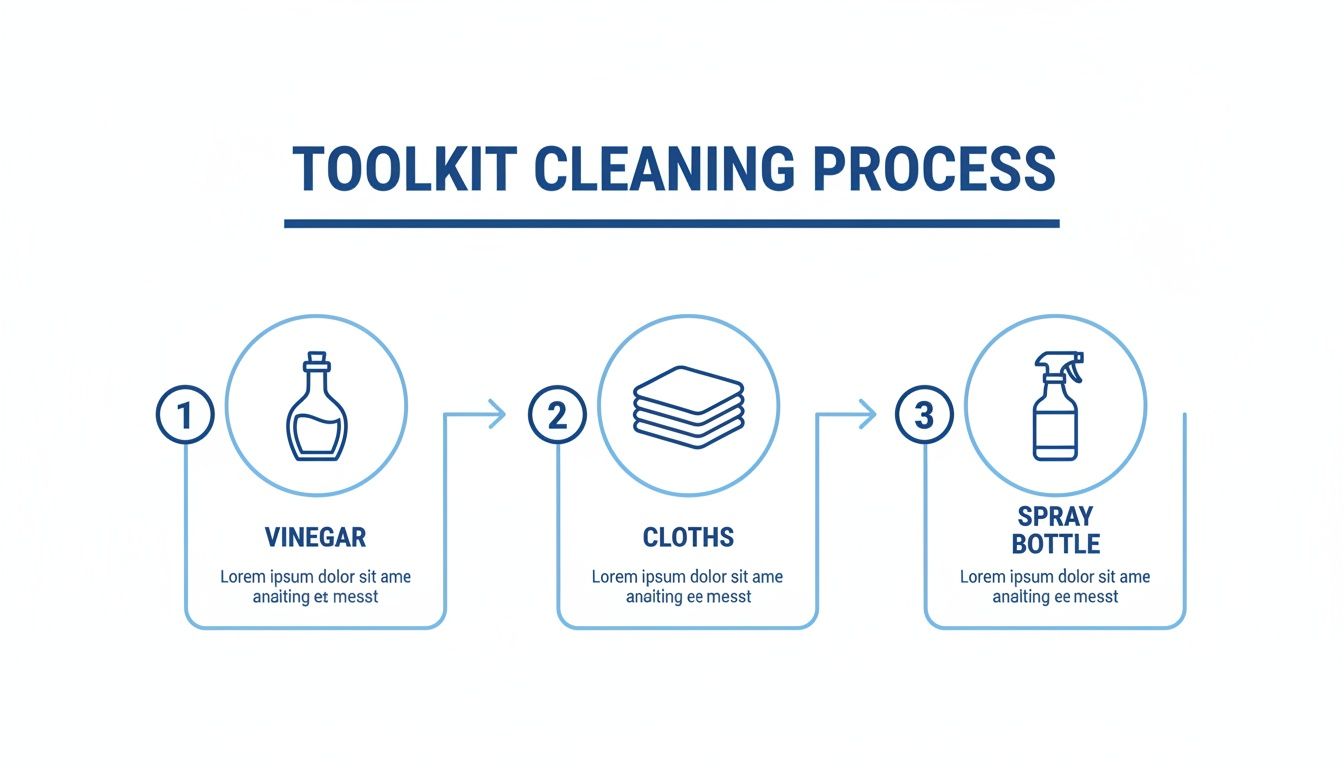
As you can see, these three basic items are all you need for a powerful, non-toxic clean.
The vinegar's acetic acid is breaking down grime and neutralizing bacteria on contact. One study on plastic surfaces similar to fridge shelves found that a simple vinegar wipe-down reduced bacteria like E. coli by a staggering 98%. The wipe-down dropped the average bacterial count from 44.7 colony-forming units down to just 0.8.
After letting the solution sit for a minute, wipe everything down with a clean, damp microfiber cloth. For any lingering tough spots, a second spray and a little elbow grease should do the trick.
Tackling the Forgotten Spots
Don't forget the details! The rubber door seals, or gaskets, are notorious for collecting crumbs and spills.
Use your old toothbrush or a small brush to gently scrub within the folds of the gasket with the vinegar solution. This not only cleans them but helps ensure a tight seal, which keeps your fridge running efficiently.
Other often-missed spots include:
The Drip Pan: Some refrigerators have a small, removable pan at the bottom. Carefully slide it out and wash it with your solution.
The Butter Compartment: This little door can collect smudges and crumbs.
Water and Ice Dispenser Area: If you have one, this area can get grimy. For a detailed walkthrough, check out our guide on how to clean a fridge water dispenser.
Once everything is sparkling and completely dry, you can place the shelves and drawers back inside. Then, take a moment to wipe down your jars and containers before putting them back, organizing as you go. Your fridge is now officially refreshed and ready to go.
How to Handle Tough Odors and Stains
Sometimes, a standard spray-and-wipe just won't cut it. You might be dealing with a lingering odor from last week’s fish dinner or a sticky, dried-on mess that seems permanently fused to the shelf. This is where your natural cleaning toolkit gets a little boost from another pantry hero: baking soda.
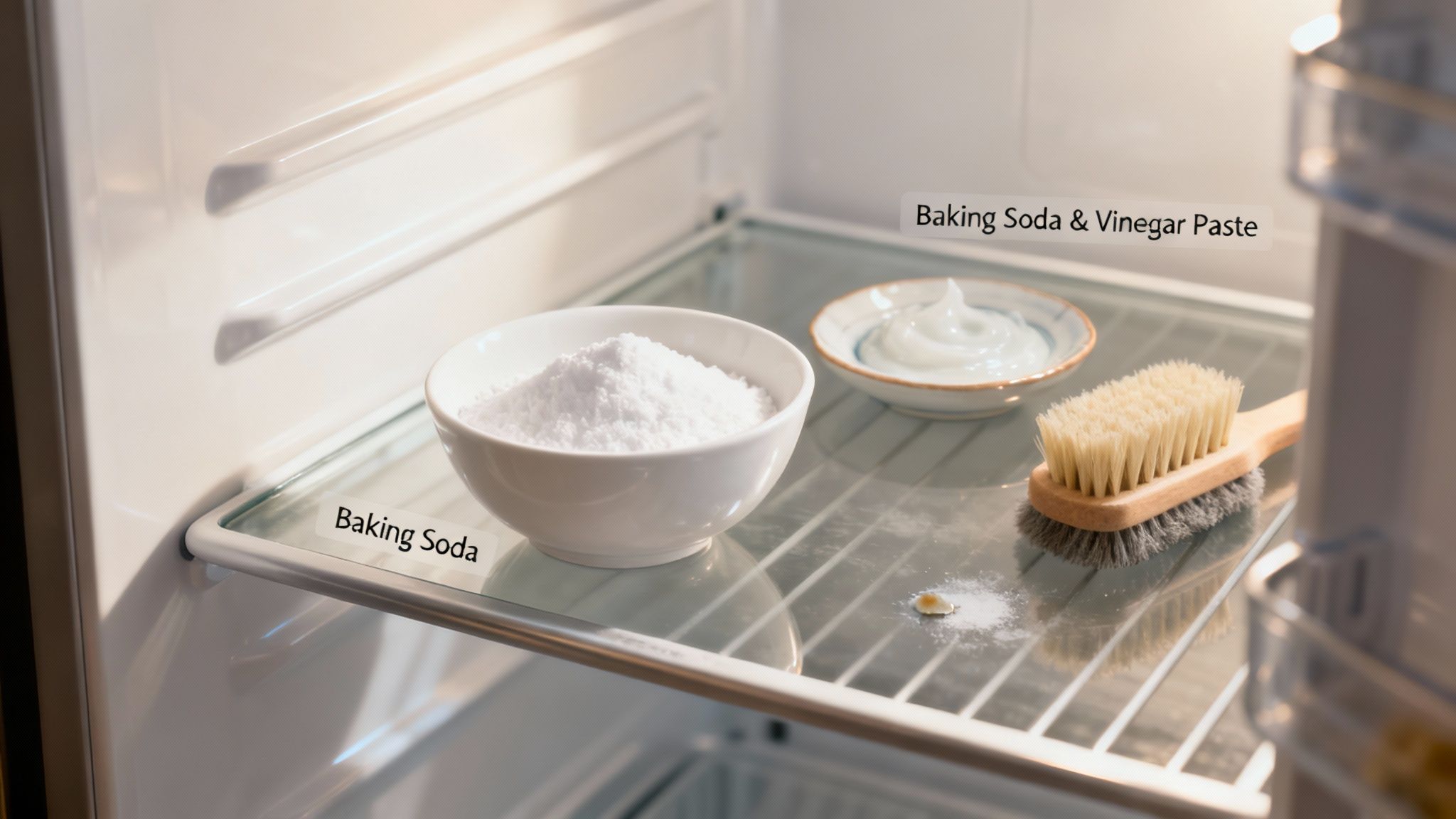
When you're cleaning your refrigerator with vinegar and come across a stubborn spot, the combination of vinegar and baking soda is incredibly effective. It's the perfect solution for restoring your fridge to a fresh, neutral state without reaching for harsh chemicals.
Creating a Gentle Scrub for Set-In Stains
For those dried-on, sticky spills- like syrup or juice- you need a bit more scrubbing power than a liquid spray can offer. A simple paste made from baking soda and your vinegar solution is the answer.
Mix a thick paste: In a small bowl, combine a few tablespoons of baking soda with just enough of your vinegar-water solution to create a thick, spreadable paste. It should have a consistency similar to toothpaste.
Apply and wait: Gently spread this paste directly onto the stain. Let it sit and fizz for about 10-15 minutes. This gentle chemical reaction helps lift the stain from the surface.
Scrub and wipe: Use a non-abrasive sponge or microfiber cloth to gently scrub the area in a circular motion. The baking soda acts as a mild abrasive, lifting the grime without scratching the plastic. Wipe the residue away with a clean, damp cloth.
This trick is a lifesaver, especially for anyone in Madison who has dealt with a fridge after a power outage or just needs to tackle a mystery spill.
Banishing Lingering Odors for Good
Even after a thorough cleaning, some odors can hang around. The porous plastic inside a fridge can absorb strong smells over time, but there are simple ways to neutralize them.
After cleaning, place a small, open bowl of fresh baking soda on a middle shelf. Baking soda is brilliant at absorbing and neutralizing smelly food acids, leaving the air inside your fridge fresh and clean. Just be sure to replace it every couple of months.
Alternatively, a small bowl of white vinegar can also work as a deodorizer, absorbing airborne odors. If you’re struggling with persistent smells throughout your home, you can find more tips in our Madison guide to removing odors from your home. Dealing with these tough spots makes all the difference between a surface-level clean and a truly refreshed appliance.
When you run into common fridge problems, knowing which natural solution to grab can save you a lot of time and frustration. Here’s a quick guide to help you choose the right tool for the job.
Natural Solutions For Fridge Problems
Problem | Vinegar-Based Solution | Alternative Natural Method | Best For |
|---|---|---|---|
Lingering Odors | Place a small bowl of white vinegar inside. | An open box of baking soda. | Absorbing airborne smells from things like onions or leftovers. |
Sticky Stains | Mix vinegar and baking soda into a paste, let it sit on the stain. | A few drops of lemon juice mixed with salt. | Dried-on spills like jam, juice, or sauces. |
Mildew/Mold Spots | Spray undiluted white vinegar, let sit for 1 hour, then scrub. | A few drops of tea tree oil mixed with water. | Small spots of mold in door seals or damp corners. |
General Grime | 1:1 vinegar and water solution spray. | Warm, soapy water with a drop of dish soap. | Routine weekly wipe-downs and light spills. |
Using the right remedy makes cleaning faster and more effective. You end up with a fridge that doesn’t just look clean but smells and feels fresh, too.
Keeping Your Refrigerator Fresh and Clean
Your fridge is finally sparkling- now, let's make sure it stays that way. Keeping a refrigerator clean isn't about one massive effort every year. It’s really about building simple habits that stop grime and funky odors from ever getting a foothold.
This proactive approach makes your next deep clean worlds easier. The single most impactful habit? Wipe up spills the second they happen. A little drip of yogurt or a sticky ring from a juice bottle is a 10-second fix right away, but it becomes a stubborn, dried-on mess if you leave it. Keeping a microfiber cloth somewhere handy makes these quick clean-ups a total breeze.
A Simple Fridge Maintenance Schedule
Staying on top of things doesn't require a huge time commitment. It just takes a little consistency. When you break the tasks down, you can keep your fridge in top shape without ever feeling overwhelmed.
Here’s a practical schedule that works well for busy Madison households:
Weekly Wipe-Down: Once a week, maybe right before you go grocery shopping, take five minutes. Use your vinegar spray to wipe down the handles and any obvious drips on the shelves.
Monthly Check-In: At the beginning of each month, do a quick inventory. Toss out anything that’s expired, wipe down sticky jars, and make sure nothing is hiding in the back.
Quarterly Deep Clean: Every three to four months, it's time to repeat the deep clean you just finished. This thorough reset is crucial for your appliance's health and your family's food safety.
Deep cleaning your refrigerator every 3-4 months is a game-changer. It can reduce the bacterial load by over 95% and helps prevent the $1,200 in annual food waste the average US household experiences. Food safety experts also note that vinegar's 5% acidity is ideal for dissolving hard-water deposits on shelves. Just be sure to avoid using it on rubber gaskets to prevent corrosion that can hike energy bills.
Another key to long-term freshness is just smart organization. When your food is arranged logically, you get better airflow and can actually see what you have. This simple change helps prevent things from getting lost in the back and spoiling.
Now that everything's clean, it's the perfect time to explore these 9 systems for organizing your fridge to cut down on waste and make your kitchen more efficient.
When to Call for a Professional Deep Clean
While cleaning your refrigerator with vinegar is a fantastic skill for regular upkeep, sometimes life in Madison just gets in the way. There are moments when a simple DIY job turns into a project that feels too big, too time-consuming, or just plain too gross to handle on your own.
Recognizing when to pass the torch to a professional is key. If you're staring down a fridge that needs more than a simple wipe-down, or if you just don't have a spare afternoon, that's a perfect time to call for backup. A pro team brings the right tools, expertise, and efficiency to get the job done right, without you having to sacrifice your weekend.
Scenarios for a Professional Touch
Certain situations almost always call for a deeper, more thorough cleaning than a quick vinegar spray can provide. If you find yourself in one of these scenarios, hiring a service can save you a world of stress.
Think about these moments:
Move-Out Cleaning: If you're handling a move out cleaning in Fitchburg, getting your security deposit back often depends on leaving the appliances spotless. Landlords notice.
Post-Renovation: After a kitchen remodel, fine drywall dust settles absolutely everywhere, including inside your fridge's delicate seals and vents.
Preparing a Rental: Getting a downtown apartment ready for new tenants requires a level of sanitation that guarantees a fresh, welcoming start.
Tackling Severe Grime: If you’ve dealt with a long power outage or discovered a long-forgotten science experiment in a crisper drawer, a professional deep clean is by far the safest bet.
At Shiny Go Clean, our Madison-based teams specialize in the kind of deep cleaning that goes far beyond a standard wipe-down. We’re equipped to handle the toughest grime, ensuring every corner is sanitized and spotless so you can focus on everything else.
A professional service isn't just about cleaning- it's about reclaiming your time and ensuring a truly hygienic result. For a complete look at what's included, you can explore our room-by-room Madison guide to what a deep clean includes. We’re here to help when the job feels overwhelming- give us a call at (608) 292-6848 for a fresh start.
Questions We Hear All the Time
We get a lot of the same questions from our neighbors here in Madison about using vinegar to clean a refrigerator, so we’ve put the answers all in one place. This should clear up any worries and help you get the best results.
Will My Fridge Smell Like a Salad?
This is easily the biggest concern people have, and it's a fair one! That sharp vinegar smell is definitely noticeable while you're cleaning.
The good news? It disappears completely once everything is dry. The same acetic acid that does all the heavy lifting also evaporates, taking the odor with it. What's left behind is a truly neutral, fresh scent- not a perfumed cover-up.
If you want to speed things along, you can give everything a final wipe with a plain, damp cloth after the vinegar solution. Or, just leave the fridge door open for 15-20 minutes before you start putting food back in.
Can I Use Apple Cider Vinegar Instead?
You can, but we’d only recommend it in a pinch. Distilled white vinegar is always the better choice for cleaning jobs.
White vinegar is completely colorless, so there’s zero risk of it leaving a slight tint or stain on any of your fridge's surfaces. It's also usually a bit more acidic, which gives it a slight edge in cleaning power. For the best, streak-free results, stick to the clear stuff.
Is Vinegar Safe for Stainless Steel Doors?
Absolutely. A 50/50 mix of vinegar and water is fantastic for wiping down stainless steel refrigerator exteriors. It cuts right through fingerprints and smudges that seem to appear out of nowhere.
Pro Tip: The trick to avoiding streaks on stainless steel is to always wipe in the direction of the grain. After you clean it with your vinegar solution, grab a dry microfiber cloth and buff the surface. You'll get a perfect, satisfying shine every time.
This simple, natural approach doesn't just keep your fridge interior hygienic. It makes the outside sparkle, too, proving just how versatile a basic bottle of vinegar can be.
Sometimes, the job is bigger than just a simple wipe-down, especially when you're dealing with a hectic move or a deep seasonal clean. When you need a guaranteed spotless result without giving up your weekend, Shiny Go Clean is here to help our Madison neighbors. Our professional teams handle the details so you can get back to your life.