Hard Water Stain Removal Service Des Moines: A Guide to Removing Hard Water Stains
- Team Shiny Go Clean
- 10 hours ago
- 12 min read

If you’re constantly battling that chalky white residue on your shower doors and faucets and need a reliable hard water stain removal service Des Moines homeowners trust, you’re in the right place. It’s a common headache for homeowners all over the Des Moines metro, from busy family neighborhoods in West Des Moines to the new builds popping up in Waukee.
The culprit is our local water supply, which is naturally "hard."
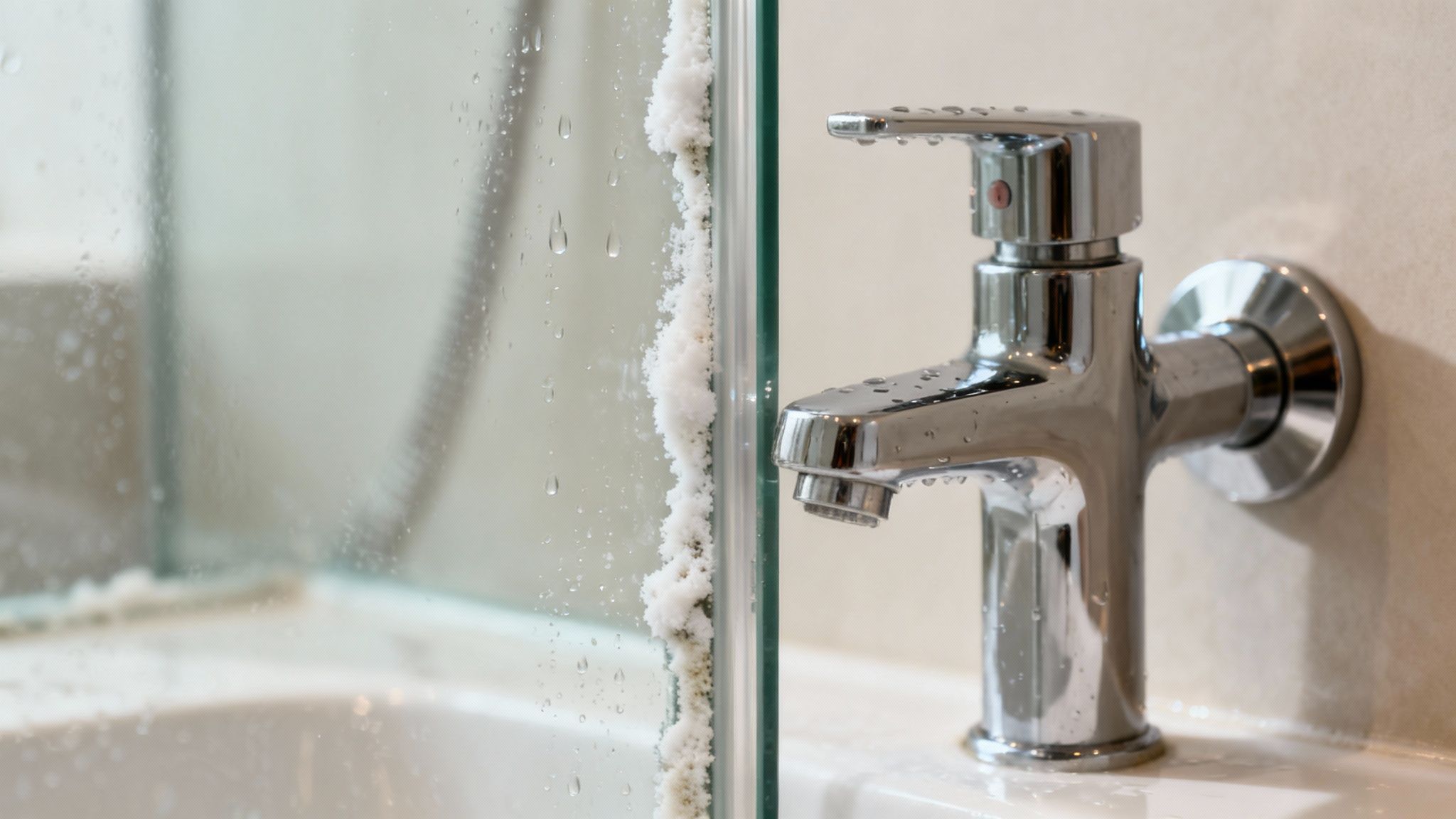
So, What Is Hard Water Exactly?
Hard water isn't dirty or unsafe; it’s just packed with dissolved minerals, mostly calcium and magnesium. Iowa's geology, with its abundant limestone and gypsum, means that as groundwater travels to our taps, it picks up these minerals along the way.
When this water evaporates on a surface—like your shower door or kitchen sink—the water is gone, but the minerals stay behind.
This leftover residue is what we call limescale or hard water stains. It’s much more than just soap scum; it's a mineral deposit that chemically bonds to surfaces, making it tough to wipe away with your usual cleaners. Over time, these deposits build up layer by layer, becoming more and more stubborn.
The core issue isn't cleanliness but chemistry. You're not fighting dirt; you're fighting mineral deposits that have solidified on your home's surfaces, which requires a specific approach to dissolve and remove them effectively.
How It Impacts Your Home
This mineral buildup isn't just an eyesore. It can cause real, practical problems if it's left to its own devices. A few common issues Des Moines residents run into include:
Cloudy Glassware and Shower Doors: Mineral deposits can actually etch into the glass, creating a permanently foggy look that no amount of scrubbing seems to fix.
Clogged Faucets and Showerheads: Limescale can accumulate inside your fixtures, slowing down water pressure and eventually causing frustrating blockages.
Dull, Lifeless Surfaces: The chalky film robs chrome, stainless steel, and tile of their natural shine, making even clean bathrooms and kitchens look dated and dull.
Understanding that you're dealing with a geological reality—not just everyday grime—is the first step toward winning this battle. While it can feel like a persistent issue, the right techniques for removing hard water stains can absolutely restore the sparkle to your home.
And if the buildup ever feels like too much to handle, remember that professional house cleaning services in Des Moines are always here to help.
Your Essential Toolkit for Mineral Buildup
Tackling those stubborn white spots is a lot easier when you have the right supplies ready to go. Before you even think about scrubbing, pulling together a simple toolkit makes the whole process of removing hard water stains more effective—and keeps your surfaces safe from accidental damage. The best part? You probably already have the most powerful items in your pantry.
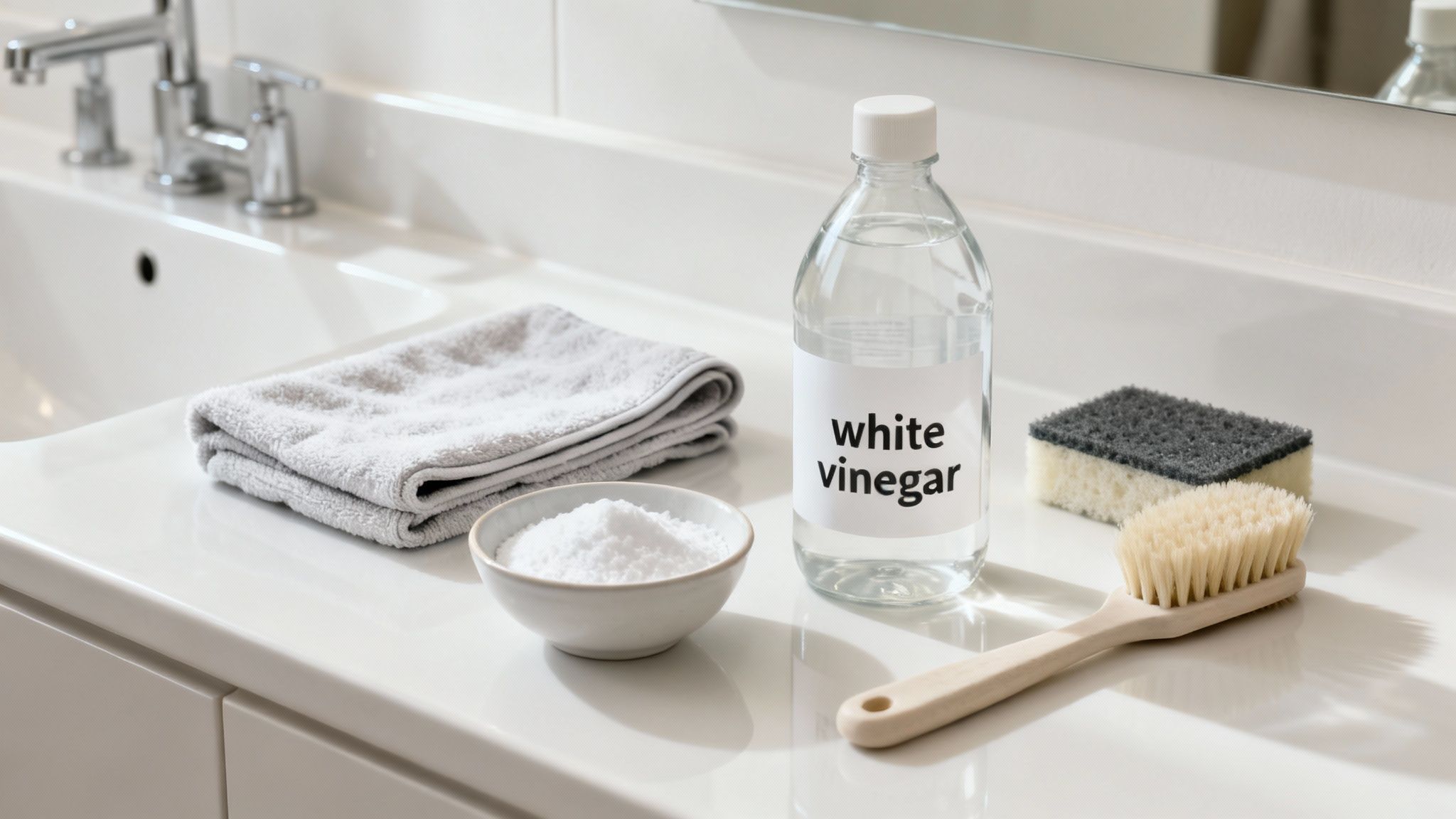
The two heroes of this story are plain white vinegar and baking soda. Their power comes down to simple chemistry. Hard water stains are just alkaline mineral deposits, and the mild acidity in vinegar is perfect for dissolving them and breaking their bond with whatever surface they're stuck to.
Baking soda, on the other hand, is a gentle abrasive. When you mix it into a paste, it gives you just enough scrubbing power to lift away the loosened minerals without scratching delicate finishes like chrome or glass. For most of the buildup found in homes, this combination is all you'll ever need.
The Gentle Cleaning Gear You'll Need
The tools you use are just as important as the cleaners themselves. An aggressive scouring pad or wire brush can leave permanent scratches on your faucets, shower doors, and tile. To keep your fixtures looking great, make sure your kit includes:
Non-scratch scrub pads or sponges to provide gentle friction on durable surfaces.
Microfiber cloths, which are perfect for wiping and drying without leaving behind lint or streaks.
A soft-bristle brush (an old toothbrush works great) for getting into tight spaces like faucet bases and grout lines.
A spray bottle to evenly apply your vinegar solution, letting it soak in and do the hard work for you.
Having these items ready before you start saves you from that frustrating mid-clean scramble. This simple prep work helps you work efficiently and safely, turning a tough chore into a manageable task with sparkling results.
DIY Solutions for Different Surfaces
While vinegar and baking soda are incredibly versatile, knowing how to mix and apply them for different surfaces is key. You wouldn't use the same approach on a glass shower door as you would on stained tile grout. For a complete rundown of what you might need for a major clean, check out our guide on the essential tools for deep cleaning your home.
To get you started, here's a quick guide to creating your own effective, surface-safe cleaning solutions right at home.
DIY Hard Water Stain Remover Recipes
This table offers a few simple, homemade solutions that are safe and surprisingly effective for tackling hard water stains on different surfaces around your house.
Solution | Best For | Mixing Ratio | Application Tip |
|---|---|---|---|
Vinegar & Water Spray | Glass shower doors, faucets | Equal parts white vinegar and warm water | Spray generously and let it sit for 15-20 minutes before wiping. |
Baking Soda Paste | Tile, grout, tough sink stains | 3 parts baking soda to 1 part water | Apply the paste, let it dry slightly, then scrub and rinse. |
Lemon Juice Soak | Faucet spouts, small fixtures | A plastic bag filled with fresh lemon juice | Secure the bag over the fixture with a rubber band overnight. |
Vinegar-Soaked Towel | Stubborn spots on flat surfaces | Soak a towel in pure white vinegar | Drape the towel over the stain for an hour or more to dissolve it. |
These simple recipes can handle most common hard water problems without harsh chemicals, giving you a go-to plan for keeping things spotless.
A Practical Guide to Removing Stains Surface by Surface
Now that you have your supplies ready, it's time to tackle those stains head-on. Different surfaces react differently to cleaning methods, so a one-size-fits-all approach just won't cut it. We’ll walk through the best techniques for the most common problem areas, making sure you get a brilliant shine without accidentally causing any damage.
This battle against mineral buildup is a shared challenge for homeowners everywhere. In fact, the global market for hard water stain removers is expected to nearly double to USD 5.94 billion by 2033, driven largely by residential demand. This just shows how common this problem is and why finding solutions that actually work is so important.
Restoring Clarity to Glass Shower Doors
Cloudy, spotty glass can make an entire bathroom feel less than clean. That vinegar and water spray you mixed up earlier is the perfect tool for removing hard water stains from glass.
Spray the solution generously across the door, paying extra attention to the areas with the heaviest buildup. Don't wipe it off right away—let it sit for a good 15-20 minutes. This dwell time is critical; it gives the acid in the vinegar a chance to start dissolving those stubborn calcium and magnesium deposits.
Once it has soaked, use a non-scratch sponge to gently scrub the glass in a circular motion. You'll actually feel the gritty mineral deposits breaking down. Finally, rinse the door with warm water and dry it completely with a microfiber cloth for a perfect, streak-free finish.
Reviving Your Faucets and Fixtures
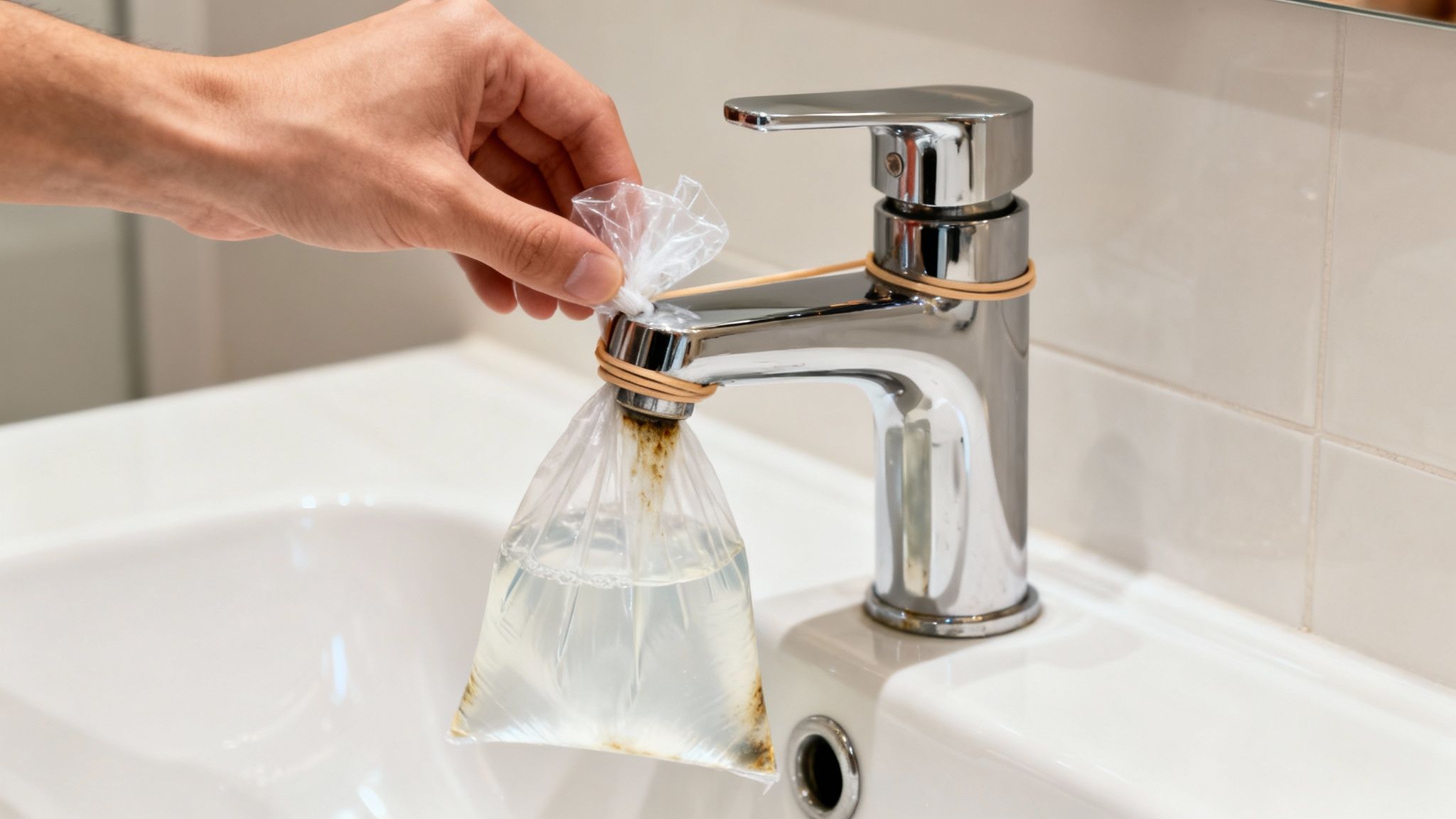
Chrome and stainless steel fixtures are magnets for that white, crusty buildup, especially around the base and on the spout. This is where the classic "vinegar bag" trick works wonders.
Fill a small plastic sandwich bag with undiluted white vinegar. Carefully place the bag over the faucet head or showerhead, making sure the stained parts are completely submerged. Secure it with a rubber band and let it soak for at least an hour—or even overnight if you're dealing with really stubborn limescale.
The bag creates a targeted soak that keeps the vinegar in constant contact with the buildup, dissolving it without any need for harsh scrubbing.
Once the time is up, just slip the bag off. Use an old toothbrush to gently scrub away any leftover residue before wiping everything clean with a soft cloth.
For more detailed guidance, you can find some great expert tips on how to remove hard water buildup from faucets. And if you notice more than just water spots, our guide on how to handle other metallic stains might be useful: how to remove rust from a stainless steel sink.
Brightening Tile and Grout
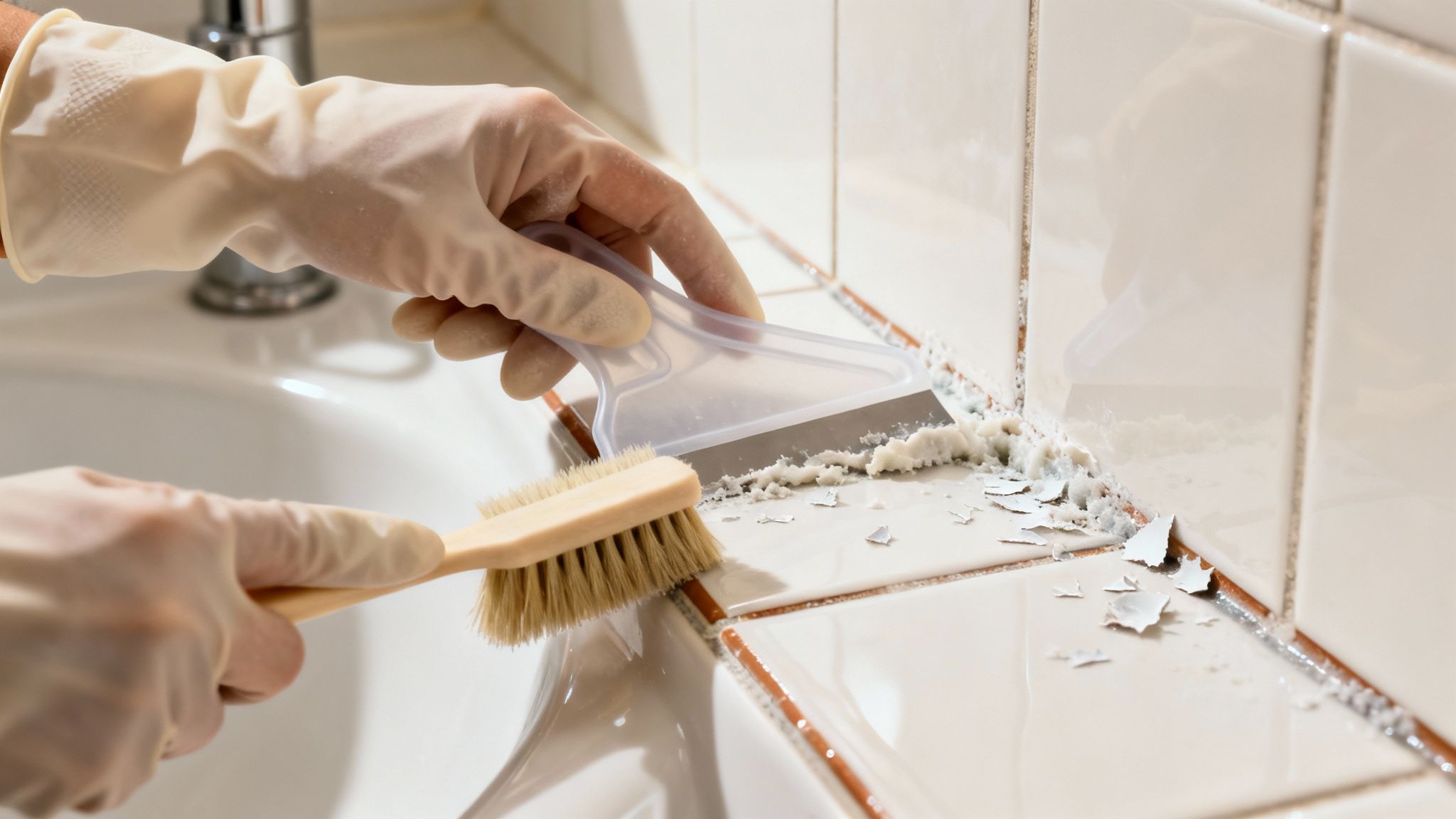
Hard water can leave a hazy film on your tile and make your grout lines look dingy and discolored. For this job, a simple baking soda paste is your best friend.
Just mix about three parts baking soda to one part water until you get a thick, spreadable paste. Apply it directly to the stained tile and grout, then let it sit for about 10-15 minutes. You might see it start to bubble a little as it reacts with the mineral deposits.
Next, grab a soft-bristle brush and scrub the area. The baking soda acts as a mild abrasive, lifting the loosened stains without scratching your tile. Rinse everything thoroughly with water to reveal brighter, cleaner surfaces.
Tackling Toilet Bowl Rings
That stubborn ring inside the toilet bowl is usually a frustrating mix of mineral deposits and other grime. While many people reach for harsh chemicals, vinegar can often get the job done just as well.
Start by shutting off the water supply to the toilet and flushing to lower the water level. Pour about two cups of undiluted white vinegar directly into the bowl, swishing it around to make sure you coat the entire ring.
Now, let the vinegar sit for several hours, or even better, overnight. That extended contact time is the key to breaking down the tough buildup. In the morning, give the ring a good scrub with a toilet brush, turn the water back on, and flush. The ring should wash away, leaving your porcelain sparkling.
Troubleshooting the Toughest Limescale Buildup
Sometimes, the usual vinegar and baking soda tricks just don't cut it, especially when you’re up against years of caked-on minerals. This is a familiar story if you’ve just moved into an older Urbandale home or are finally tackling a neglected bathroom in a downtown Des Moines apartment. When the DIY approach isn't getting results, it’s time to bring in some stronger tactics for removing hard water stains.
But that doesn't mean you need to jump straight to harsh, fume-filled chemicals. A couple of simple adjustments can seriously boost the power of the solutions you already have.
Increasing Dwell Time
One of the most effective strategies is simply giving your cleaner more time to work its magic. For that impossibly stubborn buildup on a faucet or showerhead, try letting it soak in vinegar overnight instead of just for an hour.
For flat surfaces like a shower floor, you can soak a few old towels in pure white vinegar and lay them directly over the stained area. Leave them there for several hours, and you’ll see a huge difference when you lift them.
The secret to dissolving tough mineral deposits isn't aggressive scrubbing; it's patience. Extended contact time allows the mild acid to slowly break down the layers of calcium and magnesium, doing the heavy lifting for you.
Applying Gentle Heat
Here's another pro-tip: gently warm up your cleaning solution. A little heat can speed up the chemical reaction that dissolves those stubborn mineral deposits.
Just pop your 50/50 vinegar and water solution in a microwave-safe bowl for a few seconds before pouring it into your spray bottle. Apply the warm solution to the stain and let it sit. You'll often find that the warm liquid cuts through the gunk much faster than a cold spray.
When to Consider Commercial Cleaners
If you've tried extending soak times and adding a little heat with no luck, it might be time for a commercial-grade cleaner. Look for products specifically formulated to remove calcium, lime, and rust (you'll often see them labeled "CLR"). These are designed to tackle the exact minerals we deal with in our Iowa water.
Always follow the manufacturer's instructions to the letter, make sure the room is well-ventilated, and wear gloves to protect your skin. While these products are effective, they are much stronger and should be your last resort before calling for backup.
For a complete home reset, sometimes the best solution is a professional one. If you’re facing overwhelming buildup, consider a hard water stain removal service Des Moines. Our team at Shiny Go Clean can handle the toughest limescale, restoring your fixtures and surfaces safely. Give us a call at (515) 446-9726 for a hand.
Signs It's Time for Professional Help
Sometimes the decision is easy, but other times it’s a judgment call. Here are a few clear signs that it might be time to let a professional team take over:
The Stains Won't Budge: You’ve tried multiple soaks, pastes, and a whole lot of elbow grease, but that cloudy film or crusty ring just isn't going anywhere.
You're Worried About Damage: You’re dealing with a delicate surface like natural stone, a high-end fixture, or custom glass and you're hesitant to risk using stronger chemicals yourself.
You're Preparing for a Move: A hard water stain removal service Des Moines ensures every fixture sparkles for your final walkthrough.
You Simply Don't Have the Time: Life is busy. Between work, kids, and everything else, dedicating an entire weekend to battling hard water stains isn't always realistic.
Professional cleaning isn’t a luxury; it’s a strategic investment in your home and your time. Our experienced team uses professional-grade products and proven techniques for removing hard water stains safely and completely.
How to Prevent Future Hard Water Stains
After putting in all that effort to scrub your surfaces clean, the last thing you want is for those chalky white spots to creep back. Preventing hard water stains is less about marathon cleaning sessions and more about building a few simple habits into your routine.
Think of it this way—every time water evaporates, it leaves minerals behind. The goal is to wipe away the water before it has a chance to disappear on its own. It’s a small shift in mindset that makes a huge difference, whether you’re in a new Waukee build or an apartment in the East Village.
Simple Daily Habits
The best prevention tools are the ones you use every day. These small actions take only a few seconds but stop mineral buildup before it even starts.
Squeegee Your Shower: Keep a squeegee hanging in your shower. After every use, take 30 seconds to wipe down the glass doors and tile walls. This simple step removes the bulk of the water droplets that would otherwise leave spots.
Wipe Down Faucets and Sinks: Keep a dedicated microfiber cloth under your kitchen and bathroom sinks. After you're done washing dishes or brushing your teeth, give the faucet and basin a quick wipe-down.
Dry Your Dishes: If you wash dishes by hand, dry them with a clean towel instead of letting them air dry. This is what keeps those cloudy spots from forming on your glassware and silverware.
The key is making prevention a reflex. By incorporating these tiny tasks into your daily life, you’re actively stopping the buildup process, saving yourself a lot of future scrubbing and frustration.
Here’s a simple checklist to help you stay on track each week. These small tasks are your best defense against having to do a deep scrub later on.
Weekly Prevention Checklist
Area | Task | Frequency |
|---|---|---|
Showers & Tubs | Wipe down with a squeegee or microfiber cloth after use. | Daily |
Faucets & Sinks | Wipe dry after use to prevent water spots. | Daily |
Toilets | Use a pumice stone or brush on the water line. | Weekly |
Appliances | Run a cleaning cycle with vinegar or a descaler. | Monthly |
Glassware | Hand dry after washing to avoid cloudiness. | As Needed |
Sticking to a simple schedule like this can dramatically reduce the time you spend fighting mineral deposits.
Long-Term Solutions for Your Home
For homeowners tired of the constant battle, a more permanent solution might be the way to go. Daily habits are great, but treating the water at its source is the ultimate fix.
A whole-house water softener is an investment, but it removes hard minerals like calcium and magnesium from your water before they ever reach your taps. This not only stops stains on fixtures and glass but also helps your appliances run more efficiently and makes soaps work better.
Going beyond just cleaning, understanding how to get rid of hard water for good can offer lasting relief. If you’re planning on staying in your Des Moines home for the long haul, it’s a solution that really pays off in saved time and effort down the road.
When to Call a Professional for Hard Water Stains
DIY methods are fantastic for day-to-day upkeep, but let's be honest—sometimes you run into buildup that just laughs at a vinegar-soaked paper towel. It’s not about admitting defeat; it’s about being smart and choosing the most effective solution for your home. Knowing when to call for backup can save you hours of scrubbing, a ton of frustration, and even prevent accidentally scratching a faucet you love.
If you're looking at years of accumulated limescale, those chalky deposits can become as hard as rock. This is super common in older homes or rentals that haven't seen a deep clean in a while. When standard home remedies aren't cutting it, that's the perfect time to bring in an expert.
Signs It's Time for Professional Help
Sometimes the decision is easy, but other times it’s a judgment call. Here are a few clear signs that it might be time to let a professional team take over:
The Stains Won't Budge: You’ve tried multiple soaks, pastes, and a whole lot of elbow grease, but that cloudy film or crusty ring just isn't going anywhere.
You're Worried About Damage: You’re dealing with a delicate surface like natural stone, a high-end fixture, or custom glass and you're hesitant to risk using stronger chemicals yourself.
You're Preparing for a Move: A hard water stain removal service Des Moines ensures every fixture sparkles for your final walkthrough.
You Simply Don't Have the Time: Life is busy. Between work, kids, and everything else, dedicating an entire weekend to battling hard water stains isn't always realistic.
Professional cleaning isn’t a luxury; it’s a strategic investment in your home and your time. Our experienced team uses professional-grade products and proven techniques for removing hard water stains safely and completely.
The Shiny Go Clean Advantage
When you hire Shiny Go Clean, you're getting more than just a clean bathroom. You're getting a team that truly understands the specific challenges of Des Moines' notoriously hard water. We know exactly how to restore your glass, chrome, and tile without risking scratches or chemical damage.
We’ll get the job done right the first time, giving you back your weekend to actually enjoy it.
For a deeper look into what professional services entail and how they're priced, you might find our guide on professional house cleaning costs in Des Moines helpful.
Ready to reclaim your home from stubborn hard water stains? The team at Shiny Go Clean is here to restore the sparkle to your surfaces. For a free, no-obligation quote, call us at (515) 446-9726, email us at dsm@shinygoclean.com, or book your hard water stain removal service Des Moines instantly online at https://shinygoclean.com.
Comments