How to Organize Cleaning Supplies Like a Madison Pro
- Feb 12
- 15 min read
Updated: Mar 23
That chaotic jumble of bottles, sponges, and rags under the sink is more than just an eyesore-it’s a major roadblock to a clean home. When you can’t find the right cleaner or realize you have three half-empty bottles of the same product, a simple task becomes a frustrating chore.
The goal isn't just to tidy up; it's to build a practical, long-lasting system that saves you time and stress. This all starts with a clear plan before you even think about buying a single bin or caddy. You need to know exactly what you're working with, what you actually use, and the specific dimensions of your storage spaces.
Start with a Full Inventory
First things first: pull everything out. Gather every single cleaning product from under the kitchen sink, the bathroom cabinets, the laundry room, and any other hiding spots. Lay it all out on a protected surface where you can see it all at once.
Once everything is visible, sort items into broad categories. This isn't about perfection; it's about seeing what you have so you can spot the overlaps immediately.
Common groupings include:
Surface Cleaners: All-purpose sprays, glass cleaners, wood polish.
Heavy-Duty Cleaners: Oven cleaners, grout scrubs, drain openers.
Floor Care: Vacuums, mops, floor-specific cleaning solutions.
Tools & Accessories: Microfiber cloths, sponges, scrub brushes, gloves.
This process gives you a complete, honest picture of your cleaning arsenal and makes the next step-decluttering-much simpler.
Declutter Ruthlessly but Safely
Now it's time to decide what stays and what goes. Be honest with yourself. If you haven't touched a product in over a year, it’s probably not essential. Check for expired products, nearly empty bottles that are just taking up space, and items you bought but never really liked.
Remember to dispose of chemicals safely according to local guidelines. Never pour harsh chemicals down the drain or mix products, especially bleach and ammonia.
An organized home is an efficient one. A 2023 survey found that 68% of households with organized cleaning storage reported spending 25% less time searching for supplies during weekly chores. That's a real time-saver for busy families in Madison.
The global household cleaning supplies market is massive-projected to hit USD 57.9 billion by 2035. That means companies are constantly creating new "must-have" products. A good decluttering session keeps you from falling into the trap of over-purchasing.
The diagram below breaks down this simple three-step flow to get you started.
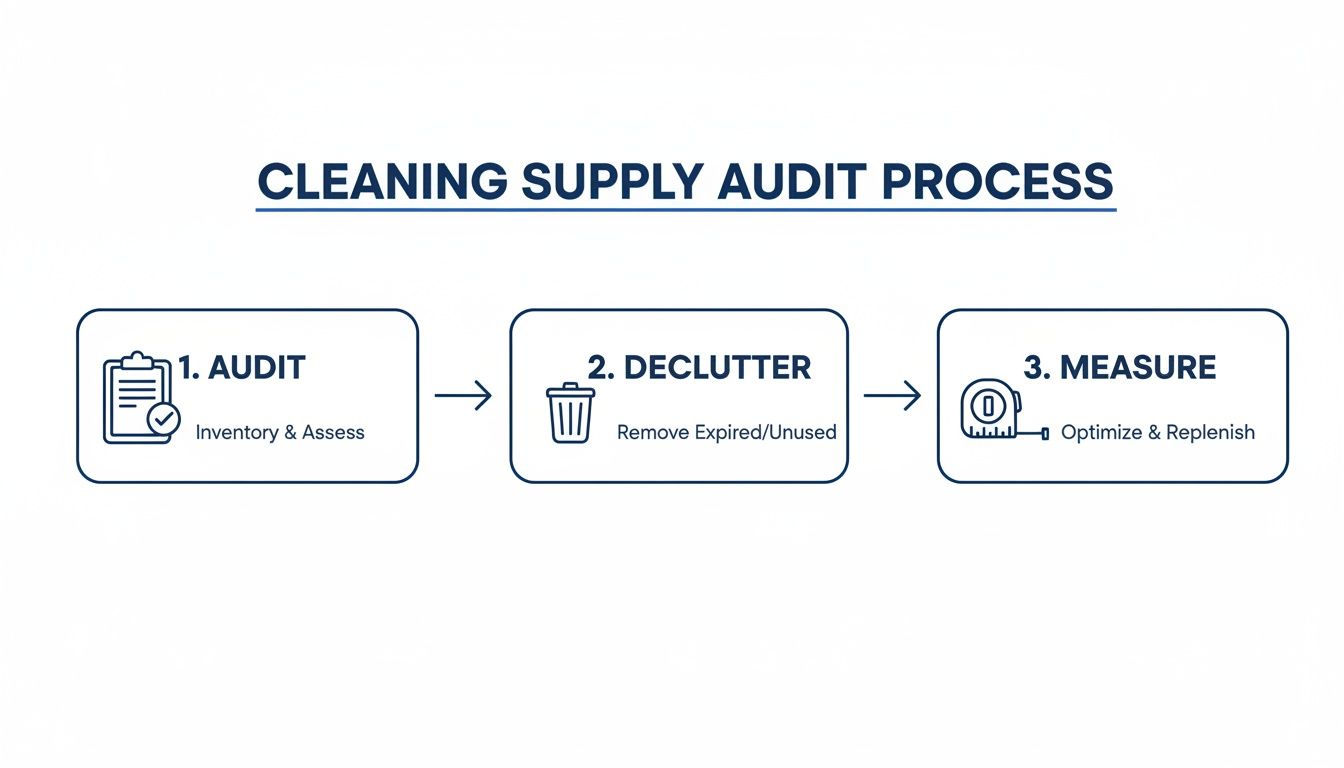
This straightforward approach-auditing, decluttering, and measuring-creates a solid foundation before you spend a dime on storage containers.
Before you jump into organizing, taking a moment to assess the situation sets you up for success. This quick audit prevents you from just shifting clutter from one spot to another.
Quick-Start Cleaning Supply Audit
Action Step | Why It Matters | Pro Tip for Madison Homes |
|---|---|---|
Gather Everything | Creates a complete visual inventory, so you know exactly what you own. No more surprises. | Pull supplies from the garage and basement, too. Wisconsin's humid seasons can affect product consistency. |
Group by Type | Instantly reveals duplicates. You'll see you don't need five different glass cleaners. | Group seasonal items like grill cleaner or deck wash separately so they can be stored out of the way. |
Check Expiration Dates | Expired cleaners lose their effectiveness and can even damage surfaces. | Toss old, hardened powders or separated liquids. They're no longer safe or effective to use. |
Dispose of Unwanted Items Safely | Protects your plumbing and the local environment from harmful chemicals. | Check the Metro Waste Authority guidelines for hazardous material drop-off sites in the Madison area. |
This initial clear-out is the most crucial part of the process. It ensures you're only organizing the items you actually need and use.
Measure Your Space
Before you buy a single organizer, grab a tape measure. Seriously. Measure the height, width, and depth of your primary storage areas, whether it's a tight under-sink cabinet in an East Village apartment or a spacious laundry room in a new Waukee build.
Don’t forget to account for any pipes or a garbage disposal that might get in the way. Having precise measurements ensures you buy storage solutions that actually fit the first time around. For more ideas, check out our guide on the essential tools for deep cleaning your home.
Choosing the Right Storage for Your Home and Habits
Once you’ve sorted through your supplies, the next move is to give everything a smart, accessible home. The best storage solutions aren't just about hiding clutter-they’re about matching your tools to your space and your actual cleaning routines. After all, what works for a sprawling family home in Madison might not be practical for a sleek apartment in the Verona.
The real key is to think in terms of accessibility and frequency. Stuff you grab daily should be right at your fingertips. Those heavy-duty or seasonal cleaners? They can live a little further away. This simple shift in mindset is what makes a system you’ll actually stick with.
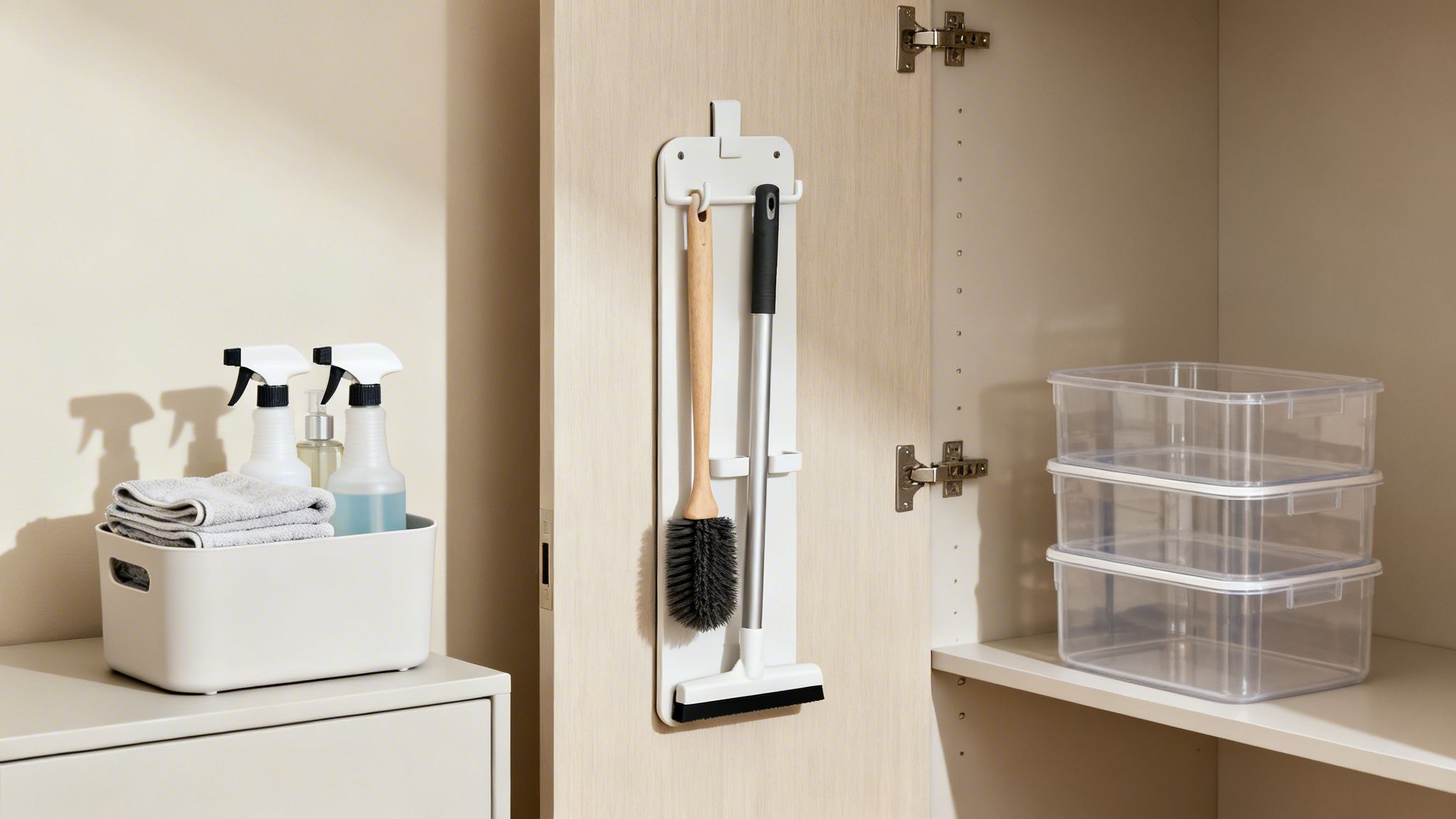
Finding Your Perfect Storage Match
Every home has its own storage opportunities and challenges. A portable caddy might be a game-changer for one person, while a wall-mounted system is the only thing that works for another. Let's break down some of the most effective options.
Portable Caddies: These are the absolute workhorses of any good cleaning system. A simple caddy lets you haul all your essential bathroom or kitchen cleaners from one room to the next, saving you countless trips back to the supply closet. They're cheap, versatile, and perfect for everyday tasks.
Over-the-Door Organizers: When you’re tight on closet or cabinet space, vertical storage is a lifesaver. An over-the-door rack with pockets or wire baskets can hold a surprising number of bottles and tools without taking up a single inch of floor space. It's an ideal fix for pantry doors or small laundry rooms.
Wall-Mounted Systems: If you have wall space in a garage or basement, use it. A pegboard or track system with hooks and baskets gets bulky items like mops, brooms, and buckets off the floor. This keeps them dry, helps them last longer, and frees up valuable closet real estate.
Figuring out the right mix of these solutions helps you build the physical framework for an efficient system. To really get your home functioning well, it helps to see how these principles apply elsewhere. Exploring practical ideas for smart kitchen storage solutions can inspire ways to manage not just your cleaners, but your entire living space more effectively.
Under-Sink and Pantry Solutions
Let's be honest: the area under the sink is often the most chaotic spot in the house. With all that plumbing to navigate, it becomes a forgotten zone where half-empty bottles go to expire. But with the right tools, it can become an organizational powerhouse.
Try a two-tiered pull-out organizer designed to fit around pipes. The top shelf can hold sponges and scrub brushes, while the bottom can store your most-used spray bottles. Another great trick is to install a tension rod near the top of the cabinet-it’s perfect for hanging spray bottles by their triggers to free up the cabinet floor.
For pantries, clear stackable bins are your best friend.
By using clear containers, you eliminate the guesswork. You can see exactly what you have at a glance, which stops you from buying duplicates and helps you find what you need in seconds.
Group similar items together in these bins-one for microfiber cloths, one for dusting supplies, another for specialty wood or stone cleaners. Make sure you label each bin. This simple step transforms a cluttered shelf into a tidy, grab-and-go station that anyone in the family can use and-more importantly-put things back correctly.
Tailoring Storage to Your Madison Home
Your lifestyle and where you live should absolutely shape your storage strategy. A busy family in Johnston with kids and pets might do well with multiple, smaller cleaning stations. A small caddy with pet-safe carpet cleaner and paper towels in the living room can handle spills instantly, while the main supply stash stays in the laundry room.
Contrast that with someone in a new-build townhome in Waunakee. With more vertical space but maybe fewer closets, a garage wall system or a tall, narrow rolling cart that slides next to the washer and dryer makes the most sense.
The whole point is to make cleaning less of a chore by removing the friction between seeing a mess and cleaning it up. When you strategically place your supplies where you actually use them, you’re not just organizing-you’re building a smarter, more efficient home.
Building Room-Specific Cleaning Kits That Save Time
Ever found yourself in the middle of cleaning the bathroom, only to realize the grout brush is still in the laundry room? Or that the good glass cleaner is under the kitchen sink? We've all been there. This is exactly why room-specific cleaning kits are a game-changer. It's a simple but incredibly effective idea: grab one caddy, and everything you need is right there.
This strategy turns a huge chore into a series of smaller, more manageable tasks. Instead of one massive, disorganized collection of supplies, you create dedicated kits for the high-traffic areas of your home. It’s the same method our Shiny Go Clean teams use to get homes in Johnston and Urbandale clean and shiny, fast-because it just plain works.
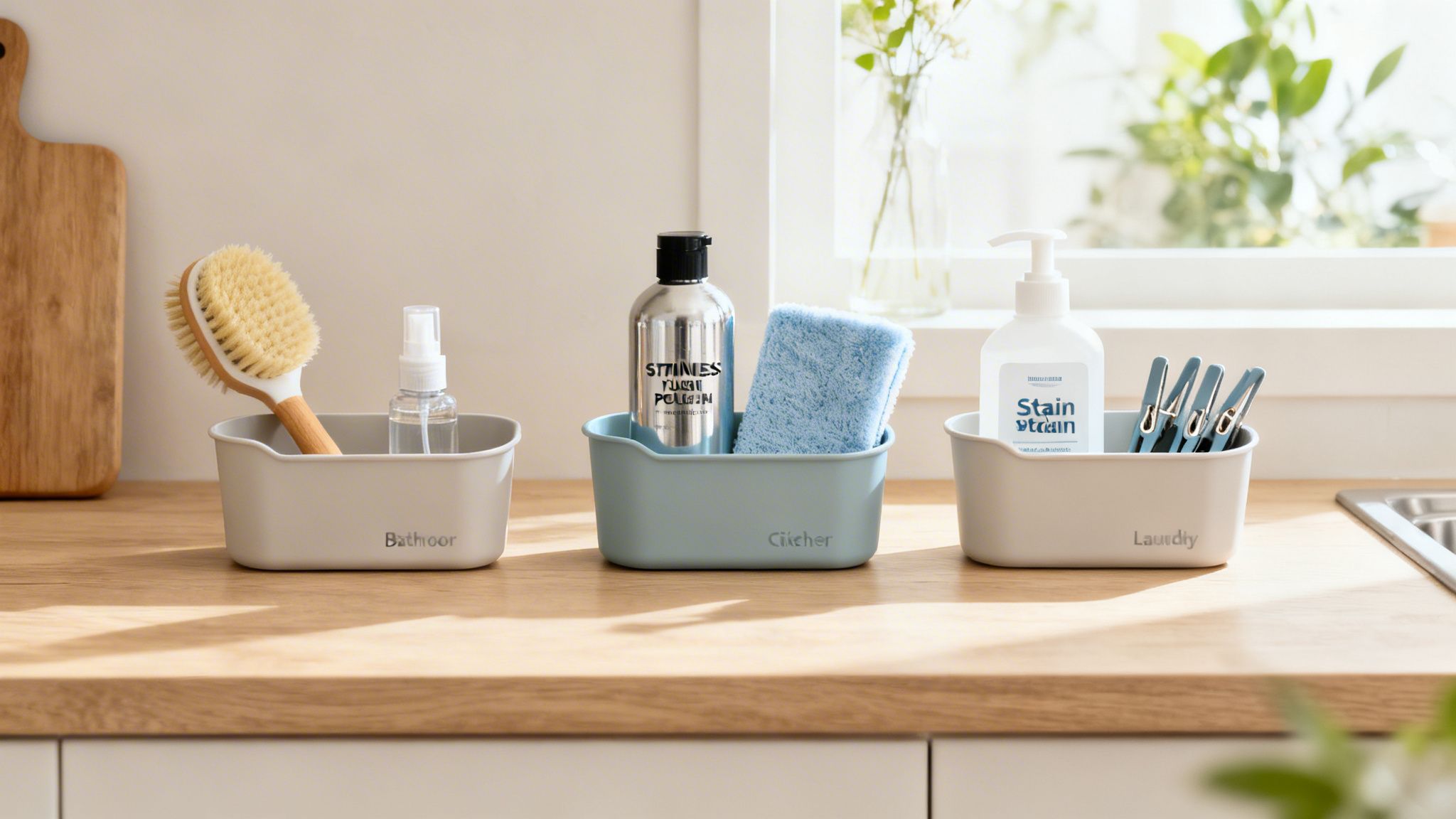
The Essential Bathroom Caddy
The bathroom is the perfect place to start because its cleaning needs are so unique. You're dealing with soap scum, mildew, and water spots, all of which demand a specific set of tools. Creating a dedicated caddy also helps you avoid cross-contamination-you’ll never accidentally grab the toilet brush sponge to wipe down the kitchen counter.
Here’s a great starting point for your bathroom kit:
A Non-Abrasive Scrubber: Perfect for tackling soap scum on tubs and tiles without scratching anything.
Grout Brush: A small, stiff-bristled brush is non-negotiable for getting into those tough grout lines. For tips on handling the really stubborn stuff, check out our Madison guide on how to kill mold in your shower.
Toilet Bowl Cleaner and Brush: These should live in the bathroom and only be used for the toilet.
Glass Cleaner: A must-have for constantly splattered mirrors and shower doors.
Disinfecting All-Purpose Spray: For wiping down countertops, sinks, and faucets.
Microfiber Cloths: Keep at least two on hand-one for general wiping and another for polishing mirrors to a streak-free shine.
With this simple setup, anyone in the family can grab the caddy and clean the entire bathroom in one efficient go. No more excuses.
Your Go-To Kitchen Kit
The kitchen is another workhorse, but its messes are completely different. Here, you're up against grease, food splatters, and crumbs, which means you need degreasers and food-safe cleaners within easy reach. Storing this kit under the sink or in a nearby pantry makes daily wipe-downs almost effortless.
Your kitchen kit should include:
A Quality Degreaser: Your best friend for wiping down the stovetop, backsplash, and vent hood.
All-Purpose Surface Cleaner: Make sure to choose one that’s safe for your specific countertop material, whether it's granite, quartz, or something else.
Stainless Steel Polish: If you have stainless appliances, a dedicated polish is the secret to keeping them looking new and fingerprint-free.
Dish Soap: A small bottle of concentrated dish soap works wonders for spot-cleaning greasy spills on the fly.
Scrub Sponges and Microfiber Towels: Have a fresh supply ready for counters, spills, and whatever else the day throws at you.
The real magic of room-specific kits is how much time they save. You stop wandering around the house looking for the right product. Everything you need is exactly where you need it, which can easily turn a 30-minute task into a 10-minute one.
This isn't just a clever homeowner hack; it's a foundational principle in the professional cleaning world. In fact, with the global cleaning services market projected to hit $425.6 billion by 2025, efficiency is everything. Studies have shown that 72% of cleaning firms using zoned storage-like dedicated kits for different areas-report 22% higher client satisfaction. It saves time and improves results. When you bring this pro method home, you get that same efficiency at your fingertips.
Smart Strategies for a Safe and Sustainable System
A well-organized cleaning closet does more than just save you time-it creates a safer, healthier space for everyone in your home. This is especially true for families with curious kids or pets running around. Beyond just safety, a thoughtful approach to organizing your supplies can also support a more sustainable, eco-friendly lifestyle, something a lot of homeowners are passionate about these days.
First things first: safety is non-negotiable. Many common household cleaners can be dangerous if they're stored improperly or, even worse, mixed. For instance, never store bleach and ammonia-based products in the same cabinet. When their fumes combine, they create toxic chloramine gas, which is seriously harmful. A good rule of thumb is to always store harsh chemicals like oven cleaners, drain openers, and straight bleach separately from your milder, everyday sprays.
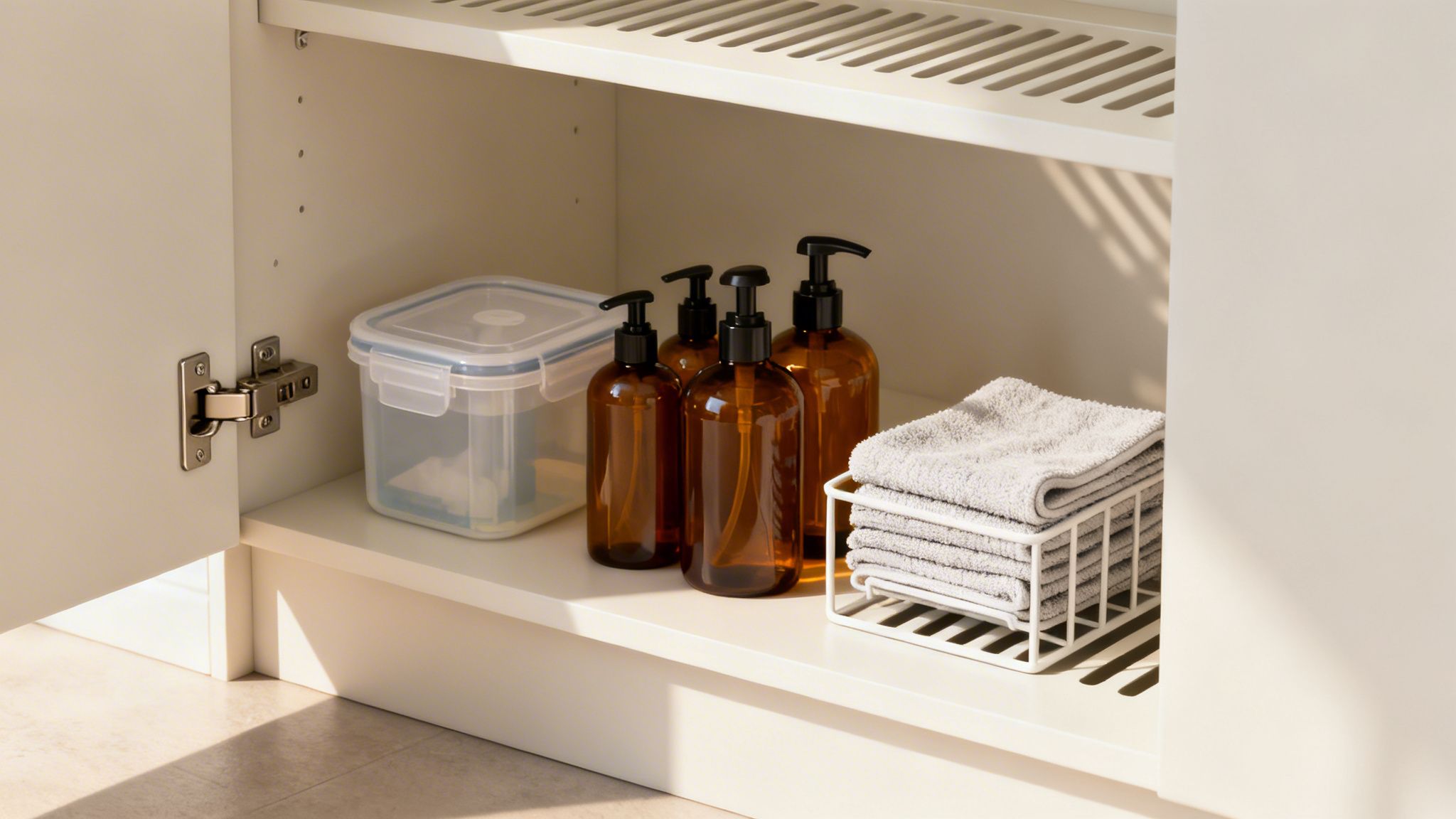
Prioritizing a Safe Storage Setup
The best spot for stronger chemicals is on a high shelf, ideally inside a locked cabinet or a space with a child-proof latch. A garage or a well-ventilated laundry room is almost always a better choice than under a busy kitchen or bathroom sink where little hands can easily wander.
Consider these simple but incredibly effective safety measures:
Install Child-Proof Locks: Add magnetic or slide locks to any low cabinets containing cleaning products. They’re cheap, easy to find, and take minutes to install.
Ensure Good Ventilation: Try to avoid storing chemicals in tightly sealed, unventilated closets where fumes can build up over time.
Keep Original Containers: Always store products in their original, labeled bottles. This way, you have immediate access to ingredient information and usage instructions in case of an emergency.
Keeping your family safe is the most important part of home organization. A few deliberate choices-like separating chemicals and adding a simple cabinet lock-provide invaluable peace of mind.
Embracing Sustainable Organization
Creating a safer system often goes hand-in-hand with building a more sustainable one. As more people switch to eco-friendly products, organizing them properly ensures they last longer and work the way they're supposed to. This shift is pretty significant; eco-products are on track to claim 52.7% of the $207 billion global cleaning market by 2026.
Making your system greener can be simple. Designate a specific shelf or bin just for your refillable spray bottles and concentrates. This keeps them from getting lost among single-use products and serves as a visual reminder to refill instead of rebuy. If you're heading down this path, we've put together a guide to green cleaning solutions for your home that offers some practical tips.
Properly storing your reusable tools is just as important. Instead of tossing damp microfiber cloths into a dark cabinet where they can get mildewy, hang them on small hooks inside a closet door or store them clean and dry in an open-air basket. This little habit extends their life, saving you money and cutting down on waste.
To balance these goals, it helps to see how safety and sustainability can work together.
Safe vs. Sustainable Storage Solutions
Storage Goal | Best Practices | Recommended Products |
|---|---|---|
Child & Pet Safety | Keep all chemicals, even natural ones, out of reach. Use high shelves or locked cabinets for anything potentially hazardous. | Magnetic cabinet locks, high-mounted shelving units, lockable storage totes. |
Eco-Friendly Habits | Store reusable items where they can air-dry. Group refills and concentrates for easy access to encourage use. | Wall-mounted hooks for cloths/brushes, clear bins for refillables, glass spray bottles. |
Combining Both | Use a locked cabinet for harsh chemicals, but place eco-friendly, refillable daily cleaners in a handy, accessible (but still smart) spot. | A two-tiered approach: a high, locked "chemical zone" and a lower, organized "green cleaning" station. |
By combining smart safety practices with mindful, sustainable habits, your organized system becomes a powerful tool for a healthier home and planet.
Maintaining Your System for Lasting Order
You’ve done the hard work-you’ve decluttered, sorted, and found the perfect home for every last bottle and brush. But the real secret to keeping your cleaning supplies organized for good isn't that initial setup; it’s the simple, repeatable habits you build afterward.
An organization system only works if you stick with it. These small routines are what prevent that dreaded clutter creep from returning and stop chaos from slowly reclaiming your closets and cabinets, especially in a busy Madison household.
Adopt the 'One In, One Out' Rule
This is one of the easiest and most effective habits you can pick up. Whenever you buy a new cleaning product, an old one has to go. It’s a simple mental checkpoint that forces you to use up what you have before adding something new to the collection.
No more accumulating three half-empty bottles of all-purpose cleaner. Before you head to the store, take a quick look at your supplies. If you’re grabbing a new bottle of wood polish, make sure the old one is nearly gone or gets tossed if it's expired. This single rule is your best defense against the slow pile-up of unnecessary products.
Keep a Running Inventory List
You don't need a complicated spreadsheet for this. A simple list on your phone's notes app or a magnetic notepad stuck to the fridge works perfectly. The moment you use the last of your glass cleaner or notice you’re down to your final roll of paper towels, add it to the list immediately.
This takes all the guesswork out of shopping and solves two common problems:
Forgetting Essentials: You’ll never have that moment of panic when you realize you’re out of dish soap mid-cleanup.
Overbuying Duplicates: You won’t waste money on a fourth bottle of granite cleaner you didn’t realize you already had.
A running list keeps you prepared and helps you stick to your budget, making sure you only buy what you actually need. It's a small change that makes a huge impact on both your clutter levels and your wallet.
An organized system is only as good as its upkeep. Just 10 minutes of maintenance a week is usually all it takes to keep your cleaning supplies tidy, restocked, and ready for action. It’s a small investment that pays off with a consistently calmer, more functional home.
Schedule Quick System Resets
Maintenance doesn't have to be a major project. A quick, scheduled check-in can keep your entire system running smoothly. Think of it as a mini-audit that takes just a few minutes but saves you from a much bigger mess down the road.
Weekly Tidy-Up (5 Minutes): Once a week, just do a quick visual scan. Did every spray bottle make it back to its caddy? Are the microfiber cloths in their designated basket? This is all about returning stray items to their proper homes before they start to pile up. It’s also a good time to wipe down any drippy bottles to keep your shelves clean.
Monthly Restock & Review (15 Minutes): Once a month, take a slightly deeper look. Go through your inventory list and restock whatever you're low on. This is also the perfect time to quickly check expiration dates on less-used products and safely get rid of anything that’s past its prime. Giving your caddies and bins a quick wipe-down during this check-in keeps everything fresh.
These simple routines are the guardrails that keep your organization efforts on track. They ensure the time you invested in setting up your system pays off for months and years to come, making cleaning less of a chore and more of a seamless part of managing your home.
When Your Home Needs a Professional Reset
Even with the best organizational system, sometimes life just gets ahead of you. A perfect setup for your cleaning supplies is fantastic for keeping things in check, but it can’t always undo weeks or months of built-up grime. Some messes just call for a bigger reset.
Think about the realities of Wisconsin living-that sticky spring pollen that coats every windowsill or the salt and slush from a long winter tracked across your entryway floors. These situations often need more than a quick wipe-down with your go-to spray.
When to Call for a Deep Clean
Sometimes, a professional touch is what you need to get back to a manageable baseline. It’s not about giving up; it’s about getting a strategic head start so your own system can work again.
Consider bringing in a professional deep cleaning team when you’re facing challenges like:
Post-Construction Dust: The fine dust from a new build or renovation in areas like Waukee settles everywhere for weeks. It takes specialized tools and techniques to fully get it out of the air and off every surface.
Move-Out Cleaning: Getting a security deposit back often depends on leaving a place spotless. A professional move out cleaning Madison service ensures every last corner is handled, saving you the headache.
Seasonal Overhauls: Tackling a whole season’s worth of buildup-like accumulated dust in vents or grime on baseboards-can eat up an entire weekend. It’s a huge job.
A one-time deep clean from a professional service isn't a luxury-it's an investment in your time and peace of mind. It restores your home to a state that’s easy to maintain, letting your organizational system truly shine.
For many busy professionals and families in the Madison area, our recurring cleaning services provide that consistent "deep-clean" feeling without the effort. If your home needs a more extensive reset, you might be curious about how much a professional organizer charges to help get things back in order first.
At Shiny Go Clean, our team arrives with all the organized, professional-grade supplies needed to tackle the tough jobs from the start. If your home needs more than just a tidy-up, we make it easy to get the expert help you deserve.
You can even explore the ultimate professional deep cleaning checklist to see what a true reset involves.
Answering Your Top Questions About Organizing Cleaning Supplies
Getting your cleaning supplies in order always brings up a few practical questions. You're not alone-we hear the same ones from homeowners all over the Madison area. Here are some straightforward answers to the challenges people run into when creating a system that actually sticks.
Where Should I Store Cleaning Supplies Without a Dedicated Closet?
If you're working with limited space, like many in downtown East Village apartments, the key is to think vertically and use overlooked nooks. Don't underestimate the power of an over-the-door rack on a pantry or laundry room door. It can hold dozens of bottles without taking up any precious floor space.
A narrow rolling cart is another fantastic solution. It slides right into that small gap between a washer and dryer or next to a refrigerator. For those awkward under-sink cabinets, a pull-out organizer designed to fit around plumbing can instantly double your usable space. It’s all about making every inch count.
How Often Should I Declutter My Cleaning Supplies?
A full overhaul isn't necessary very often if you stay on top of it. We recommend a quick 10-minute check-in once a month. This is the perfect time to wipe down any drippy bottles, add items to your shopping list, and toss anything that's empty or expired.
A deeper reorganization just once or twice a year is usually enough to keep the entire system from falling apart. This prevents you from slowly accumulating products you tried once and never used again.
Is It Safe to Store All My Cleaning Products Together?
No, and this is the most critical point for safety. You should never store ammonia-based and bleach-based cleaners together. When they’re in the same enclosed space, their fumes can mix and create toxic chloramine gas, which is dangerous to inhale.
As a general rule, always keep harsh chemicals like bleach, drain openers, and oven cleaners separate from your everyday, milder sprays. Store them in a well-ventilated area, away from heat, and-most importantly-safely out of reach of children and pets.
Feeling like your home needs a full reset before you can even think about organizing? Let Shiny Go Clean handle the hard work. Our professional deep cleaning services give you the fresh start you need, making it easier to maintain a clean and orderly home. We offer everything from a one time cleaning to recurring maid service in Madison. Book your Madison house cleaning service in just 60 seconds.
Comments