How to Remove Stains from Upholstery: A Practical Guide
- Team Shiny Go Clean
- 14 hours ago
- 13 min read

That split-second of horror—a glass of red wine tipping over, a smear of chocolate on the cushion, a glob of spaghetti sauce landing squarely on your favorite armchair. We’ve all been there. How you react in that very first moment is everything.
The most important thing to remember? Blot the spill with a clean, dry cloth immediately, and never, ever rub it. This single action can be the difference between a minor cleanup and a permanent stain setting deep into the fabric fibers.
Your First Move When a Spill Happens
When a spill happens, it's easy to panic. But a fast, calm response can save your furniture. Think of it as first aid for your sofa. Acting within the first few minutes is your best defense against a mishap becoming a permanent eyesore. This is especially true with common Des Moines messes like tracked-in Iowa winter slush or muddy paw prints during the spring thaw.
The urge to grab a sponge and start scrubbing is strong, but it's the worst thing you can do. Rubbing actually grinds the stain deeper into the upholstery, making it almost impossible to remove later on. It can also damage the texture of the fabric itself. Instead, your goal is to lift the spill out of the material, not push it further in.
Gather Your Emergency Tools
You don’t need anything fancy for your initial response. Just grab a couple of simple household items:
Clean, white cloths or paper towels: Using a white cloth is key because it prevents any color from the towel from transferring onto your upholstery.
A spoon or butter knife: For thicker spills like jam, mud, or food, gently scrape off any excess before you start blotting.
The global market for upholstery stain removers is massive—it's expected to hit $3.7 billion by 2033. This just goes to show how universal this problem is. Everyone is looking for that magic solution to keep their furniture looking great.
To give you a clear, quick-reference guide for that initial "uh-oh" moment, here's exactly what to do.
Immediate Stain Response Checklist
Action | Tool | Why It Works |
|---|---|---|
Scrape Excess Solids | Spoon or Dull Knife | Removes the bulk of the spill before it can soak in, preventing a bigger mess. |
Blot, Don't Rub | Clean White Cloth | Absorbs the liquid out of the fibers instead of pushing it deeper. |
Work Outside-In | Fresh Section of Cloth | Prevents the stain from spreading and creating a larger discolored ring. |
Apply Light Pressure | Your Hand | Gentle pressure helps lift the liquid without damaging the fabric's weave. |
Acting fast with these simple steps will give you the best chance of removing the stain completely without any lasting damage.
The Blotting Technique Explained
Start by taking your clean, dry cloth and gently pressing it onto the fresh spill. You’ll see the liquid start to absorb into the cloth right away.
Once one part of the cloth is damp, move to a clean, dry section and do it again. Always blot from the outside edge of the stain and work your way inward. This simple trick contains the spill and stops it from spreading into an even bigger problem.
For a deeper dive into why acting fast is so critical, check out our guide on the one-minute rule for cleaning spills. It explains the science behind how quickly stains can set and become permanent.
Understanding Your Furniture's Cleaning Codes
Before you even think about tackling a stain, the very first move is to find your furniture’s care tag. It's usually tucked away under a cushion or stapled to the frame, but that little tag holds the secret to safely cleaning your upholstery without making things worse. Think of it as a cheat sheet from the manufacturer, and learning its language is crucial for anyone in Johnston or Waukee wanting to protect their furniture.
Ignoring these codes is a surefire way to turn a small spill into a permanent eyesore. Using the wrong cleaner can lead to water rings, color bleeding, or even damage the fabric's fibers. It's a simple step that prevents a lot of headaches down the road.
This flowchart shows the immediate first step for any spill—a quick decision that sets you up for success from the start.
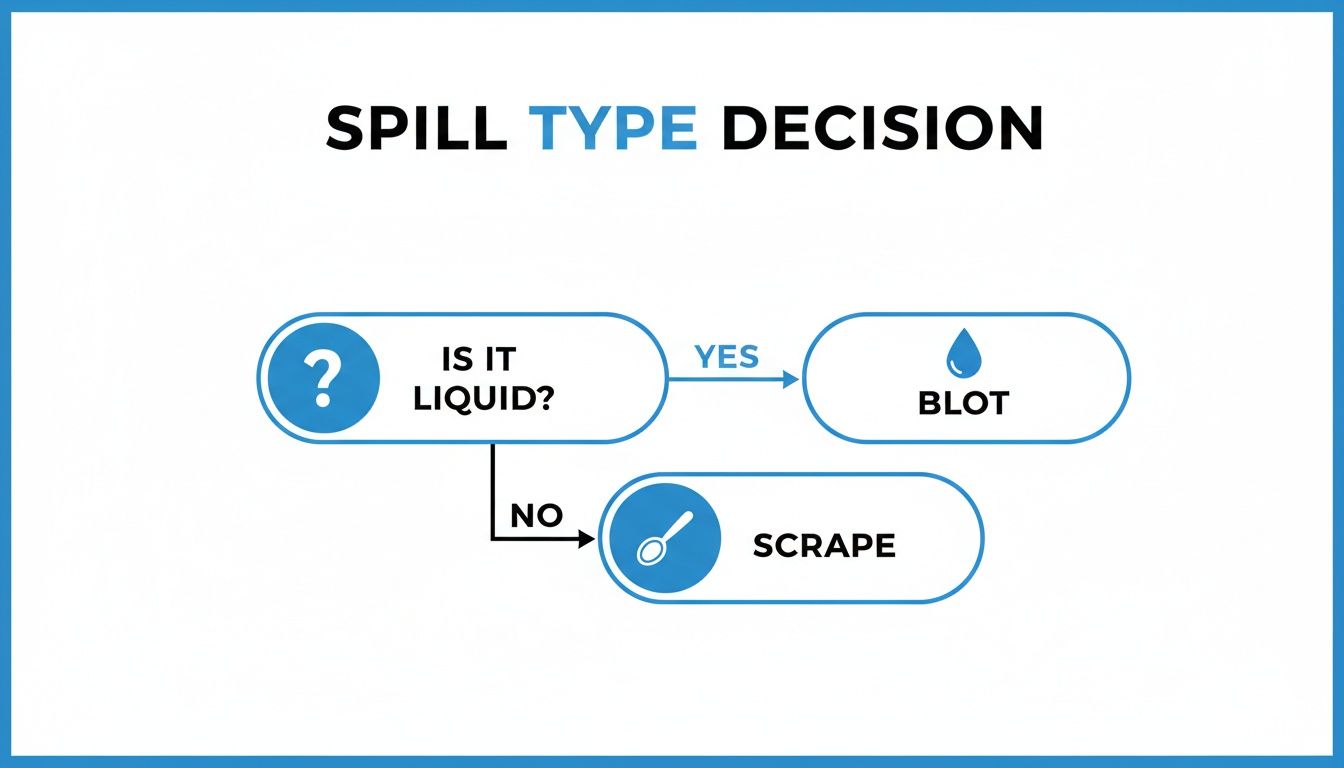
As you can see, the initial reaction is always to either blot a liquid or gently scrape away a solid. That’s your move before you even look at the cleaning code.
Decoding Your Upholstery Tag
You'll almost always find one of four letters on the tag. Each one tells you exactly what kind of cleaning solution is safe for your sofa or chair.
W – Water-Based Cleaner: This is the most common code, and thankfully, the easiest to work with. It means you’re clear to use water-based solutions, like a simple mix of mild soap and water. Fabrics with this code are typically durable synthetics like polyester or nylon.
S – Solvent-Based Cleaner: This code is a strict warning: avoid water completely. These fabrics, often natural fibers like cotton, linen, or silk, require a special water-free solvent. Hitting an "S" code fabric with water will almost certainly leave a permanent stain or ring.
W/S – Water or Solvent: You have a bit more flexibility here, but you still need to be strategic. If it's a water-based spill like juice, reach for a water-based cleaner. For an oil-based stain like grease from a pizza slice, a solvent is the way to go.
X – Vacuum Only: This is the most delicate of all. The 'X' means do not use any liquid cleaners, whether water or solvent-based. Your only safe cleaning options are vacuuming or light brushing with a soft-bristled brush. For any actual stains on 'X' code furniture, professional help is a must.
Knowing the code is step one, but the fabric material itself also plays a huge role. If you're interested in how different materials affect cleaning, especially those designed for high-traffic homes, learning about performance fabrics like What Is Crypton Fabric can be really eye-opening.
If you’ve located the tag but still feel unsure, or if you're up against a tricky 'S' or 'X' code, don't risk it. Sometimes the smartest—and safest—move is to call a professional.
Simple DIY Solutions for Everyday Spills
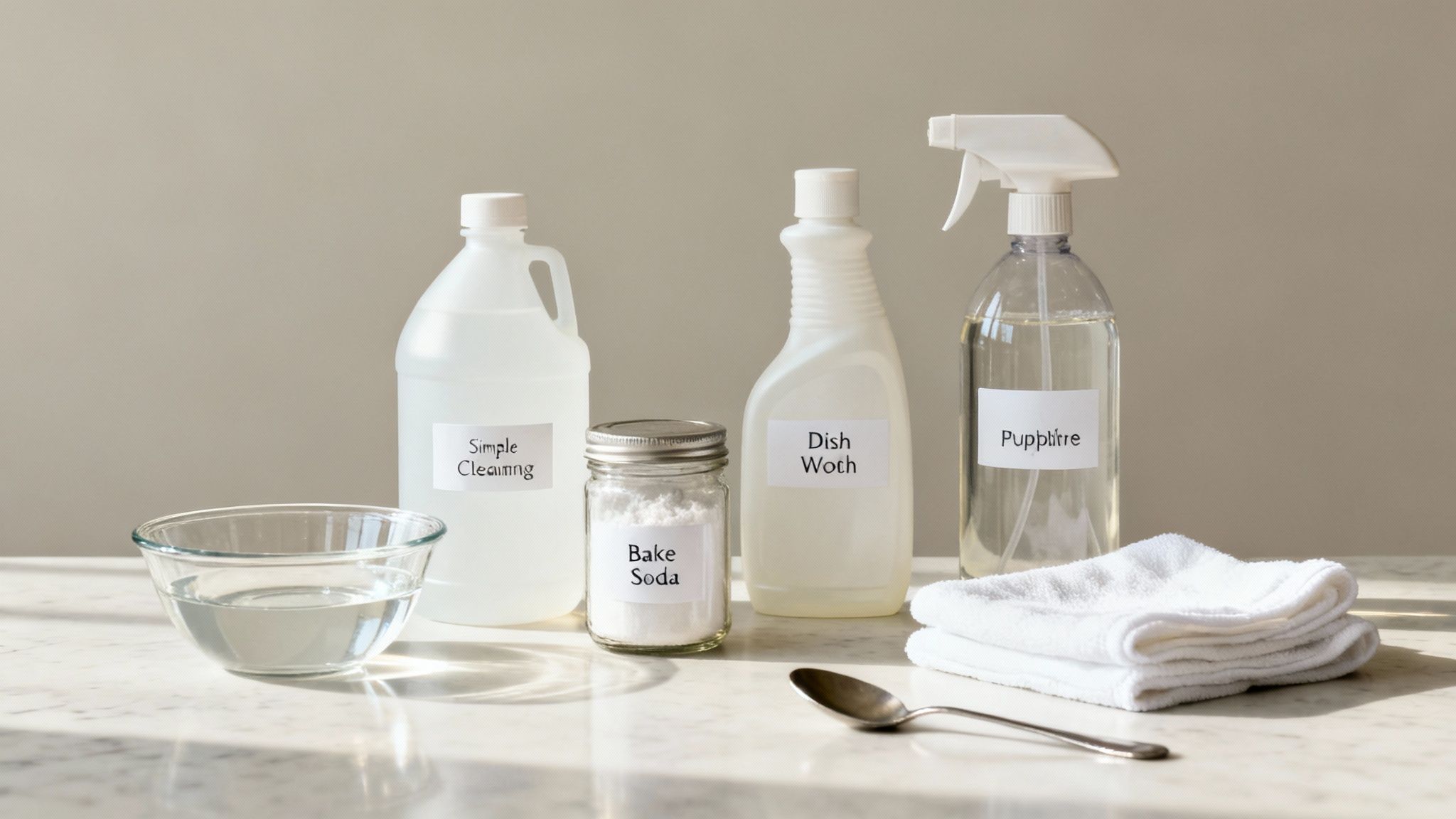
You don’t always need a cabinet full of aggressive chemicals to deal with everyday spills. In fact, some of the best stain fighters are probably already sitting in your kitchen pantry.
For those minor mishaps that happen in busy family homes around West Des Moines and Ankeny, a simple homemade cleaner is often all you need. These DIY recipes are perfect for handling common stains like coffee, juice, or greasy food drips before they have a chance to set. The key is to act fast and use the right formula for the stain at hand.
The All-Purpose Water-Based Cleaner
If your furniture has a ‘W’ cleaning code, this is your go-to solution. It's gentle, effective, and incredibly easy to whip up.
The Recipe: Mix two cups of cool water with one tablespoon of clear dish soap.
How to Use: Dip a clean, white cloth into the mix, wring it out so it's damp but not dripping, and gently blot the stain.
Why It Works: The soap helps break down the stain while the water lifts it from the fabric fibers.
Remember to follow up by blotting the area with a different cloth dampened with only water. This "rinses" away any soap residue. Finish by blotting with a dry towel to pull out the remaining moisture.
Important Safety Check: Always perform a spot test before applying any cleaning solution, homemade or store-bought. Apply a tiny amount to a hidden area—like the underside of a cushion or a flap on the back. Let it dry completely and check for any color change or damage.
Tackling Greasy Stains with Baking Soda
That stray drop of pizza grease or buttery popcorn doesn't have to spell disaster for your couch. When you're dealing with an oily stain, your first move is always to absorb as much of the grease as possible.
Baking soda is a fantastic absorbent. Just sprinkle it generously over the fresh grease stain and let it sit for about 15-20 minutes. You'll actually see the powder start to clump as it pulls the oil right out of the upholstery.
After it has done its work, vacuum up the baking soda. If there's any discoloration left, you can treat it with your all-purpose water-based cleaner, as long as your fabric code allows it. For a deeper look at its power, check out how baking soda works on carpet and upholstery stains and odors.
The Vinegar Solution for Tougher Spills
For slightly more stubborn, non-oily stains like coffee or juice, white vinegar can give your cleaning efforts a real boost. Its mild acidity is great for breaking down the compounds in these kinds of stains.
Create the Mix: In a small bowl, combine equal parts white vinegar and cool water.
Apply Gently: Dab the solution onto the stain using a clean cloth. Always work from the outside of the stain inward to keep it from spreading.
Blot and Repeat: Gently blot the area, allowing the solution to sit for a few minutes before blotting again with a fresh, dry cloth to lift the stain out.
DIY Solution Guide for Common Stains
Not sure which kitchen-cabinet solution to grab for which spill? This quick guide matches common household messes with the best homemade cleaning recipe. It's a simple way to make sure you're using the right tool for the job.
Stain Type | DIY Solution Recipe | Best For Fabric Codes |
|---|---|---|
Coffee or Tea | 1 part white vinegar, 1 part water. | W, WS, S |
Grease or Oil | Sprinkle with baking soda or cornstarch, let sit 20 minutes, vacuum. Follow with a soap/water solution if needed. | W, WS |
Red Wine | Blot, then apply a paste of 3 parts baking soda to 1 part water. Let dry, then vacuum. | W, WS |
Ink | Blot with a cloth dampened with rubbing alcohol (use sparingly). | S, WS |
General Grime | 1 tbsp clear dish soap mixed with 2 cups of cool water. | W, WS |
Remember, these are starting points. The effectiveness can depend on how fresh the stain is and the specific type of fabric you're working with. Always test a hidden spot first!
Beyond these quick fixes, a general understanding of how to clean fabric sofa at home can be invaluable for long-term care.
It’s clear that homeowners are serious about spotless furniture. The North American stain remover market is valued at a whopping $7.3 billion, showing just how much households prioritize clean living rooms. Unfortunately, improper use of these products is common, leading to 25% of fabrics needing professional re-treatment after a DIY attempt goes wrong. It's a reminder to always start gentle and test first.
How to Handle Tough Stains Like Pet Accidents and Oil
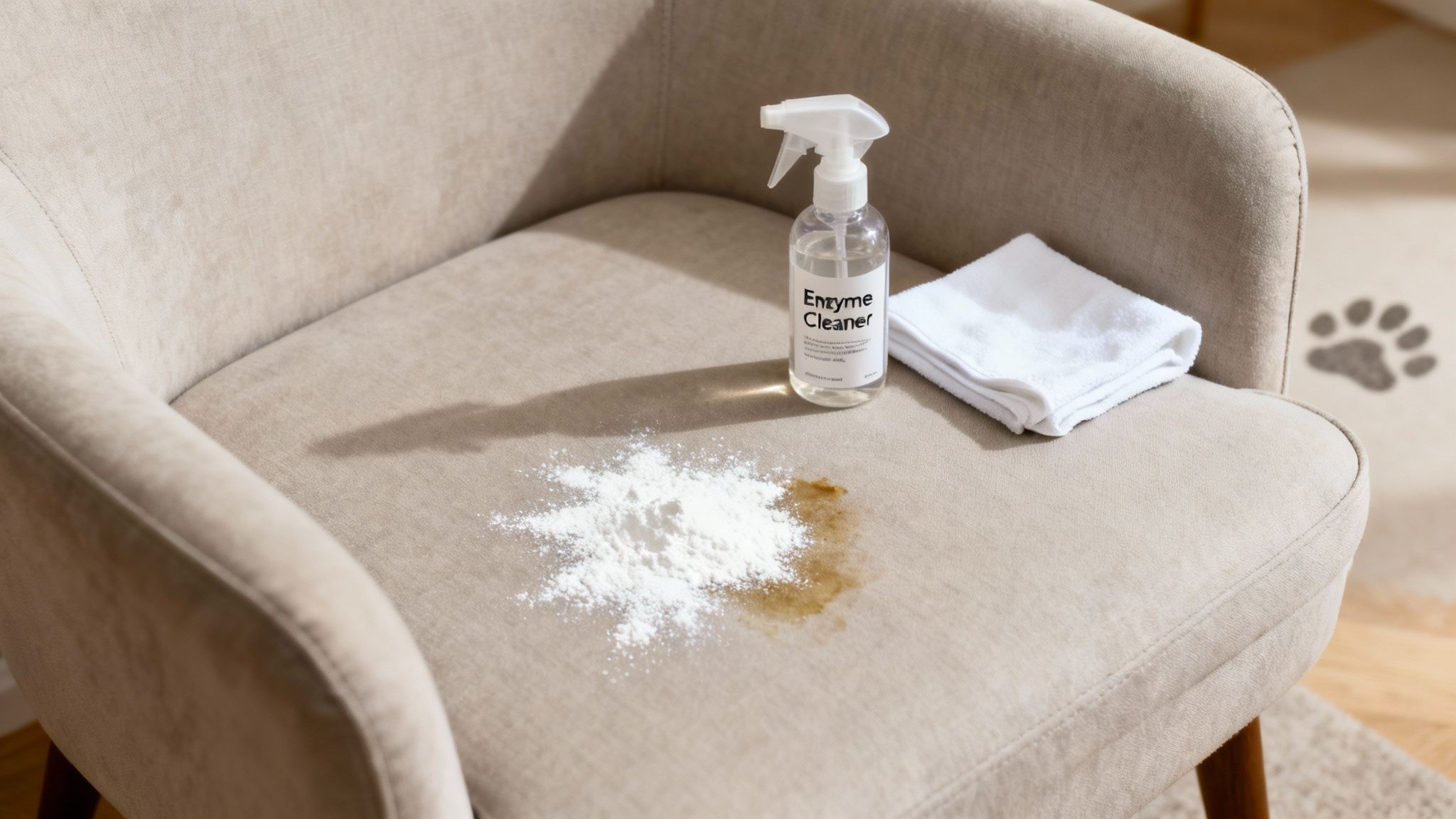
Sometimes a spill is more than just a spill—it's a stubborn, frustrating mess that defies simple soap and water. Stains from pet urine, ink, blood, or grease fall into a different category, and they demand a much more strategic approach than your everyday coffee drip.
These tougher stains are loaded with proteins, oils, or potent pigments that physically bond with fabric fibers, making them incredibly difficult to lift. For homeowners in Des Moines dealing with these spots, knowing the right technique can be the difference between a minor cleanup and a ruined piece of furniture.
The global upholstery cleaner market is growing fast, on track to hit $5.8 billion, which just goes to show how common these furniture-ruining incidents are. But here's the catch: data also shows that 45% of DIY attempts on tough stains like ink or grease actually fail, often making the problem worse. You can learn more about the upholstery care chemicals sector and see the research for yourself.
Tackling Organic Stains with Enzyme Cleaners
When you’re faced with an organic stain—think pet accidents, blood, or food—your best friend is an enzyme cleaner. Unlike regular soaps that just lift surface dirt, enzyme cleaners are formulated with special proteins that chemically break down the stain itself.
Think of it this way: the enzymes literally "eat" the organic matter causing both the stain and the odor. This is precisely why they work so well on pet urine. They don't just mask the smell; they eliminate its source.
How to Use Them: First, blot up any excess liquid you can. Then, generously spray the enzyme cleaner on the affected area, making sure you saturate it so the cleaner can reach deep into the padding beneath the surface.
Let It Work: Allow the cleaner to sit for at least 15-30 minutes, or whatever the product label recommends. This dwell time is critical—it’s when the enzymes do their real work.
Blot Dry: After letting it sit, press a clean, dry cloth firmly into the area to absorb the moisture and the broken-down stain.
For pet owners, understanding this process is a complete game-changer. For more specific advice, you can also check out our detailed guide on removing pet stains from your carpet and furniture.
Defeating Oil and Grease-Based Stains
Oil-based stains from things like salad dressing, lotion, or greasy food are tricky because water and oil just don't mix. Trying to clean them with a water-based solution can sometimes just smear the grease around, creating a bigger mess.
Your first and most critical step is to absorb as much of that oil as possible, and fast.
Pro Tip: Generously sprinkle cornstarch or baking soda directly onto the fresh oil stain. Let it sit for at least an hour—or even overnight if you can. The powder will act like a sponge, pulling the grease right out of the fabric fibers.
Once the powder has had time to work, use a vacuum with a brush attachment to lift it all away. If a faint spot remains, you can move on to a cleaning solution. For fabrics with an 'S' or 'W/S' code, a small amount of rubbing alcohol on a white cloth can be surprisingly effective. Just be sure to dab gently and always, always test it on a hidden spot first.
Knowing When to Call a Professional Cleaner in Des Moines
You’ve blotted, you’ve tested, you’ve mixed a DIY solution—and the stain is still there. Sometimes, the most important part of stain removal is knowing when to stop. Pushing a home remedy too far can turn a small spot into a permanent, faded patch of damaged fabric.
The reality is, some stains are just beyond what household products can handle. Our Des Moines team has the training and commercial-grade equipment to tackle the messes that home solutions simply can't.
Signs It's Time for Professional Help
If you see any of these red flags, it’s a good idea to put down the spray bottle and give us a call at (515) 446-9726. Continuing to treat the stain yourself could cause irreversible damage, especially on delicate fabrics.
The Stain is Old or Set-In: A stain that has been there for weeks, or one that’s been hit with heat, has bonded deep into the fabric fibers.
You Have a Mystery Stain: If you don’t know what caused the stain, you can’t know how to treat it. Using the wrong approach—like water on an oil-based stain—will only make it worse.
The Fabric is Delicate: Materials like silk, velvet, or any upholstery with an 'S' or 'X' cleaning code require specialized, water-free solvents and techniques to avoid disaster.
Your DIY Attempt Backfired: Has your cleaning effort left a light-colored ring or a faded spot? This often means the cleaning agent was too harsh or residue was left behind. A professional extraction is needed to fix it.
Tackling a large, stubborn stain on a major piece of furniture isn’t just a cleaning task—it’s about protecting your investment. The right professional service not only removes the stain but also preserves the fabric's color, texture, and integrity, saving you from costly replacement down the line.
The Benefits of Calling Shiny Go Clean
For busy homeowners in Des Moines or renters in an East Village apartment prepping for a move-out inspection, the decision often comes down to time and results. Our powerful hot water extraction equipment flushes out deep-set grime and tough stains that DIY methods just can't reach.
We understand the specific challenges Des Moines homes face, from spring pollen buildup on windowsills to tracked-in Iowa winter slush. Instead of spending your weekend experimenting with solutions that might not work, let us handle it quickly and correctly. Our professional approach ensures you get the best possible outcome without risking your furniture.
Ready to get that stubborn stain gone for good? Call or text us at (515) 446-9726 or book your upholstery cleaning Des Moines IA service online in just a few clicks. We'd love to help restore your furniture. For more on keeping your pieces fresh, explore our guide to professional upholstery shampoo services.
Still Have Questions About Upholstery Stains?
Even after you’ve cleaned up a spill, it's normal for a few questions to pop up. As professional cleaners in Des Moines, we’ve pretty much heard them all. Here are some quick, real-world answers to the things homeowners wonder about most when they’re trying to tackle stains themselves.
Can I Use a Steam Cleaner on My Upholstery?
This is a tricky one, and the honest answer is: it depends entirely on your furniture's cleaning code. High heat can be a total disaster for certain fabrics. It can make natural fibers like cotton or wool shrink right up, and it can permanently set protein-based stains like blood or egg. You’ll never get those out.
If your tag has an 'S' or 'X' code, you should absolutely keep water and steam far away. For 'W' coded fabrics, a steam cleaner might seem like a good idea, but the risk of oversaturating the fabric and the padding underneath is huge. This often leads to mildew growth and those dreaded water stains.
For most busy families in Des Moines, the potential damage just isn't worth the risk. Our professional hot water extraction methods use carefully controlled heat and powerful suction, giving you a deep clean without soaking the furniture. It's a much safer and more effective way to go.
How Can I Prevent Future Stains on My Furniture?
An ounce of prevention is truly worth a pound of cure—especially with upholstery. The absolute best way to handle a stain is to stop it from happening in the first place.
Here are a few simple strategies that actually work:
Apply a Fabric Protector: After testing it in a hidden spot, a quality fabric protector spray creates an invisible shield. This helps repel liquids and buys you more time to blot up a spill before it sinks in.
Use Throws and Slipcovers: For high-traffic homes, especially in busy family neighborhoods in West Des Moines or Johnston, decorative throws or washable slipcovers are a lifesaver for sofas and chairs.
Set Some Ground Rules: It can be tough with kids, but enforcing a "no food on the couch" rule is still the single most effective strategy for preventing food-related stains.
What's the Best Way to Get Rid of Lingering Odors?
If a smell from a pet accident or food spill is sticking around, a simple surface clean isn’t going to cut it. The odor is coming from bacteria that have soaked deep into the fibers and padding.
Once you’ve cleaned the visible stain and let the spot dry completely, sprinkle it generously with baking soda. Let it sit for several hours—or even overnight—to absorb the odor molecules, then vacuum it up thoroughly.
For smells that are really hanging on, an enzyme cleaner is your best bet. It doesn’t just mask the smell; it releases proteins that chemically break down the organic, odor-causing gunk. If the smell still won't budge, it means the source is deep in the cushion, and it’s time to call in a professional for a deep extraction clean.
When DIY solutions aren't enough, Shiny Go Clean is here to help. Our professional upholstery cleaning service in Des Moines gets deep into the fibers to remove stubborn stains and odors, restoring your furniture and saving you the stress. Book your cleaning in 60 seconds at https://shinygoclean.com.
Comments